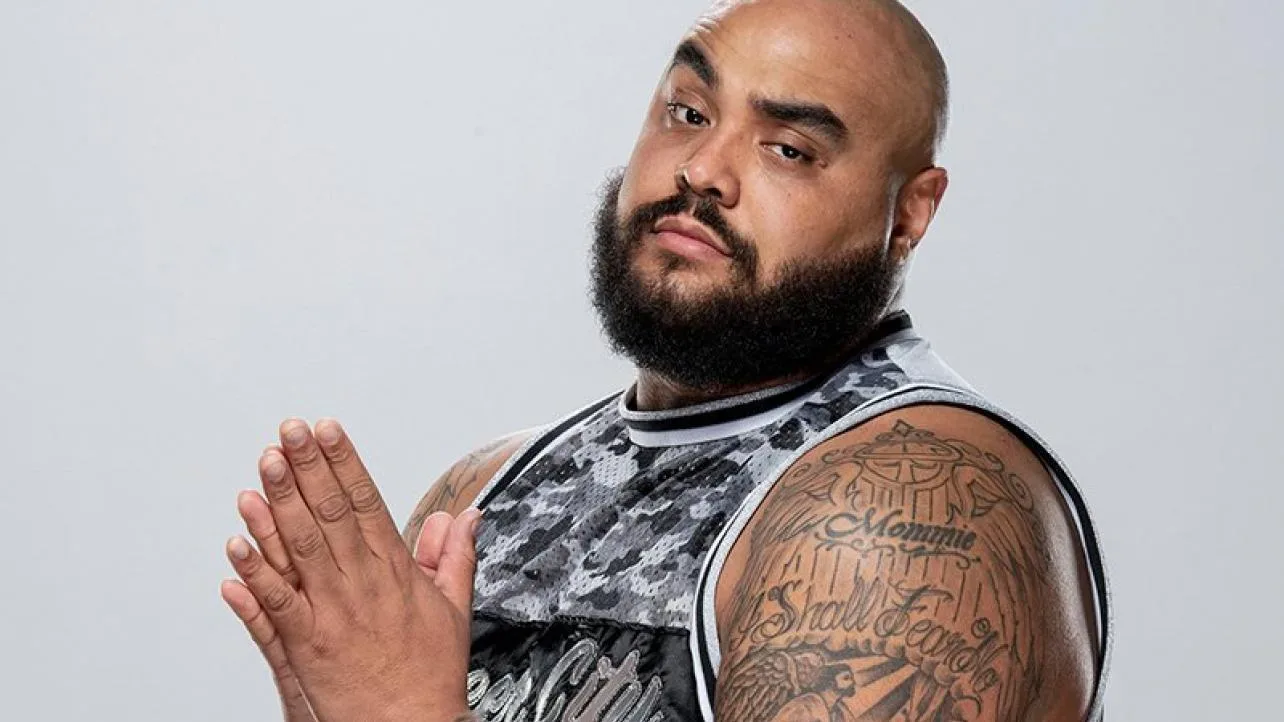
AJ Francis believes the heel role is the most natural fit for him in TNA, and his reasoning is rooted in the fundamental logic of professional wrestling. As one of the promotion’s larger performers, Francis says it can be difficult to make a conventional underdog-in-peril story believable when he is positioned as the sympathetic wrestler being controlled by much smaller opponents.
Francis has been a prominent antagonist in TNA, targeting smaller babyfaces including BDE and Avery Styles. His current presentation leans into his physical advantages, his confidence, and a willingness to do whatever is necessary to protect his own success. In Francis’ view, that dynamic allows the match structure to feel more convincing while also giving audiences a clearer reason to rally behind the wrestlers trying to stop him.
Speaking in a recent interview, Francis said he believes heel work is generally easier for wrestlers, but added that his stature makes the distinction particularly significant. Rather than asking fans to accept that a smaller opponent can dominate him for long periods, Francis can use his size as the basis for his character’s offense and his opponents’ comeback stories.
“I think for everybody being a heel is easier, but for me especially because I’m so much bigger than everybody that it’s not really believable that BDE keeps me down for five minutes and has me in peril; or that Avery Styles has me on the ropes for five minutes or that Joe Alonzo has me on the ropes for five minutes. I don’t think that it’s really believable for these little tiny tikes to put heat on me.”
For more background on this topic, read The Hardys Set to Confront TNA’s Mystery Attackers on September 24 iMPACT.
Why size affects the story Francis can tell
Francis’ comments speak directly to a major part of wrestling psychology: the audience has to understand the physical and emotional stakes of what they are watching. A smaller wrestler can absolutely defeat a larger opponent, but the route to that result matters. The larger wrestler’s strength, reach, and ability to absorb punishment all have to be addressed within the structure of the match.
For Francis, being cast as the villain creates a simpler and more effective framework. He can establish control through his power, frustrate fans through his behavior, and then give a smaller opponent moments to fight back without requiring the audience to accept that he has been helpless for an extended stretch. That is a different proposition from building a match around Francis being overwhelmed by a smaller heel.
He explained that his role is easier because he is physically bigger and stronger than much of the roster. That does not mean smaller opponents cannot be threats. Instead, Francis is saying that the most believable version of those rivalries is one in which his opponent’s speed, resilience, urgency, or tactical edge is used to counter his power, rather than one built around Francis spending lengthy stretches in danger.
“So, it’s easier for me to play the heel because I’m so much bigger and stronger than everybody.”
The distinction is important because Francis is not simply describing a preference for insulting crowds or bending the rules. He is discussing the in-ring mechanics that accompany a character alignment. As a heel, he can be dominant without being celebrated for it. The audience is invited to resent the advantages he possesses, while the babyface is given a ready-made obstacle to overcome.
That structure has long been useful for larger wrestlers. A physically imposing heel can create urgency simply by controlling the ring and cutting off a smaller rival’s offense. When that rival finds an opening, the crowd has a reason to react because the comeback feels like a meaningful shift. Francis sees that formula as more suited to his own build and the opponents he regularly encounters in TNA.
Different opportunities against larger opponents
Francis also made clear that the equation changes when he is working with another larger wrestler. He specifically pointed to opportunities against Elijah and Moose, opponents whose size allows him to work a more evenly balanced match. With those kinds of pairings, Francis does not need to be framed solely as the overwhelming powerhouse who repeatedly punishes a smaller foe.
Instead, he said he can become what he called a “full-fledged 50/50 wrestler,” with both competitors able to trade momentum in a way that feels natural. The phrase captures the difference between a David-versus-Goliath layout and a confrontation between two physically credible heavyweights. In the latter scenario, Francis can sell early offense, take bigger bumps, and allow the action to move back and forth without compromising the story.
“That’s why I like when I have opportunities like facing Elijah, facing Moose; they’re bigger guys, so I don’t have to play the role of I’m just gonna beat the hell out of you over and over again.”
Francis used his TNA Lockdown match with Elijah as an example. He noted that he took a bump from Elijah’s clothesline roughly 30 seconds into the match, a moment he said would not fit the way he would approach the majority of his matches against much smaller wrestlers.
“If you watch me and Elijah’s TNA Lockdown match, I take a bump off his clothesline like 30 seconds into the match. I would never bump 30 seconds into a match for 90% of the roster because they’re so much smaller than me. But because Elijah is a bigger guy, we can tell the story, and I can actually be a full-fledged 50/50 wrestler.”
That is not a dismissal of the work Francis can do with smaller opponents. It is an explanation of why he approaches those matches differently. A clothesline from a comparably large wrestler can immediately establish that Francis is dealing with a genuine physical equal. Against a smaller wrestler, Francis believes selling that same level of early danger would be less believable. His heel character therefore becomes an extension of the story he feels his matches are best positioned to tell.
A heel because of his actions, not his personality
Francis also drew a firm line between being a villain on television and being an unpleasant person away from the ring. His current character is a heel because of his decisions: turning on partners, cheating when possible, and prioritizing individual success above loyalty or fair competition. Those are the actions he believes define the character, rather than any suggestion that he must present himself as personally miserable or unlikeable at all times.
“I’m a bad guy because I do bad things, not because I’m a bad person. I turn on all my partners. I cheat to win as much as I possibly can. That’s what makes me a bad guy. Not because I’m a bad person outside of that.”
That approach gives Francis a clear foundation for his work. He can remain energetic, expressive, and entertaining while still serving as an antagonist. In fact, his personality can make the heel role stronger: a wrestler who clearly enjoys attention and celebrates his own accomplishments can become even more aggravating when he uses that charisma in service of selfish behavior.
Francis described himself as a positive presence outside the character, saying he has “a great smile” and is “very energetic, very entertaining.” But he said the defining trait of his on-screen role is how far he will go to advance himself.
“I’m just awful when it comes to my success.”
In that sense, Francis’ explanation is not only about size. It is also about clarity. The audience can understand why he is booed because his character makes choices that are openly self-serving. He cheats. He abandons partners. He looks out for himself first. Combined with his imposing physical presence, those actions give TNA a straightforward heel dynamic to use against its babyfaces.
Francis sees momentum in his current run
Francis recently said that he feels he is peaking in his career at present, and his explanation of the heel role helps illustrate why he may feel that way. He has a defined character, a clear understanding of what his size brings to a match, and an approach that changes depending on the opponent across the ring from him.
Against smaller TNA wrestlers, Francis can lean into the role of the powerful obstacle who must be outsmarted, outlasted, or overcome. Against bigger names such as Elijah and Moose, he can work a more balanced physical contest and show a different side of his in-ring performance. Both settings still support the same core character: a competitor focused on winning and willing to make himself the villain to do it.
For Francis, that is why the heel role works. It is not merely a matter of choosing to antagonize fans. It is a presentation that aligns with his physical presence, supports believable match storytelling, and gives his opponents a compelling challenge. As his TNA run continues, that combination gives Francis a strong and flexible platform whether he is overwhelming a smaller rival or standing across the ring from another heavyweight.
Darryl Polo
Darryl Polo is a passionate wrestling fan covering WWE, AEW, TNA and beyond. He loves great rivalries, breakout stars and the moments that keep fans talking long after the bell. How we work.