
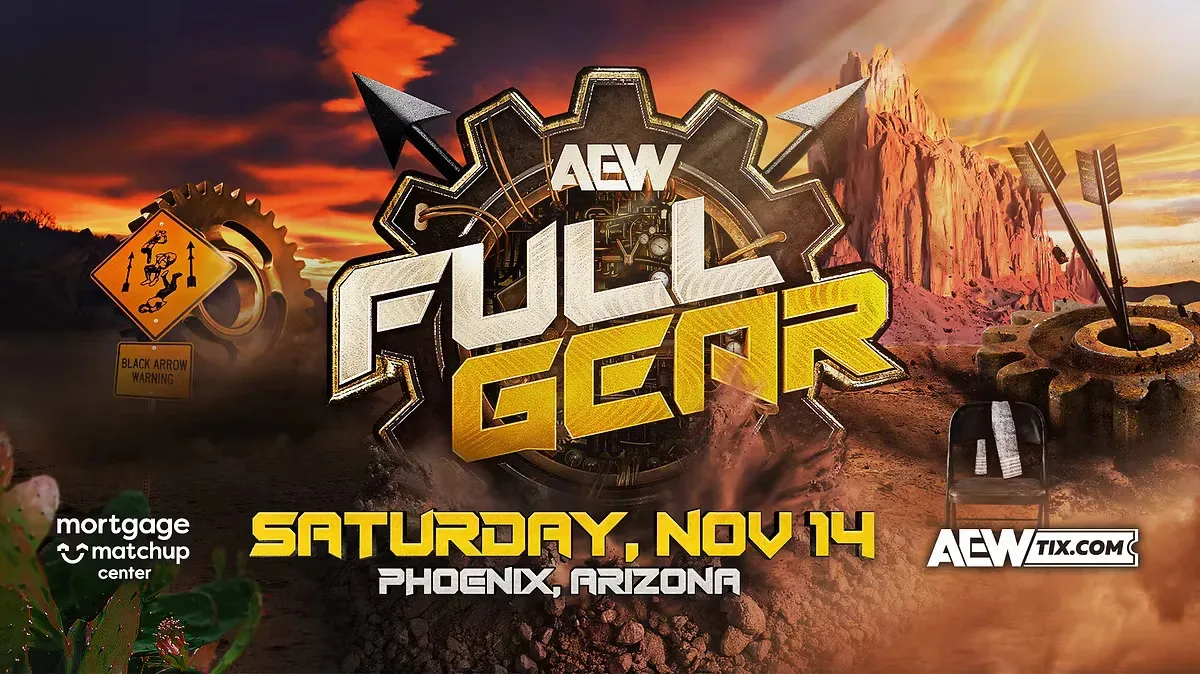
AEW’s Full Gear presentation is set to include multiple licensed songs, with reports indicating that at least one of the tracks is a mainstream selection. The full slate of music and the specific moments in which the songs will be used have not been publicly detailed, leaving viewers to find out how the licensed material factors into the pay-per-view broadcast.
Licensed music has become an occasional but notable part of AEW’s big-event identity. While the company primarily relies on its own entrance themes and production music, it has shown a willingness to bring in established songs when the right setting calls for an added sense of scale, chaos, drama, or familiarity. Full Gear now appears poised to be the latest event to receive that treatment.
The report describes AEW as having secured multiple songs for the show, rather than a single track. That distinction could be significant. A licensed song can be used in a number of ways on a wrestling broadcast: as a theme for a special stipulation match, in a video package, during an entrance, in a promotional segment, or as part of the overall event soundtrack. Without confirmation of the songs themselves or their intended placement, it remains unclear whether the music will be tied to one major match or spread throughout the card.
Licensed Music Has Added to AEW’s Event Atmosphere
When AEW has used popular music effectively, it has generally done so in ways that make a particular match or moment feel distinct from a normal weekly television presentation. The approach can immediately change the tone in an arena. A familiar song provides an instant emotional shorthand for the audience, and that can be especially valuable for matches built around violence, urgency, celebration, or personal animosity.
For more background on this topic, read AEW Dynamite and Collision Three-Hour Block Averages 621,000 Viewers on TBS.
Anarchy in the Arena has become the clearest example of AEW embracing that concept. The annual multi-person spectacle has frequently leaned into music as part of its identity, helping turn the opening stages of the match into a deliberately wild and unusual viewing experience. Rather than treating the song as background noise, AEW has used the music as an active piece of the presentation.
Last year’s Anarchy in the Arena match notably featured “Bodies” by Drowning Pool playing throughout. The song’s aggressive energy fit the match’s environment and helped give the brawl a memorable hook beyond the action itself. It also demonstrated why licensed music can be worth the investment for a company seeking moments that stand out in a crowded wrestling calendar.
That history naturally creates curiosity around Full Gear. If one of the reported songs is being positioned as a major mainstream track, it could be intended to accompany a similarly prominent part of the event. AEW has not announced whether the music will be attached to a stipulation bout, a title match, an entrance, or a broader video presentation. The eventual context will matter as much as the selection itself.
Why the Details Matter
Music licensing in wrestling is more complicated than simply selecting a song that suits a storyline. Rights must be secured for the desired form of use, and different arrangements may apply depending on whether a track is heard live in the arena, on a pay-per-view feed, in promotional content, on social media, or in later on-demand versions of a show. Those considerations can affect where and how a song appears.
That is one reason fans should avoid making assumptions about the reported tracks before AEW presents them. The information currently available confirms that multiple licensed songs have been obtained and that one is described as mainstream, but it does not establish the artists, titles, matches, or segments involved. It also does not indicate whether all of the songs will be heard in full, used briefly, or reserved for pre-produced material.
Still, the fact that AEW reportedly pursued several licensed selections suggests that Full Gear’s production may feature a few deliberate musical flourishes. For a pay-per-view, those details can help create separation from the company’s standard weekly programming. They can also give fans memorable audio cues that become associated with a particular night, rivalry, or performance.
There is an additional practical benefit to a well-placed song. Major wrestling events often contain several hours of action, entrances, interviews, recaps, and promotional material. A recognizable track can reset the energy of the broadcast and signal that a particular portion of the card is intended to feel different. Used selectively, it can enhance an already established story without replacing the need for strong in-ring work and clear character motivations.
Full Gear’s Presentation Will Be Under the Spotlight
Full Gear has long been one of AEW’s significant annual pay-per-view events, and the reported music acquisitions point toward an effort to give the show additional production character. AEW’s biggest shows are often judged not only by match quality and outcomes, but also by how effectively the company makes the night feel consequential from beginning to end.
The use of licensed songs can be a small component of that larger equation, but it can leave an outsized impression when it is attached to the right moment. Wrestling fans routinely remember the entrances, video packages, crowd reactions, and unconventional presentation decisions that surround major matches. A fitting musical choice can help elevate those elements and make them feel more cinematic.
At the same time, the selection needs to match the situation. A song that works for a chaotic group fight may not fit a technically focused championship contest or a personal grudge match built around a serious tone. AEW’s strongest uses of outside music have generally been the ones that reinforce what the viewers are already being asked to feel, whether that is anticipation, defiance, disorder, or triumph.
Because the songs have not been named, the announcement is currently more about potential than certainty. Fans do not yet know if the mainstream track will be a contemporary hit, a rock song, a legacy recording, or a selection from another genre entirely. They also do not know whether the additional licensed material will be used in comparable fashion or serve more understated purposes across the broadcast.
A Possible Addition to Full Gear’s Defining Moments
AEW’s use of licensed music is not an every-show practice, which is part of what makes it notable when the company does go in that direction. The relative rarity can give a song greater impact, particularly when it is saved for a major pay-per-view rather than used repeatedly on television.
For Full Gear, the approach could offer a fresh production wrinkle while maintaining the company’s usual emphasis on its wrestling card. The music will not determine the success of the event by itself, but it may become one of the details viewers discuss once the show is complete. If the selections are connected to pivotal matches or major story developments, they could become part of the event’s lasting identity.
For now, the central takeaway is straightforward: AEW has reportedly lined up multiple licensed songs for Full Gear, including one mainstream track, and the company has not yet revealed exactly how those songs will be deployed. Given AEW’s prior willingness to use recognizable music for memorable high-energy moments, the eventual placements will be worth watching closely during the pay-per-view.

Darryl Polo
Darryl Polo is a passionate wrestling fan covering WWE, AEW, TNA and beyond. He loves great rivalries, breakout stars and the moments that keep fans talking long after the bell. How we work.