
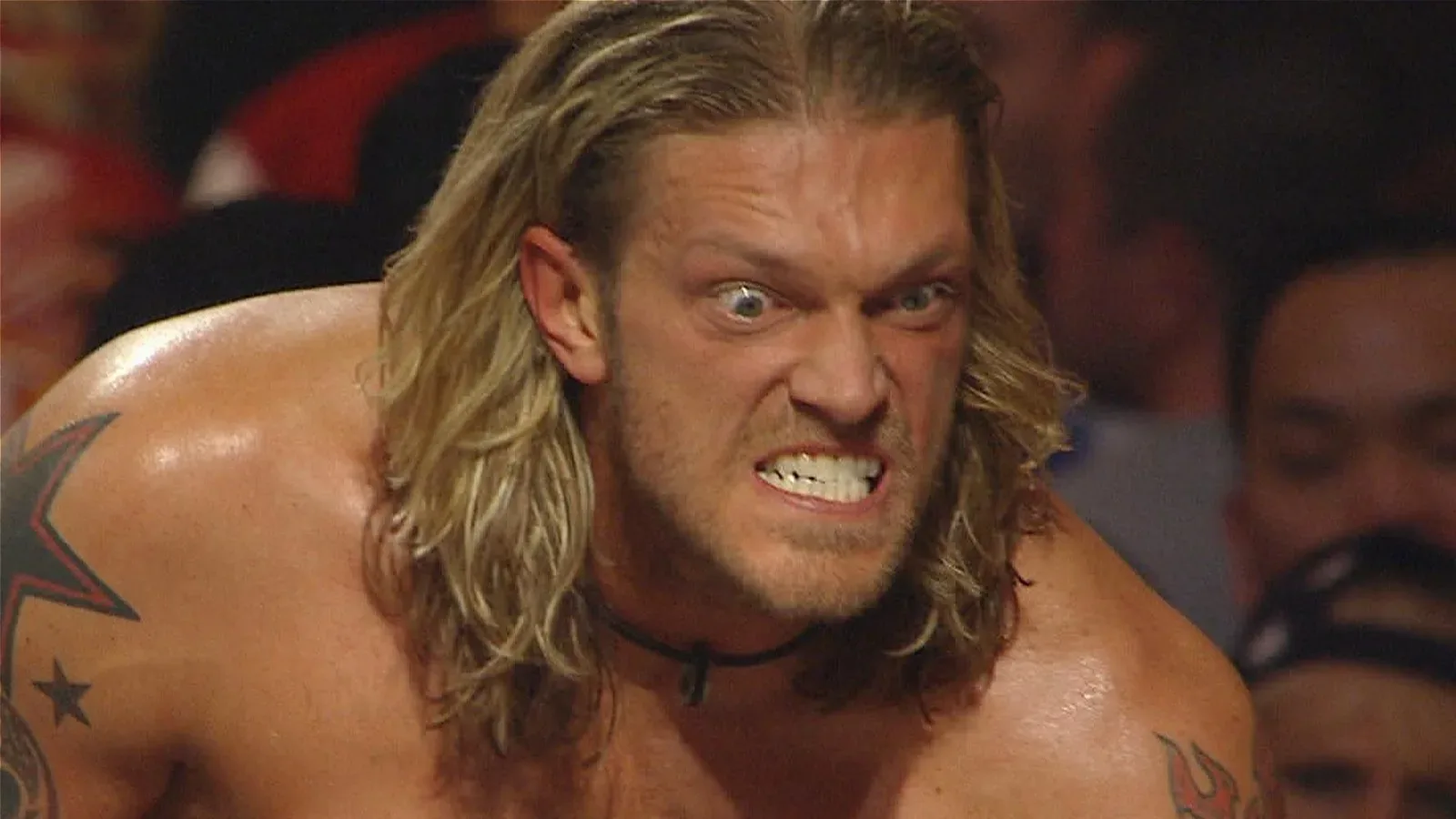
Adam Copeland has spent decades building a career defined by reinvention, longevity and some of professional wrestling's most enduring images. Before he became an AEW competitor pursuing one final major championship goal, Copeland spent years establishing himself as Edge, a performer whose body of work moved from tag team innovator to singles main-event attraction.
For Copeland, however, there is a clear point at which that ascent truly began. Speaking on The Mick and Kenny Show, the veteran identified the first tag team ladder match between Edge & Christian and The Hardy Boyz at No Mercy in Cleveland as the moment he felt he and his peers crossed into a different level of recognition.
The match placed four young wrestlers in a high-pressure environment and gave them an opportunity to show what they could do on a major stage. Copeland believes it did more than produce a loud crowd reaction or add another match to a growing résumé. In his view, it put all four men on the path to becoming stars.
“To answer your question about it feeling like the first star-making moment: it was actually in Cleveland. No Mercy, the ladder match against The Hardys; it was the first tag team ladder match ever,” Copeland said on The Mick and Kenny Show.
For more background on this topic, read Randy Orton Declares Himself WWE’s ‘Last Man Standing’ Ahead Of Cody Rhodes Clash At Crown Jewel.
Copeland's recollection focused particularly on what happened after the match. As important as the response inside the building was, validation from a respected peer made the milestone feel real in a different way. He recalled Mick Foley meeting the four wrestlers after they returned through the curtain and offering a direct assessment of what they had accomplished.
“When we got to the back, and we walked through the curtain, Mick came up to all four of us and said, ‘You just became stars,’” Copeland recalled.
That reaction carried special weight for Copeland. A crowd can make its feelings unmistakable in the moment, especially after a physically demanding match built around risk and spectacle. But hearing an assessment from someone within the wrestling business can provide a more lasting sense of what a performance meant. Copeland explained that peer recognition was a major indicator that the group had made an impact beyond the immediate noise of the arena.
“When you start to hear it from your peers, that's when you know you've kind of made your mark,” Copeland said. “So, for me, that match was the one that really kind of set us on the path.”
A Defining Step for Two Emerging Teams
The No Mercy ladder match occupies an important place in the careers of both Edge & Christian and The Hardy Boyz. It came at a time when each team was still creating its identity on a national level, and it helped demonstrate how much audience investment could be generated around tag team wrestling when performers were given a distinctive match format and the freedom to make it matter.
Copeland's comments do not reduce the moment to one spot, one reaction or one result. Instead, he described it as a turning point for all four men. Edge and Christian's partnership would go on to become a cornerstone of that era's tag team division, while Matt and Jeff Hardy continued to build a connection with audiences that made them one of the most recognizable teams of their generation.
That collective dimension is central to why Copeland's memory of Foley's words remains so significant. The acknowledgment was not framed as praise for a single performer. It was directed at the four wrestlers who had created the match together. For Copeland, the significance lies in the idea that the bout announced the arrival of a group of competitors who were ready to be seen differently.
In retrospect, the ladder match is also notable as an early chapter in a rivalry that became closely associated with high-risk tag team wrestling. Copeland's later career was filled with championship success, major character changes and prominent singles feuds, but he continues to point back to the No Mercy encounter as the first major signpost on that journey.
The WrestleMania X-Seven Leap That Still Stands Out
Copeland also revisited another moment linked to the ladder-match legacy: his leap from a ladder to spear Jeff Hardy at WrestleMania X-Seven. The move took place during the TLC Match for the World Tag Team Championship and has remained one of the visual highlights most commonly connected to that period of his career.
For viewers, the moment carried an obvious sense of danger. It required Copeland to launch himself from the ladder while Hardy was suspended in the air, creating an image that has endured long after the event. Yet Copeland said he did not spend much time dwelling on fear before making the jump. His explanation was simple: once the moment arrived, there was little value in overthinking it.
“I honestly didn't think about it, to be honest,” Copeland said on The Mick and Kenny Show. “You just kind of got to go.”
Copeland also offered a characteristically lighthearted observation about Hardy's mindset in those kinds of situations.
“I don't think Jeff Hardy understands what fear is, so I don't think he was scared,” Copeland said.
The comments underline the approach required for wrestlers operating within matches designed around ladders, tables and chairs. The physicality is only part of the equation. Trust, timing and commitment are equally vital, especially when a sequence depends on more than one performer being in precisely the right place at the right time. Copeland's remarks did not present the WrestleMania X-Seven moment as a carefully analyzed personal decision in the seconds before impact. He portrayed it as the kind of instant where preparation takes over and the performer simply has to act.
From Edge to AEW's Final-Chapter Ambition
Copeland's reflections arrive during a late-career period in which he has been open about his remaining ambitions. He has set his sights on the AEW World Championship as he approaches the conclusion of his in-ring career, with retirement planned for 2027. The goal gives his current work a clear competitive focus while also placing his memories of the past in a broader context.
There is a direct line between the young wrestler who emerged from No Mercy with newfound confidence and the veteran now looking to add one more defining achievement before stepping away. The circumstances are vastly different, but the importance of pivotal moments remains the same. At No Mercy, Copeland saw the beginning of a path. In AEW, he is looking to complete another meaningful chapter.
His career has included periods as a beloved fan favorite and as one of the most disliked antagonists on the roster. That range is part of what made Edge such a durable figure. Still, Copeland's account of his earliest star-making experience emphasizes that the foundation was built in tag team wrestling, alongside Christian and across the ring from Matt and Jeff Hardy.
Foley's backstage message has clearly remained with him because it captured more than a successful night. It represented the realization that the work had changed how the industry viewed them. For Copeland, the No Mercy ladder match was not merely an early highlight. It was the performance that established a direction for the years that followed.
As he continues his AEW run and pursues the company's top prize, Copeland can look back on a career full of landmark scenes. The spear at WrestleMania X-Seven remains one of the most unforgettable. But when asked to identify the moment he first became a star, he returned to Cleveland, No Mercy, The Hardy Boyz and a backstage endorsement from Mick Foley that told all four competitors they had arrived.
In pictures

Darryl Polo
Darryl Polo is a passionate wrestling fan covering WWE, AEW, TNA and beyond. He loves great rivalries, breakout stars and the moments that keep fans talking long after the bell. How we work.