
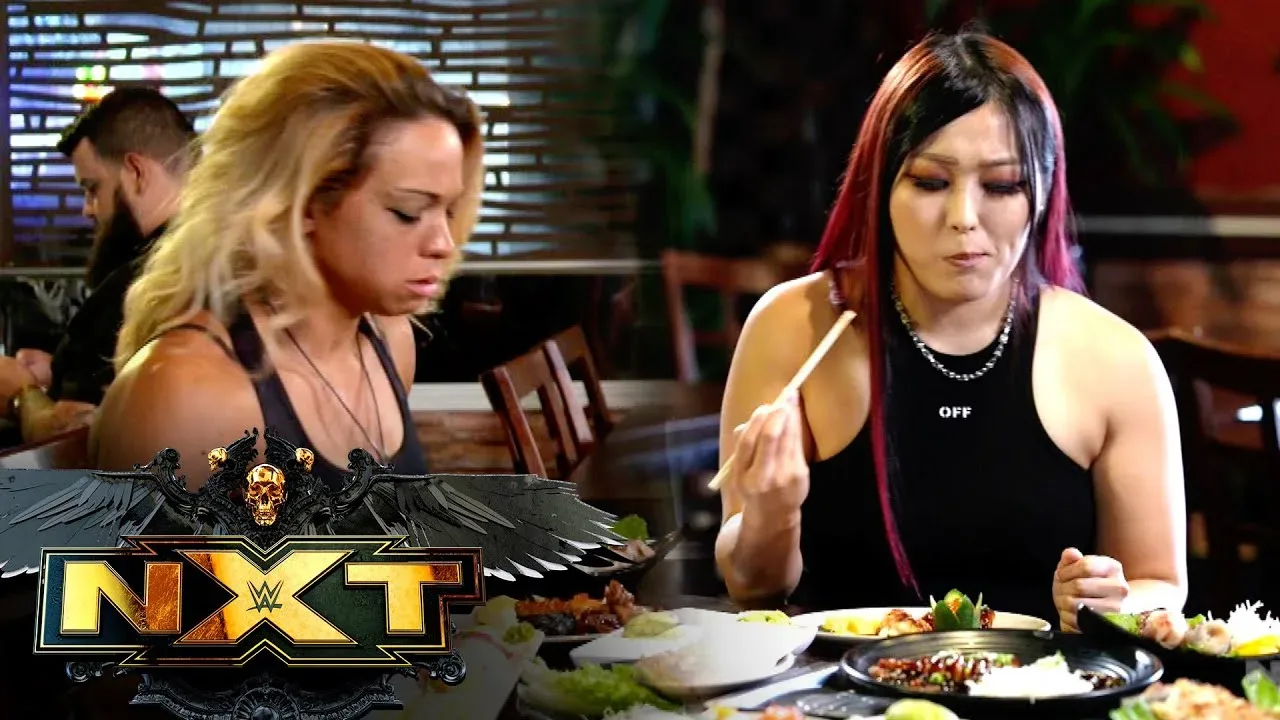
Zoey Serrano has looked back on an NXT vignette with IYO SKY that she remembers as a fun, deliberately goofy piece of television, even though it created a reaction she did not expect from part of the audience.
The segment took place during a period when Serrano and SKY were presented as a newly formed tag team on the NXT brand. The two visited a sushi restaurant as part of an on-screen effort to establish their partnership and give viewers a look at their developing dynamic away from the ring. In the vignette, Serrano was directed to act as though she did not enjoy sushi. She threw food away and pretended to enjoy the experience because, within the story, she wanted SKY to like her.
Speaking in a recent edition of her Zoey 1001 video series, Serrano named the sushi restaurant skit when asked about a segment that she particularly enjoyed making. She said the premise itself still makes her laugh, both because of its intentionally exaggerated tone and because of the reaction it produced afterward.
“This is a good one. So this immediately makes me think of me and IYO SKY. When we were both in NXT, we were a new tag team and we did a vignette. We were at a sushi restaurant and of course they wanted me to not like sushi, which is not true, I’m a big fan. They had me throwing it up against the wall, over my shoulder and pretending to like it because I really wanted ITO to like me.”
For more background on this topic, read Mason Rook Embraces His Distinctive Size Ahead Of NXT Championship Opportunity.
Serrano’s recollection points to the central joke of the scene: her character was behaving awkwardly in an attempt to make a favorable impression on SKY. Rather than presenting the restaurant visit as a sincere bonding moment from the outset, the vignette leaned into physical comedy and the discomfort of a new teammate trying too hard. Serrano stressed that her real-life feelings about sushi were not reflected in what viewers saw on NXT television.
That distinction became important once the segment aired. Serrano said some fans took issue with the portrayal and believed the material indicated that she disliked sushi in reality. More seriously, she said others interpreted the sketch as racist. Serrano said she did not understand how that conclusion had been reached from the material as it was presented.
“It always makes me laugh. One, just because it’s a fun, goofy promo, right? Two, boy did I get a lot of heat for this. People actually thought, one, I didn’t like sushi, and two, that somehow I was racist. I don’t, I don’t know how those two things link together. I was just doing what I was told, but I had a great time doing it.”
Her comments draw a clear line between an on-screen assignment and her personal views. Serrano described the sushi dislike as a direction given for the vignette rather than something she brought to the idea herself. She also framed the scene as a comedic performance, not a statement about Japanese food, Japanese culture, or SKY.
Professional wrestling regularly uses short backstage and lifestyle vignettes to add texture to alliances that may otherwise be defined only by matches, entrances, and in-ring promos. New teams in particular can benefit from those scenes because they offer a quick way to establish chemistry or identify contrasting personalities. A restaurant setting gives performers opportunities to play off one another in a way that differs from the more confrontational style of an arena interview.
However, those segments can also generate sharply divided reactions. Comedy based on cultural touchstones, food, language, or a performer’s background can be received differently by different viewers, especially when the material is brief and the intended character motivation is not universally read the same way. Serrano was not dismissing the fact that viewers reacted; instead, she said she was surprised by the specific assumptions made about her personally.
In her view, the actual value of the vignette was not limited to the comedy that aired. Serrano said the work gave her and SKY a chance to build a real connection while they were being paired together on NXT. That behind-the-scenes experience remains the element she spoke about most warmly.
“It was an opportunity for IYO and I to actually get to know each other, which was a lot of fun. I love her. She’s a sweetheart.”
That praise for SKY provides a notable contrast to the debate that followed the segment. Serrano’s account is that the assignment helped the two performers get to know one another, even as it prompted criticism among some viewers after it aired. For Serrano, the memory is ultimately tied to a positive experience with her former NXT teammate rather than the backlash.
SKY has long been recognized for the charisma and athleticism that made her a major presence in NXT before her later WWE success. Teaming her with Serrano offered the performers an opportunity to create a relationship on camera, and the sushi vignette was one of the tools used to do that. Serrano’s character attempting to win over SKY was the obvious narrative hook, with the food gag serving as the vehicle for that effort.
Yet Serrano’s comments also show the unpredictable nature of wrestling television. A segment built around a straightforward comedic instruction can take on a different meaning once it reaches a broad audience online. Performers are often the public faces viewers associate with a scene, even when the direction, structure, and character beats are part of a larger production process. Serrano said that was the case here, emphasizing that she was following the creative instruction to portray someone who did not like sushi.
Her explanation does not change the fact that some fans had a negative response to the sketch. It does, though, add her own perspective on what the scene was meant to be and how she approached it. Serrano saw it as a silly promotional vignette designed to establish an odd-couple type of dynamic in a new team. She also said it was not reflective of her own taste in food, noting that she is “a big fan” of sushi.
The difference between performer and character is foundational to wrestling, but it can become blurred when television segments touch on subjects that audiences regard as personal or cultural. Serrano’s recollection is an example of that tension. The intent she describes was simple comedy and team-building, while the response she received included interpretations she said she did not anticipate and could not understand.
As she revisited the moment, Serrano did not portray it as a regrettable experience. On the contrary, she called it one that still makes her laugh and repeatedly highlighted the enjoyable time she had with SKY. Her takeaway was that an unusual on-screen assignment became a chance to form a genuine bond with a wrestler she clearly holds in high regard.
For fans revisiting the NXT period in question, Serrano’s comments provide additional context for a vignette that was remembered very differently by different sections of the audience. She maintains that the sushi restaurant scene was an exaggerated character bit, performed as directed, and that its best outcome was the relationship it helped foster between her and IYO SKY.

Darryl Polo
Darryl Polo is a passionate wrestling fan covering WWE, AEW, TNA and beyond. He loves great rivalries, breakout stars and the moments that keep fans talking long after the bell. How we work.