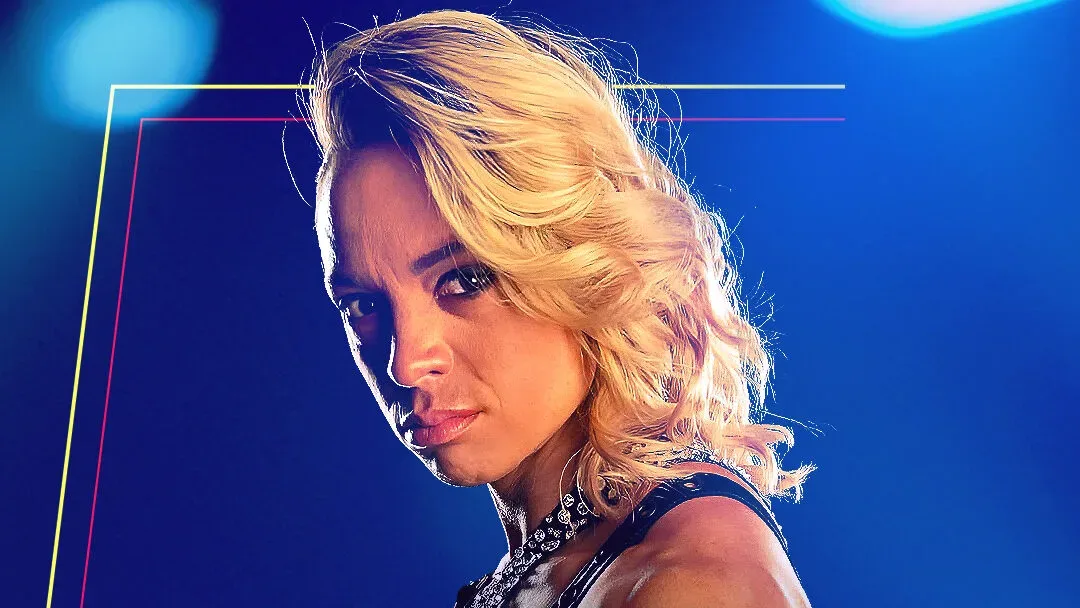
Zoey Serrano has directly addressed longstanding speculation surrounding her sexuality, making clear that she is straight while also emphasizing her support and affection for LGBT+ fans.
The discussion stems from the history of Pure Fusion Collective, the WWE faction that included Serrano alongside Shayna Baszler and Sonya Deville. Because Baszler and Deville are members of the LGBT+ community, a portion of the audience adopted the nickname “The Lesbian Shield” for the group. That label, and the chemistry fans associated with the trio, led to continued assumptions about Serrano even after the group’s original formation was further in the past.
Speaking with DS Shin on Ring The Belle, Serrano said the questions have not disappeared. She explained that posts featuring her husband can still draw surprised reactions from people who had assumed she was gay. Serrano said she welcomes the support of fans from the LGBT+ community, but wanted to state her own identity clearly.
“All right, hold on. This will never die. Look, I love my gays. All right. I’m- I love you all. I am straight, though. I am going to put that out there. Because even to this day, when I post something with me and my husband, who you just met, I still get comments, she’s straight? I’m an ally. But I am straight, you know? Sorry, ladies.”
For more background on this topic, read AJ Styles Reflects On WWE Championship Win Over Jon Moxley At Backlash 2016.
A faction identity that sparked lasting fan conversation
Pro wrestling audiences have always formed strong connections with groups whose presentation, attitude and interpersonal dynamic create an immediate identity. Pure Fusion Collective became a clear example of that phenomenon. Baszler and Deville brought established reputations, distinct in-ring credibility and recognizable personalities to the act, while Serrano’s place within the group became part of the conversation surrounding its broader image.
The “Lesbian Shield” label was a fan-created reference, drawing on the popularity of WWE’s former Shield faction while acknowledging the LGBT+ identities of Baszler and Deville. Fans frequently use that kind of shorthand to celebrate a team or faction they enjoy, particularly when they see a group as providing representation that has not always been prominent on wrestling television.
At the same time, fan terminology can sometimes produce assumptions about performers that go beyond what they have publicly said about their personal lives. Serrano’s remarks make the distinction plainly: she appreciates the community that has embraced her and the faction, but she identifies as straight.
Her comments were delivered in a light, conversational tone, including the closing “Sorry, ladies,” but the underlying point was straightforward. Serrano said the speculation has continued even when her own social-media posts include her husband, and she chose to address it without dismissing the fans who had engaged with her work.
Serrano highlights the importance of being an ally
Serrano did not frame the clarification as a rejection of the LGBT+ fanbase that has supported her. Instead, she explicitly described herself as an ally and repeatedly expressed love for those fans. That distinction is important in an industry where fans often feel a personal connection to performers and where representation can carry considerable meaning.
Wrestling’s relationship with LGBT+ representation has evolved over time, both through openly LGBT+ wrestlers and through fan communities that have long been a visible and passionate part of the audience. WWE has featured performers with a range of identities, while stars have increasingly had the opportunity to speak for themselves rather than have audiences define their private lives through character work, partnerships or online speculation.
Baszler and Deville’s presence in Pure Fusion Collective naturally gave the faction a significance for many viewers. Fans can celebrate that visibility while also respecting Serrano’s own statement about who she is. The two ideas do not conflict: Serrano can be a straight woman, an ally and a valued part of a faction that resonated strongly with LGBT+ supporters.
That is the balance Serrano appeared to be drawing in her interview. She did not criticize fans for feeling attached to the group or for recognizing the importance of Baszler and Deville’s representation. Rather, she clarified that the speculation about her personally is inaccurate.
The line between presentation and personal identity
Wrestling has a unique relationship with public perception because performers routinely blend character-driven storytelling with elements of their real personalities. Fans are encouraged to invest in alliances, rivalries and on-screen chemistry, and that investment often carries into discussions outside the ring. Social media has made the boundary even more complicated, allowing audiences to see aspects of wrestlers’ lives that would once have remained entirely private.
That environment can create a tendency to read personal meaning into a performer’s television role, a faction affiliation or photographs shared online. Serrano’s experience shows how quickly those assumptions can become durable, especially when a fan-created nickname catches on and becomes part of the conversation around a stable.
There is a meaningful difference, however, between enjoying a fan interpretation of a group’s dynamic and assigning an identity to an individual performer. Serrano’s comments provide the information fans need: she is straight, she is married, and she considers herself an ally to LGBT+ people. Respecting that statement does not diminish the enthusiasm surrounding Pure Fusion Collective or the affection that many viewers have for the faction’s legacy.
For wrestling fans, it is also a reminder that performers deserve room to establish their own boundaries and speak about their own lives in their own words. A wrestler’s on-screen persona is built for a public audience. Their identity beyond the ring should be treated with the same respect given to any personal disclosure.
Recent discussion has also focused on Serrano’s in-ring adjustments
The interview comments arrive during a period when Serrano has also spoken publicly about changes to her wrestling style. In another recent discussion, she addressed removing springboard offense from her moveset following a knee injury in 2025.
Changes of that nature are common across the industry, particularly after an injury forces a performer to assess which risks are necessary and sustainable over the long term. A wrestler’s move selection is often tied closely to their identity in the ring, which can make any adjustment noticeable to viewers. Still, adapting a style can be a practical part of preserving a career and finding new ways to perform effectively.
That separate conversation places Serrano’s current public comments in a broader context. She has been candid about both the physical considerations that affect her work and the personal speculation that has followed her association with Pure Fusion Collective. In each case, she has offered a direct answer rather than allowing outside assumptions to stand uncontested.
A clear message from Serrano
Serrano’s statement ultimately leaves little ambiguity. She said she is straight. She also said she loves her LGBT+ fans and identifies as an ally. The message was not an attempt to distance herself from the audience that has embraced the group’s association with queer representation; it was a request for accuracy regarding her own identity.
Pure Fusion Collective’s connection with fans remains part of the faction’s history, as does the impact of having Baszler and Deville within the group. Serrano’s clarification simply ensures that discussion of the collective does not overwrite what she has said about herself.
For supporters of Serrano, Baszler, Deville and the wider WWE roster, the appropriate takeaway is simple. Celebrate the representation that matters, appreciate the performers who make fans feel seen, and allow each wrestler to define their own life beyond the character and beyond the ring.
Darryl Polo
Darryl Polo is a passionate wrestling fan covering WWE, AEW, TNA and beyond. He loves great rivalries, breakout stars and the moments that keep fans talking long after the bell. How we work.