
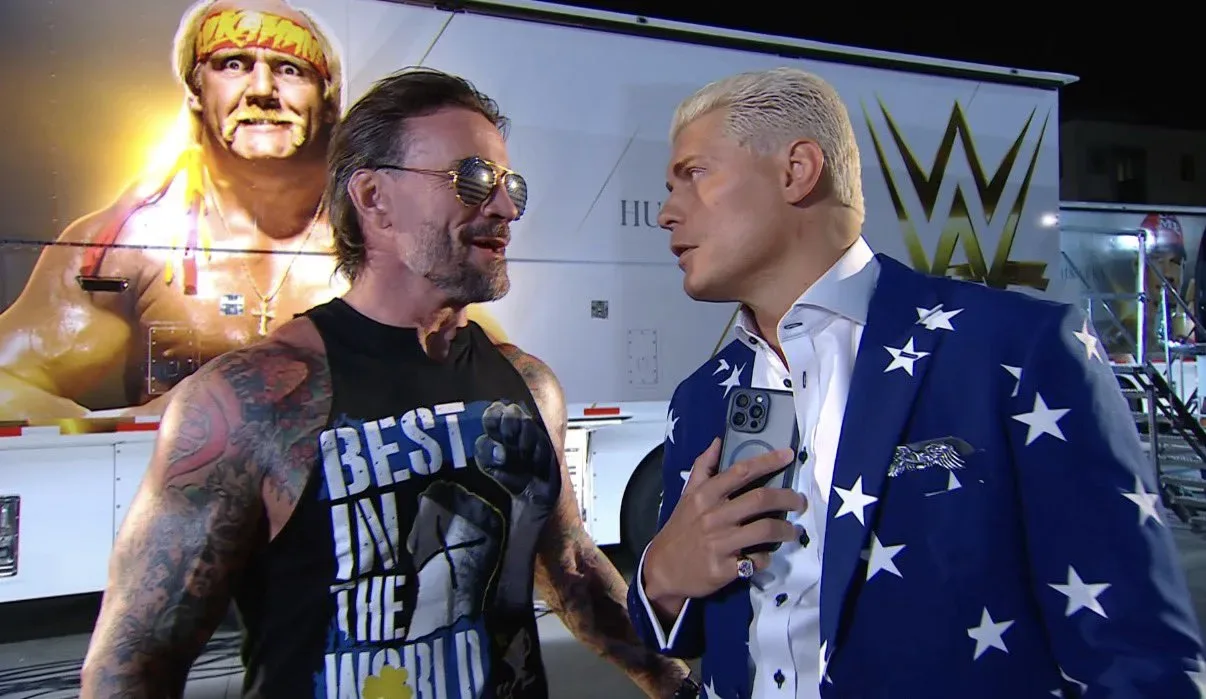
Team USA’s segments on WWE Raw and SmackDown reportedly drew internal praise during the buildup to Survivor Series 2026. WWE used segments for both Team USA and Team Mexico to promote their five-on-five match, but it was the response to Team USA’s television work that stood out. Those segments were described as “universally applauded,” with the people involved said to be happy with how everything came together.
The reaction also raised a question about what happens after Survivor Series. One source said they wouldn’t be surprised to see Cody Rhodes and CM Punk continue to share screen time once the event is over. That was an expectation, not word of a confirmed creative plan. The distinction matters: WWE can be pleased with what Rhodes and Punk brought to this particular buildup without having decided how, or even whether, to use them together again.
Team USA’s Buildup Gets a Positive Reaction Inside WWE
The praise covers Team USA’s segments across Raw and SmackDown. It wasn’t framed as a case of one line or one appearance getting a particularly good reaction. Instead, the assessment was about how the segments came together, with the people involved reportedly satisfied with the finished work. No particular moment was singled out as the reason for that response.
View the referenced post on X
There’s also a difference between internal approval and how a segment performs with viewers. The reaction here speaks to how the work was received inside WWE. It isn’t a claim about television ratings, live crowd response or which side fans favor going into the match. And while Team Mexico also had segments promoting the bout, the praise for Team USA doesn’t tell us how WWE evaluated the other side’s presentation. It’s a positive account of one team’s buildup, not a comparison between the two.
For more background on this topic, read Roman Reigns vs. Royce Keys for WWE World Heavyweight Title on Track to Headline Major Event.
For a five-on-five match, the television has to give viewers a reason to follow the teams as units, not just as a collection of individual wrestlers. The Team USA and Team Mexico labels make the sides easy to identify, but the segments are where WWE can show what those sides look like in practice. Who commands attention when a group is together? Which personalities are most interesting in the same scene? Those are useful questions in their own right, and the answers don’t necessarily expire when the match ends.
Why Cody Rhodes and CM Punk Stand Out
Rhodes and Punk were the two names singled out in the discussion about potential screen time beyond Survivor Series. The key phrase is screen time. It doesn’t tell us whether they would be allies, opponents or simply two wrestlers whose stories put them in the same segment. There’s no announced match or partnership attached to the comment, and no indication of when or on which show another appearance together might happen.
What makes the idea interesting is that neither wrestler needs a partnership to give him a reason to be on television. Both can carry a segment on their own, which gives a shared appearance a different challenge: the scene has to give both men something worth doing. The team format supplies an immediate answer because there’s a common match to promote. Outside that format, WWE would need another reason for their paths to cross, but it wouldn’t necessarily need to build an entire program around them to make a brief interaction worthwhile.
That’s why the suggestion is narrower, and more interesting, than saying WWE should put them in a tag team or book them against each other. A shared scene can be useful even when it doesn’t lead directly to a match. Two wrestlers can have a common interest for one night without becoming regular partners, just as they can disagree on television without immediately starting a feud. The positive reaction to the Survivor Series segments gives the idea some context, but it doesn’t point to any one of those outcomes.
What Could Carry Over After Survivor Series
The five-on-five match gave WWE a straightforward reason to devote time on both Raw and SmackDown to Team USA and Team Mexico. After the event, the question changes. It’s no longer about how to sell that particular match; it’s about whether anything from the buildup is worth revisiting on its own. Rhodes and Punk sharing another segment would be one way to do that without carrying over the full team setup.
There’s a difference between bringing back a pairing and bringing back the circumstances that first made it work. In this case, the group setting gave Rhodes and Punk an obvious subject and a reason to be there. A later segment would come with its own demands. If it serves one wrestler’s story more than the other’s, the appearance can still work, but it won’t necessarily have the same feel as a scene built around a common opponent or a team objective. That’s what makes the first appearance after the event, if there is one, more revealing than any speculation about a long-term direction.
It’s also possible Survivor Series will be the natural stopping point. A segment can accomplish exactly what WWE needs from it without setting up anything for the following week. The internal response doesn’t mean there has to be a follow-up, and one person’s view that more screen time wouldn’t be surprising isn’t evidence that it has been booked. Until WWE puts Rhodes and Punk in the same scene again or announces something involving both, the post-event possibility remains just that.
For now, the firm takeaway concerns the buildup, not the next storyline. Team USA’s work on Raw and SmackDown was reportedly well received internally as WWE promoted its Survivor Series match against Team Mexico. Rhodes and Punk are the names to watch once that match is behind them, but the first thing to look for is simply whether WWE gives them another reason to share the screen. Anything more specific would go beyond what’s known.

Darryl Polo
Darryl Polo is a passionate wrestling fan covering WWE, AEW, TNA and beyond. He loves great rivalries, breakout stars and the moments that keep fans talking long after the bell. How we work.