
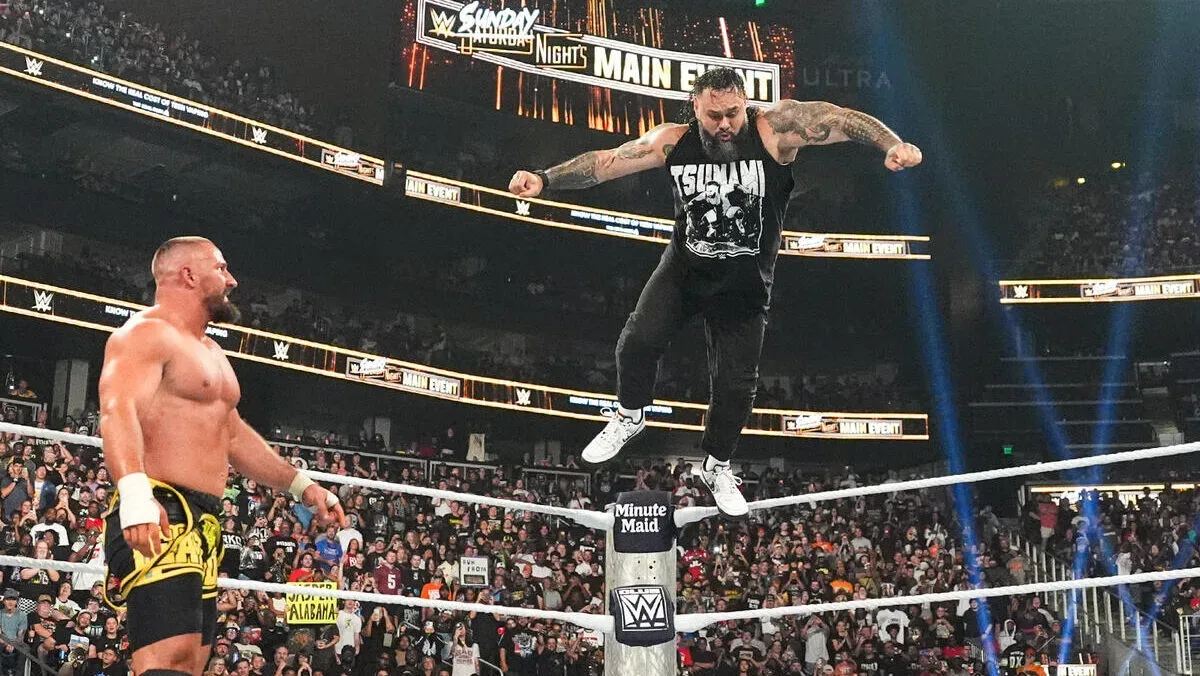
Bronson Reed is back on WWE programming, and the early internal reaction to his return has reportedly been highly positive.
Reed appeared at Sunday Night’s Main Event following an absence caused by a distal biceps tear earlier in 2026. His return came after a significant personal transformation during his time away from the ring, as Reed has said that he lost 100 pounds ahead of getting back to WWE television.
WWE personnel were reportedly very happy with the condition Reed was in when he arrived for his return. The positive response speaks to the effort Reed put into his rehabilitation and preparation, particularly given the challenge of returning from an injury affecting the arm and upper body of a performer whose style is built around size, power and explosive movement.
View the referenced post on X
For Reed, the return represents more than simply resuming an interrupted WWE run. It is the beginning of a new phase after months away from the weekly spotlight, and it comes with a noticeably different physical presentation than the one fans saw before his injury layoff.
For more background on this topic, read WWE Raw and SmackDown Producer, Writer Assignments Revealed for September 7 and September 11.
A demanding road back from a distal biceps tear
A distal biceps tear is a serious injury for any athlete, but it carries particular implications for a professional wrestler. The biceps plays a major role in pulling, lifting, controlling an opponent and absorbing force during the physical exchanges that make up a match. Even after a wrestler is medically cleared, regaining confidence in that area can be an important part of the process.
Reed’s WWE return indicates that he has progressed through the necessary rehabilitation to resume performing. However, the report that WWE was pleased with the condition he showed up in suggests that his progress was not viewed merely as meeting the baseline requirement for a return. The company was reportedly impressed by the overall state in which he presented himself after the layoff.
That distinction matters in a sport where a comeback can shape perception quickly. A wrestler returning after an extended absence is often immediately placed under a microscope by fans, colleagues and decision-makers. The first appearance can establish whether the performer looks ready, whether their character still connects and whether there is momentum behind the comeback.
Reed entered that moment having made a substantial change to his physique. A 100-pound weight loss is dramatic by any standard, and it inevitably alters how a wrestler is viewed visually. It can also lead to questions about how that change may affect a performer’s speed, stamina, movement and in-ring approach. Those questions will be answered over time as Reed works more matches, but the reported internal reaction indicates WWE liked what it saw upon his arrival back.
The transformation adds a new layer to Reed’s presentation
Bronson Reed has long been identified with a heavyweight presence. His offense and aura have been closely tied to physical force, the ability to overwhelm opponents and the sense that he can change a match with one impactful sequence. Those fundamentals do not disappear because of a body transformation, but a new condition can create opportunities for a wrestler to refresh the way he is presented.
The most immediate change is likely to be visual. Wrestling audiences notice a returning star’s appearance right away, especially when the difference is as substantial as Reed’s reported 100-pound loss. That attention can be valuable. It creates a natural point of discussion around a return and gives WWE a real-life development that can be acknowledged without needing to manufacture one.
At the same time, Reed’s established identity remains important. He is returning as a competitor known for a hard-hitting, big-man style, not as an entirely different character. The key question moving forward will be how WWE uses the transformation to enhance what already made Reed distinctive rather than moving too far away from the qualities that helped define him.
A leaner condition may allow for a different pace in certain situations, but Reed’s value is not dependent on becoming someone else. The appeal of a performer with his background is the combination of size, impact and athletic ability. If his return brings an even greater level of conditioning to that formula, it could make him a more versatile option across WWE programming.
Why WWE’s reaction is notable
Internal satisfaction with a wrestler’s condition can have practical significance beyond a compliment. WWE asks performers to meet rigorous demands: travel, training, live-event work, television production schedules and the physical strain of competing at a high level. Returning from injury requires a wrestler to show not only that they can take part in a match, but that they are prepared to handle the rhythm of a full WWE schedule.
Reed’s preparation appears to have made a strong impression. That is especially notable because injury absences can interrupt a performer’s momentum. A wrestler may leave television while a storyline is still developing, or simply lose the regular visibility needed to build a connection with the audience. The return then becomes an opportunity to reintroduce the talent and establish where they fit within the current landscape.
Being in strong physical condition gives Reed the best possible foundation for that next step. It does not guarantee a particular storyline, championship pursuit or placement on a brand, and there has been no specific direction confirmed for him beyond his return. But it does mean he has come back with a talking point that is both clear and authentic.
WWE can build on that in several ways without changing the essence of Reed’s act. The transformation itself can underline his discipline during recovery. His return can also be framed around determination, especially after an injury that kept him from competing earlier in the year. Or WWE can simply let his performance speak for itself and treat the visible change as evidence of a wrestler who used his time away productively.
The importance of patience after a return
While the positive reaction is encouraging, the next stage is always the most important one for a wrestler coming back from a significant injury. Returning to television is one milestone; establishing consistency in matches and rebuilding momentum is another. Reed will have to navigate the normal physical demands of WWE competition while also finding his footing in whatever creative role awaits him.
That process does not need to happen overnight. A return after months away can be most effective when it gives the audience time to recognize what has changed while also reminding them why the wrestler mattered before the absence. Reed has the advantage of a striking transformation, but the ultimate measure will be how that new condition translates into his work, his reactions from crowds and his place in WWE’s evolving roster.
There is also a human element that should not be overlooked. Losing 100 pounds while recovering from a serious arm injury requires sustained commitment. Professional wrestlers often speak about the difficulty of balancing rehabilitation with the desire to get back in the ring as quickly as possible. Reed’s return, and the reported approval of the condition in which he returned, point to a process that was approached with patience and purpose.
For now, the major takeaway is straightforward: Bronson Reed is back, he has returned after a distal biceps tear earlier in 2026, and WWE was reportedly pleased by the work he did during his absence. The 100-pound weight loss has given his comeback immediate visibility, while his eventual in-ring output will determine how the next chapter of his WWE career develops.
Sunday Night’s Main Event marked the end of Reed’s time on the sidelines. It also introduced a refreshed version of a familiar powerhouse, one who appears to have arrived back in WWE ready for the opportunity ahead.

Darryl Polo
Darryl Polo is a passionate wrestling fan covering WWE, AEW, TNA and beyond. He loves great rivalries, breakout stars and the moments that keep fans talking long after the bell. How we work.