
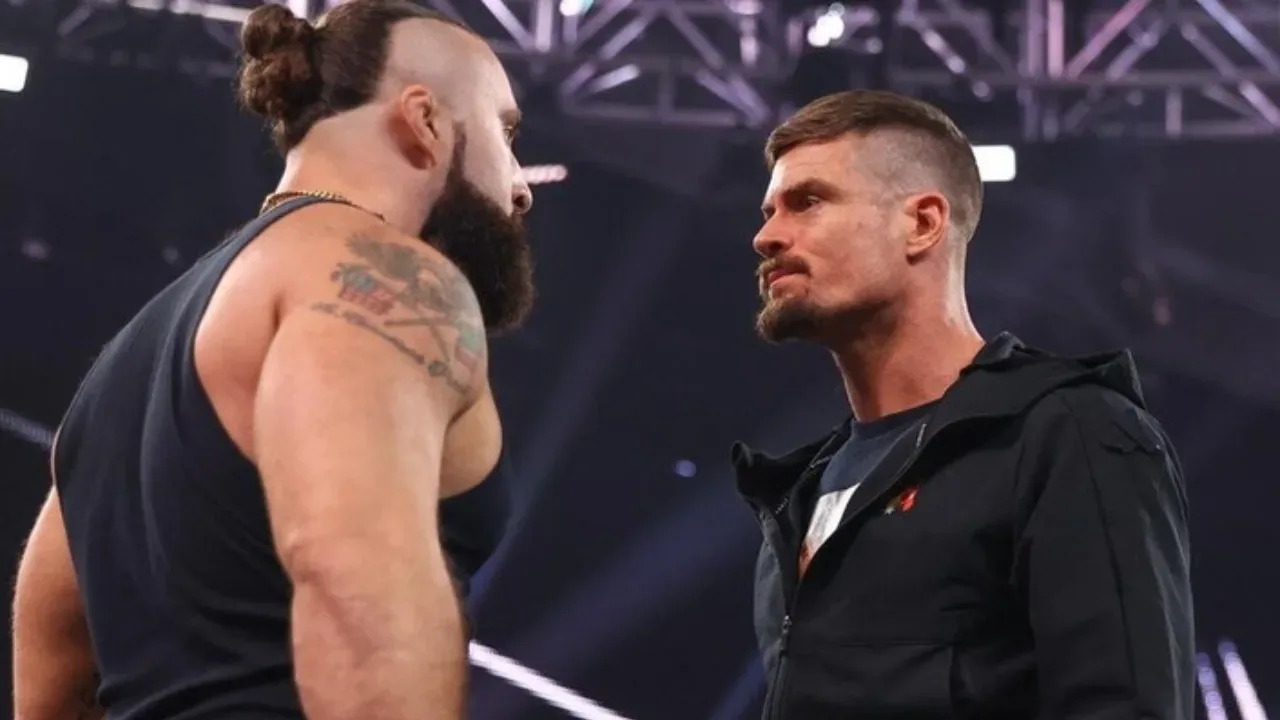
Tony D’Angelo has spent enough time in WWE NXT to understand that stability is rarely guaranteed. The brand is designed around growth, development, and movement, meaning a wrestler can build momentum alongside someone one week and find that person moved to the main roster shortly afterward. New talent can arrive just as quickly, creating a different creative environment and a new set of in-ring possibilities.
During a recent interview, D’Angelo addressed the challenge of working within that constantly evolving setting. His assessment was straightforward: longevity in WWE requires more than having a defined character or a reliable match formula. It requires the ability to adjust to new situations, new opponents, and changing opportunities.
“I think you have to be versatile and you have to be able to adjust, especially if you want to be in this job for a long time,” D’Angelo said.
That perspective carries particular weight coming from a performer who has watched numerous NXT talents rotate through the system over several years. WWE NXT remains a place where wrestlers work to establish their identities, sharpen their presentation, and prepare for potential opportunities on Raw or SmackDown. That structure creates an environment in which no one can assume the roster around them will remain the same for long.
For more background on this topic, read CJ Perry and Rusev Announce They Are Expecting Their First Child.
NXT’s Changing Roster Creates Constant New Challenges
D’Angelo pointed to the different paths wrestlers can take after arriving in NXT. Some are elevated to the main roster quickly, while others remain on the brand longer and must continue finding ways to stand out. In his view, either outcome can present risks if a performer is not prepared for the next stage.
He noted that some talent can be moved upward before gaining enough experience. When that happens, audiences may question why a performer has not yet fully connected or why their presentation is not as polished as expected. On the other hand, remaining in one place for too long without evolving can also lead to a wrestler being passed by as other talent gains momentum.
“I have seen a lot of people come and go and some people come in and they’re here for two seconds and then they get flung up to the main roster and then they got, you know, they were called up too early,” D’Angelo said. “They didn’t have enough experience and then people go, ‘ah, what the heck?’ Then they’re gone.”
The observation reflects one of the defining tensions of WWE’s developmental system. A call-up is often viewed as the objective, but arriving on a larger stage is only one part of the process. Wrestlers also need the reps, confidence, adaptability, and understanding of their own act necessary to sustain a role once the opportunity is there.
For talent still in NXT, the opposite concern can be equally significant. A wrestler who does not expand their approach, refresh their character, or react to shifts in the roster can lose ground. NXT has always featured new signings, athletes transitioning from other sports or entertainment backgrounds, experienced names entering the brand, and rising prospects pushing for television time. Each arrival changes the competitive picture.
Recent roster movement has continued that pattern, with names such as Cruz Montana and Grayson Waller joining younger talent signed to WWE’s developmental brand. Their presence adds further variety to a roster that is already built around performers at different stages of their careers. For established NXT acts, that can mean adjusting to unfamiliar opponents and finding fresh ways to maintain their place on the show.
D’Angelo Identifies the Danger of Standing Still
D’Angelo’s comments did not frame adaptation as a vague professional virtue. He described it as a practical necessity for avoiding stagnation. In an environment where performers are evaluated continually, staying the same while the people and circumstances around you change can be costly.
“They sit for too long and they don’t change their stuff up and then they eventually get passed on too,” D’Angelo said. “So, yeah, you have to be versatile and be able to adapt for this job. I think that’s super important.”
That idea applies across multiple aspects of a wrestler’s work. In-ring versatility can help when facing opponents with dramatically different styles. Character flexibility can matter when alliances, rivalries, or audience reactions change direction. Promo delivery, pacing, presentation, and the ability to work within a new storyline can all become more important as a wrestler moves through WWE’s system.
For D’Angelo, there is also a difference between adapting and abandoning what makes a performer distinct. His own NXT identity has been built around a recognizable character, but he has also undergone a character shift during his time on the brand. That combination of maintaining a core identity while responding to changing creative circumstances is central to the balance he described.
A wrestler does not necessarily need to reinvent everything at once to show evolution. Sometimes the adjustment is in how a character responds to conflict. Sometimes it is a new in-ring wrinkle, a change in motivation, or an altered relationship with allies and opponents. The larger point is that performers need to show they can handle what comes next rather than relying solely on what worked before.
Being Coachable Matters Alongside Adaptability
D’Angelo also stressed another quality he believes is vital in WWE: being coachable. NXT provides an environment where talent work under guidance while developing for a national WWE audience. That process naturally involves feedback, changes, and the need to absorb instruction from those helping shape a performer’s progression.
He acknowledged that stubbornness can be part of a wrestler’s personality, including his own at times. But he emphasized the importance of not allowing that trait to prevent growth.
“You also have to be coachable, and, you know, some people are stubborn, which I understand. I can be stubborn at times as well,” D’Angelo said.
The willingness to take direction does not mean a performer lacks conviction in their character or their work. Instead, it can allow a wrestler to refine those instincts and make adjustments before a weakness becomes a larger problem. For someone working toward a long career, that openness can be as valuable as athletic ability or charisma.
NXT’s purpose makes that especially relevant. The brand gives talent a platform to perform in front of a live audience and on WWE television, but it is also a place for experimentation and continued improvement. Wrestlers must learn what connects, what needs refinement, and how to respond when plans change. The more quickly a performer can process that feedback, the better positioned they may be when larger opportunities arrive.
D’Angelo Backs His Ability to Handle Change
While discussing the broader demands of the job, D’Angelo expressed confidence in his own capacity to adjust. Having seen the NXT landscape change around him, he believes he has become effective at navigating whatever situation is put in front of him.
“I think I’m very good at adapting to my situation, whatever I’m in,” D’Angelo said.
That confidence is important for any wrestler operating on a roster where plans can shift quickly. A new opponent, a sudden change in a faction dynamic, an emerging rivalry, or movement elsewhere in WWE can all alter a performer’s immediate direction. Being able to remain effective through those developments can help a talent avoid being defined by one moment or one specific program.
D’Angelo’s message is ultimately one about endurance. WWE NXT is not static, and neither is a career within WWE. Talent can rise quickly, encounter setbacks, find themselves needing to rebuild, or face a roster that looks completely different from the one they entered. In that setting, versatility and coachability are not simply desirable traits. They are tools for survival and sustained relevance.
As NXT continues to bring in new names while sending others toward the main roster, D’Angelo’s outlook remains clear. Wrestlers who want to stay in the conversation must be prepared to evolve, accept guidance, and make the most of every changing circumstance placed in front of them.

Darryl Polo
Darryl Polo is a passionate wrestling fan covering WWE, AEW, TNA and beyond. He loves great rivalries, breakout stars and the moments that keep fans talking long after the bell. How we work.