
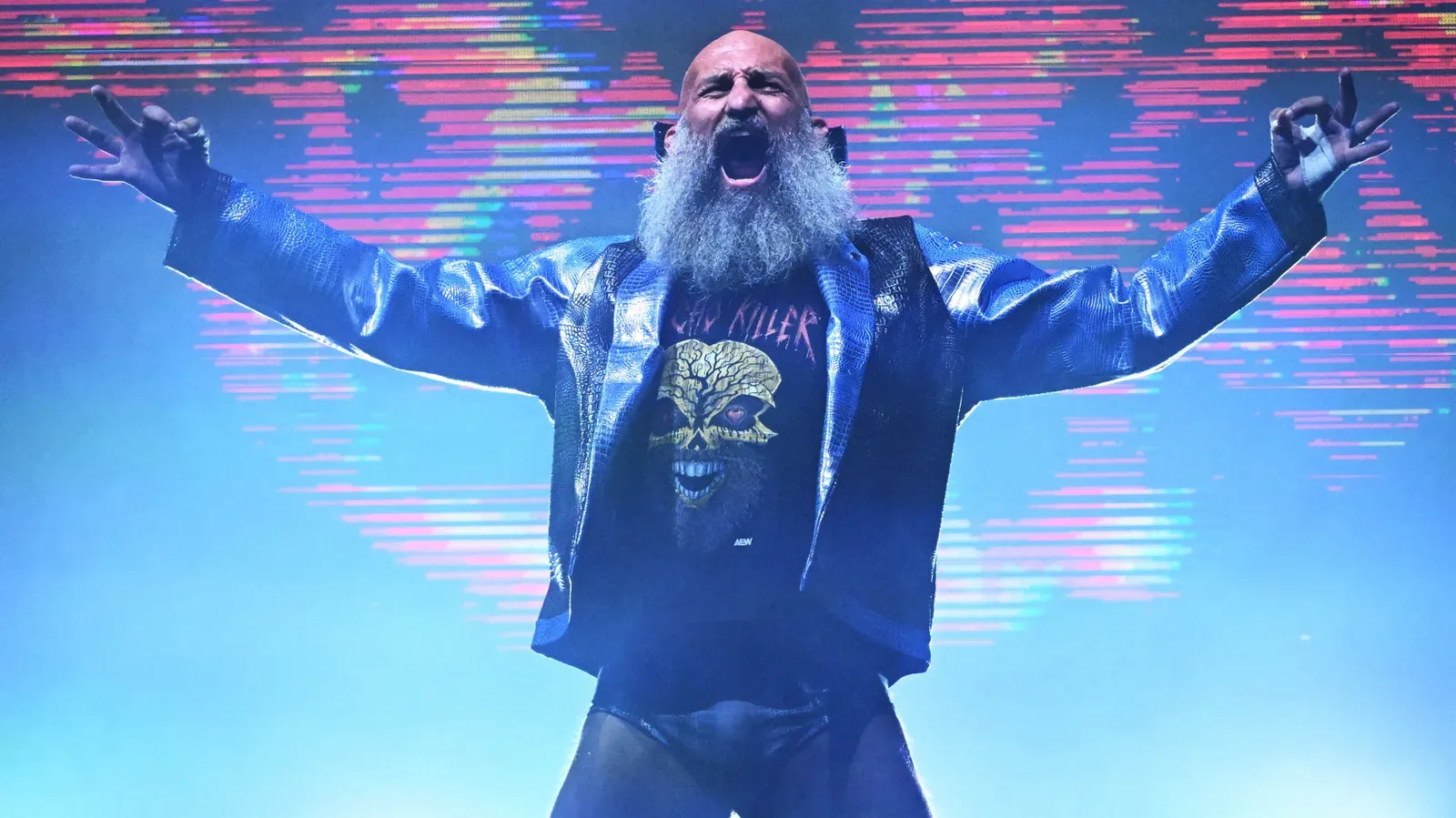
Tommaso Ciampa’s silent walk to the ring at WWE NXT TakeOver: New Orleans remains one of the most distinctive entrance choices of the Black and Gold era. There was no familiar music cue to prepare the audience. There was no song to soften the reaction or give fans another sound to focus on. Instead, when Ciampa emerged for his 2018 match with former DIY partner Johnny Gargano, the building’s hostility became the soundtrack.
It was an unusually spare presentation for a major wrestling event, and that was precisely what made it memorable. Ciampa entered through a wave of boos and jeers from an NXT crowd deeply invested in the breakdown of his friendship and tag team with Gargano. The silence placed every chant, every reaction, and every second of Ciampa’s walk under a microscope. Rather than feeling empty, the lack of music made the arena seem louder.
Speaking on Battleground Podcast, Ciampa explained that the choice was not something he knew would be successful before he tried it. He wanted to take the chance, even with the possibility that the execution could have failed in front of one of NXT’s biggest crowds.
“I don’t think I did know [it would work],” Ciampa said. “I wanted to take the risk, that was for sure, and I’m happy it paid off the way it did. It could’ve went the other way, that’s for certain, and I had that thought in my head.”
For more background on this topic, read Zoey Serrano Details Emotional WWE Release Call After Knee Injury Recovery.
That uncertainty is an important part of why the entrance has endured. Wrestling presentation often relies on the immediate recognition of a theme song. A wrestler’s music can announce their character, signal a crowd response, and give a performer a sense of rhythm before they even reach the ring. Taking that familiar element away creates a different kind of pressure. If the crowd does not react, the silence can be uncomfortable. If the crowd is fully engaged, however, the reaction becomes far more direct.
Ciampa’s situation with Gargano gave the concept the right setting. Their story had moved from a celebrated partnership into a bitter personal issue, and Ciampa had become a focal point for the audience’s anger. The fans did not need music to identify the moment or understand whom they were supposed to oppose. Their response supplied everything the entrance needed.
A Character Choice Built Around the Crowd
The decision also fit Ciampa’s onscreen persona at the time. A conventional entrance theme can invite a response, but Ciampa’s silent entrance made it appear as though he did not need that invitation. He walked into the noise without an attempt to energize the audience, win them over, or distract from their contempt. The presentation made the crowd part of the act while allowing Ciampa to remain detached from it.
That relationship between performer and audience is what transformed a simple production decision into a defining character detail. The crowd was not merely reacting after the entrance had happened; the crowd effectively became the entrance. Every boo and chant reinforced the hostility that had been built around Ciampa and Gargano’s rivalry.
Ciampa continued making silent entrances for months after TakeOver: New Orleans, demonstrating that the idea was not limited to one dramatic night. What began as a risk became a feature associated with his NXT run, particularly during a period when the audience’s reactions to his character were intense and immediate. The choice stood out because it trusted the fans to supply the atmosphere rather than relying on the standard cues of a televised wrestling presentation.
Ciampa said he did not initially anticipate the degree of attention the entrance would receive throughout wrestling or the way it would remain in fans’ memories. Years later, he is still asked about the choice. That lasting interest speaks to how strongly the moment was connected to the wider Ciampa-Gargano story, as well as to the identity of NXT’s audience during that period.
The Black and Gold-era crowd had a reputation for vocal investment in long-running stories and character developments. In Ciampa’s case, that investment allowed silence to become an advantage. The arena’s reaction was already large enough to carry the walk to the ring. Removing the music did not leave a gap; it exposed the emotional temperature of the building.
Ciampa Sees Another Version of the Idea
While the original silent entrance was rooted in fan animosity, Ciampa is interested in exploring the concept from the opposite side of the audience relationship. He told Battleground Podcast that he would like to revisit it one day as a babyface, with the crowd’s support replacing the boos that defined the earlier presentation.
“It’s one of those things that I’d love to recreate one day with the tide flipped,” Ciampa said. “I’d love to recreate that as a babyface one day because I think there’s a cool element there to be had.”
The idea has clear potential because the original entrance was not only about being hated. It was about stripping an entrance down to the audience response. With the reaction reversed, the same format could create a very different emotional effect. Cheers, chants, and sustained support could give a babyface silent entrance the same raw quality Ciampa found as a villain, while making it feel like a tribute to the connection between wrestler and crowd.
It would not simply be a repeat of the 2018 version. The key to the original was that it matched the moment, the character, and the audience’s feelings toward Ciampa. A future silent entrance would need its own reason to exist. Ciampa’s comments suggest he understands that distinction. He is not describing silence as a gimmick that automatically works; he is describing a tool that works when the crowd is emotionally invested enough to fill the space.
That is also why the concept remains difficult to duplicate. A silent entrance can be copied mechanically, but the effectiveness depends on circumstances that cannot be manufactured by production alone. The story has to be strong enough, the character has to be clear enough, and the crowd has to be eager enough to make its own voice the central element of the presentation.
AEW Could Be the Setting for a Return
If Ciampa brings the silent entrance back, it would most likely happen outside WWE. Earlier this year, Ciampa allowed his WWE contract to expire after spending more than a decade with the company. He debuted in AEW shortly afterward, opening the possibility that one of the most closely remembered pieces of his NXT presentation could eventually be reimagined in a new environment.
There is no indication that Ciampa has set a date or a specific circumstance for such a return. His comments were framed as an idea he would like to explore rather than a confirmed plan. Still, the prospect is notable because silent entrances are now so closely linked to a pivotal chapter of his career. Reintroducing the concept in AEW would invite comparison to the NXT version, but it could also allow Ciampa to present it with an entirely different crowd response and character direction.
For now, Ciampa’s reflection reinforces why the TakeOver: New Orleans entrance remains a landmark moment. It succeeded because it was willing to risk a break from wrestling convention. In a business where theme music is frequently inseparable from a performer’s identity, Ciampa briefly removed that safety net. The audience responded so loudly that nothing else was needed.
That remains the lesson of the moment: silence in wrestling is rarely truly silent. In the right situation, it gives the crowd a chance to say everything.
In pictures

Darryl Polo
Darryl Polo is a passionate wrestling fan covering WWE, AEW, TNA and beyond. He loves great rivalries, breakout stars and the moments that keep fans talking long after the bell. How we work.