
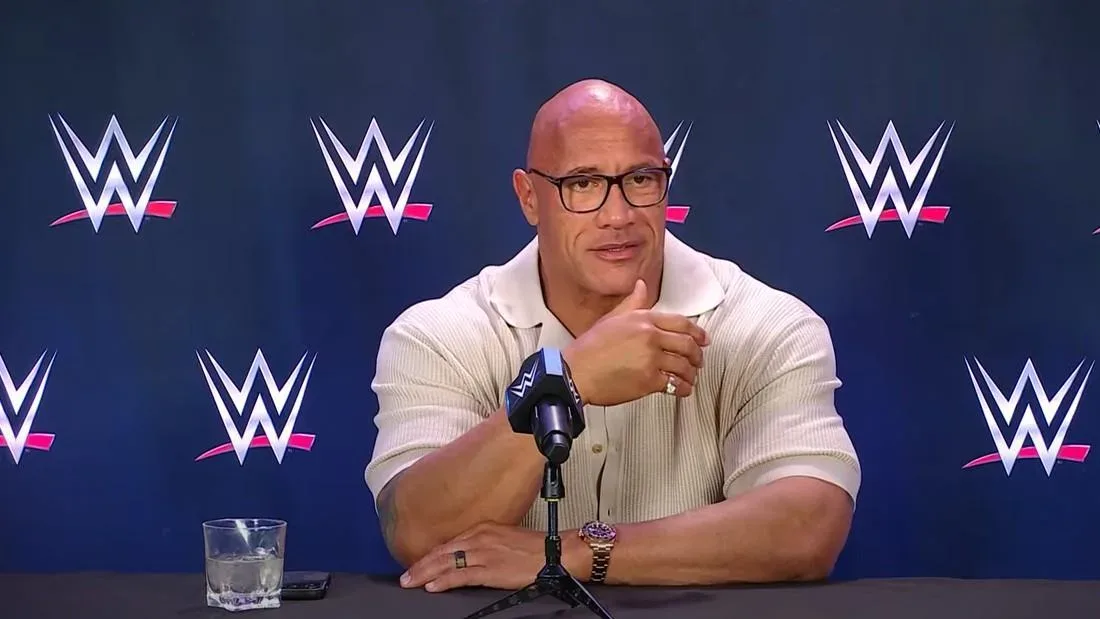
The Rock has expanded on the message behind his recent tribute to PAC, making clear that he does not view the professional wrestling industry through the lens of competition when the community is mourning the death of one of its own.
Earlier this week, following the announcement of PAC’s passing, The Rock shared a video tribute to the late wrestler. The post prompted discussion among fans about the divisions that can exist between promotions, particularly given the long-standing competitive narratives surrounding major companies and the performers connected to them.
In a subsequent Instagram comment, The Rock addressed that reaction directly. The WWE icon, who has repeatedly spoken about growing up around the business as a member of the Anoa’i family, said a loss within wrestling changes the perspective entirely. For him, the people affected by the tragedy matter more than any rivalry between organizations.
View the referenced post on X
“You’re right brother, and humanity matters to me. I was born into this business and I’ve seen it all, but when one of our own passes away, I don’t care nor do I see ‘our competition’, I care about the wrestlers and how it affects them. I’ve been there. To me, humanity matters most.”
For more background on this topic, read Josh Alexander Unifies MLP Canadian Championship at Northern Rising.
A Message Beyond Promotional Lines
The Rock’s comments were a direct statement of solidarity at a time of grief. While professional wrestling has always included competition between companies, television brands, and individual stars, his response emphasized that those boundaries carry far less weight when performers and their loved ones are dealing with a personal loss.
His wording also reflected the unusually interconnected nature of wrestling. Even when wrestlers work for different promotions, they often share years of history through training schools, independent events, international tours, locker rooms, and personal friendships. A wrestler’s influence can extend well beyond a current employer, and news of a death can reverberate across the entire industry.
That is the context The Rock highlighted when he referred to PAC as “one of our own.” Rather than framing the tribute around affiliations, brands, or business interests, he centered the human impact on wrestlers who knew PAC and on the wider community that has been affected by the news.
The Rock did not offer further details about PAC’s passing in his comment. Instead, he kept the focus on compassion for the people left to process the loss.
The Rock’s Connection to Wrestling’s Larger Family
Although The Rock has become one of the world’s most recognizable entertainment figures outside the ring, his ties to wrestling remain central to his public identity. His family’s history in the industry stretches across generations, and he has often described professional wrestling as a world that shaped him long before he became a top WWE star, Hollywood leading man, and business executive.
That background informed his latest remarks. Saying he was “born into this business” was not simply a reference to his own career; it underscored the kind of lifelong perspective that comes from watching the industry’s highs and lows unfold over decades. The Rock’s point was that the business can be fiercely competitive, but its participants understand the emotional consequences when tragedy touches a colleague.
For performers, competition can be a defining part of their professional lives. Wrestlers are measured by crowd reactions, championship success, television opportunities, match quality, and their ability to stand out in a crowded field. Promotions compete for viewers, ticket sales, media attention, and cultural relevance. Fans, meanwhile, are often deeply passionate about the companies and talent they support.
Yet The Rock’s statement argued that mourning is not a space for those divisions. His tribute and subsequent explanation placed the well-being of wrestlers first, stressing that the response to a death should be grounded in empathy rather than promotional allegiance.
PAC’s Impact Reached Across the Wrestling World
PAC built a reputation as one of the most distinctive athletes of his generation, known for an intense in-ring approach, a relentless physical style, and a presentation that made him immediately recognizable. Over the course of his career, he competed on major stages and developed a fan following that crossed geographic and promotional lines.
That kind of career naturally produces connections throughout the industry. Wrestlers may encounter one another as opponents, teammates, traveling peers, or friends away from the cameras. They can work together in one setting and find themselves on different sides of the industry years later, while still carrying the shared experiences that come with life on the road and inside a locker room.
The Rock’s decision to honor PAC publicly reflected that broader reach. A tribute from someone of The Rock’s stature carries substantial visibility, but his follow-up comment showed that the purpose was not to make the moment about himself or about a company association. It was an expression of respect for a fellow wrestler and recognition of the pain being felt throughout the profession.
His comments also serve as a reminder that the public side of wrestling can obscure the personal bonds that exist behind it. Fans may see contracts, logos, storylines, and rivalries. The people involved in the business often see colleagues with shared sacrifices: time away from family, physical wear and tear, difficult travel schedules, and the pressure of performing in front of audiences night after night.
Why the Conversation Resonated
The discussion surrounding The Rock’s video demonstrated how quickly questions about company affiliations can enter wrestling discourse, even in situations of loss. For many fans, promotional identity is an important part of how they follow the industry. It informs which weekly programs they watch, which events they attend, and which wrestlers they champion.
But The Rock’s response drew a clear line between healthy enthusiasm for wrestling and the need for decency during a tragedy. He did not deny that competition exists. In fact, his phrasing acknowledged the term that had become part of the conversation. His position was that competition becomes irrelevant when someone within the wrestling community has died.
There is a long history of wrestlers from different eras and organizations setting aside professional differences in moments of grief. Memorials, personal messages, and private support often reveal a side of the industry that is less visible than its rivalries. The Rock’s comment fits squarely within that tradition, while also reaching an enormous audience due to his global profile.
His emphasis on humanity was particularly direct. Rather than speaking in abstract terms about respect, he focused on the wrestlers who are personally impacted. That distinction matters because it acknowledges the immediate emotional reality for PAC’s peers, friends, and those who shared meaningful portions of their careers with him.
Focus Remains on Mourning and Support
The Rock’s tribute and explanation have placed the attention where he believes it belongs: on remembering PAC and supporting those affected by his death. In an industry that often thrives on debate, comparison, and conflict, his message called for a pause from those instincts.
“I care about the wrestlers and how it affects them,” The Rock wrote. It was a concise but significant statement, particularly from a figure who has seen wrestling from nearly every possible angle. He has experienced it as a child in a wrestling family, as an active performer, as a major WWE attraction, and as someone whose career expanded far beyond the ring.
For The Rock, that experience has led to a simple conclusion in this moment: the wrestling business may be divided by promotional competition, but grief should not be. His comments made clear that when a wrestler passes away, compassion for the people connected to that wrestler has to take priority.
As the wrestling world continues to mourn PAC, The Rock’s response stands as a call for unity across those familiar lines. The lasting focus, he said, should be humanity.

Darryl Polo
Darryl Polo is a passionate wrestling fan covering WWE, AEW, TNA and beyond. He loves great rivalries, breakout stars and the moments that keep fans talking long after the bell. How we work.