
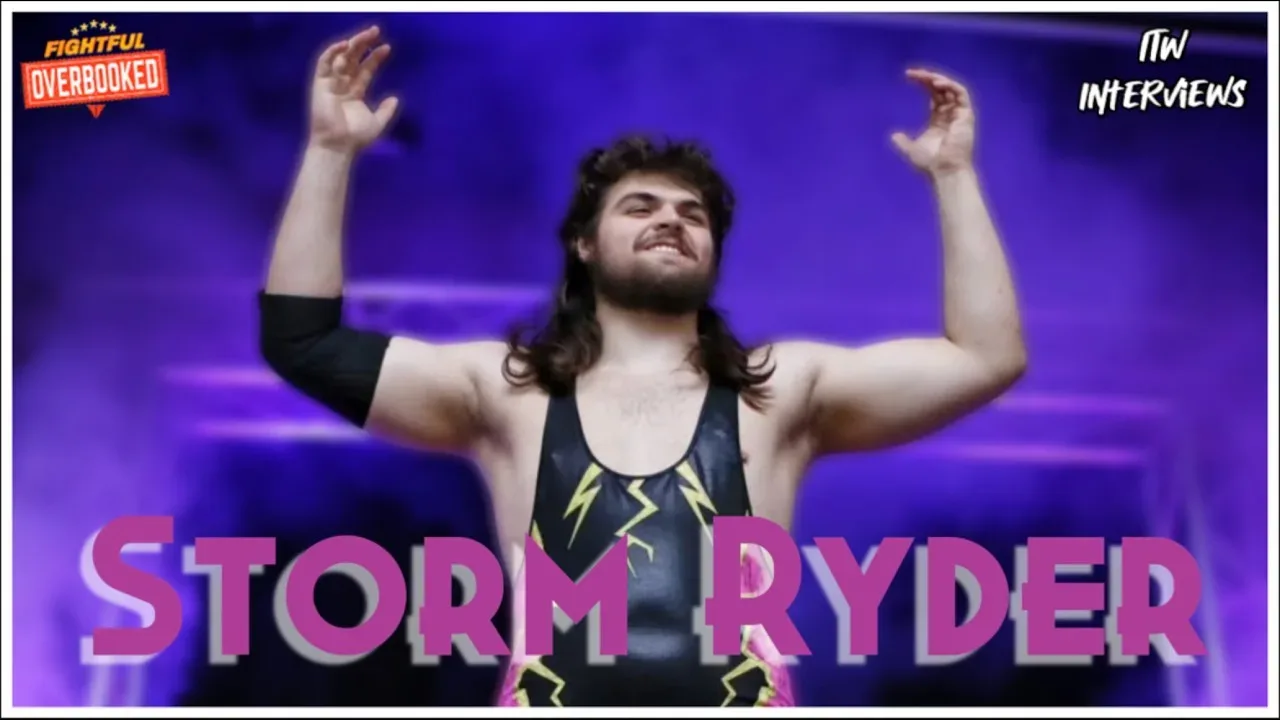
Storm Ryder has credited a group of respected wrestling coaches and peers for helping shape his development on the independent scene, with Billy Gunn and Jonathan Gresham standing out as particularly important influences.
Ryder, who has made frequent appearances for Mystery Wrestling, discussed his training experiences and the relationships he has maintained with those who have guided him. His comments painted a picture of a wrestler who has actively sought instruction beyond one setting, traveling alongside his brother and working to absorb lessons from established names with very different perspectives on the industry.
At the center of Ryder’s recollection was Billy Gunn, whom he described as both a strong coach and a supportive person. Ryder also made clear that Gunn’s approach was not simply about encouragement. There was a demanding, no-nonsense side to the training, one Ryder recognized as a form of tough love.
“Billy Gunn, great coach, great human being. I love Billy, but there was definitely a tough love aspect, and that’s kind of how it goes, at least for the football side of it, too,” Ryder said.
For more background on this topic, read GCW Fight Club Night One Results: VNDL48 Wins The Art Of WarGames.
That comparison to football is revealing. Wrestling training often requires performers to work through physical fatigue, learn under pressure, take direct criticism, and demonstrate that they are committed to the craft rather than merely attracted to its spotlight. Ryder indicated that his football background had already given him some familiarity with that type of environment. As a result, Gunn’s firm style was something he could understand within the broader context of athletic coaching.
For Ryder, the key was showing genuine investment. He said Gunn responded once he saw how seriously Ryder and his brother approached their pursuit of professional wrestling. Their commitment was reflected in a shared decision to spend several months at the Nightmare Factory, where they trained while looking to expand their opportunities and establish themselves more widely.
“Billy, once he sees that you are invested and that you care and that you love pro wrestling, like me and my brother do, like we went on that journey together,” Ryder said. “We went to the Factory for four or five months. We did that together and because we wanted to chase out and branch out and get our names out there and train and learn from the very best.”
The Nightmare Factory has become an important stop for wrestlers seeking to improve their foundational skills while gaining exposure to a variety of modern wrestling approaches. For Ryder, the experience was not an isolated training camp but part of a larger effort to keep evolving. Training with his brother also gave the process an added layer of accountability, as both men were working toward their goals at the same time.
Ryder’s comments suggest that Gunn’s standards came with a purpose: he wanted to identify trainees who would put in the work and respect the opportunity. Once Ryder felt that Gunn recognized that commitment, the relationship became a meaningful part of his progression.
Ryder expressed gratitude not only to Gunn, but also to Gresham and coach Luke Sampson. While he named all of those figures as valuable teachers, he spent considerable time discussing the continued influence Gresham has had on his wrestling.
“We’re so thankful for Billy Gunn, for John Gresham, who is another coach at there. Coach Luke Sampson, very thankful for all of our coaches,” Ryder said.
Gresham’s reputation has long been tied to technical precision, detailed ring psychology, and an analytical approach to match construction. That background appears to have made him an especially useful mentor for Ryder. Rather than describing the training as something that ended once he left the facility, Ryder explained that he and Gresham have kept in touch since that initial period.
That ongoing communication has allowed Ryder to seek feedback when preparing for or reviewing matches. In an independent wrestling landscape where performers may work numerous promotions, face different opponents, and need to develop quickly in public, access to a trusted veteran’s perspective can be highly valuable. Ryder said he can contact Gresham directly when he wants thoughts on his work.
“That was, we have learned so much from him. It is almost unreal how much I’m able to pick his mind really, and now we trained with him obviously the first year around and we stayed in contact since then,” Ryder said. “So yeah, if there’s ever a match or anything, I can text him. I can say, ‘hey, do you have any feedback? What do you think of this?’”
The ability to revisit a performance with a coach can be just as significant as learning drills in a wrestling ring. In-ring execution is only one part of developing as a performer. Wrestlers also need to understand timing, pacing, emotional investment, character consistency, audience response, and the choices that make a match feel distinct. Ryder’s comments indicate that Gresham is someone he trusts to assess those areas honestly.
Ryder called Gresham “a great mind in wrestling,” while adding that the feedback he receives often overlaps with observations from his brother. That alignment appears to reinforce Ryder’s confidence in the direction of his work. When multiple people whose opinions he values recognize similar strengths or areas for improvement, it gives him a clearer framework for applying those lessons.
“Gresh is a great mind in wrestling, and I’ve noticed a lot of the things that he says and will give me credit or feedback on in the match. It’s a lot of the things my brother will do, too,” Ryder said.
Ryder also spoke glowingly about the wrestlers around him, naming Gresham, Stu, and his brother among the best in the world. Those remarks underscore how Ryder views his own advancement: not as an individual accomplishment separated from his environment, but as the product of continued learning from people he believes are exceptional at what they do.
“I think Gresh is one of the best wrestlers in the world. I think Stu is one of the best wrestlers in the world. I think my brother is also one of the best wrestlers in the world,” Ryder said. “So that’s why I think I am doing so well right now is because I have had the success of all these coaches as well. So I have taken all that and now I’m able to apply that.”
That perspective is notable for a wrestler continuing to build a name on the independents. Ryder did not frame training as a checklist to complete before beginning a career. Instead, he described a process of collecting knowledge, maintaining relationships, and applying advice in real time as opportunities arise.
There is also a clear balance in the influences Ryder highlighted. Gunn represents the value of high expectations, discipline, and demonstrating commitment. Gresham represents detailed technical insight and an accessible source of post-match evaluation. Sampson and the wider Nightmare Factory environment are part of the foundation that gave Ryder and his brother a place to push themselves over a sustained period.
For independent wrestlers, opportunities to learn from accomplished performers can be transformative, but Ryder’s comments emphasize that access alone is not enough. The trainee must show dedication, be willing to hear difficult criticism, and continue using those lessons after the formal training sessions end. Ryder believes he and his brother demonstrated that commitment, and he remains appreciative of the coaches who responded to it.
As Ryder continues appearing on the independent circuit, the combination of Gunn’s tough-love standards and Gresham’s continuing feedback figures to remain part of his approach. His remarks make clear that he sees development as an ongoing pursuit, rooted in both the physical demands of training and the willingness to keep listening to experienced minds.

Darryl Polo
Darryl Polo is a passionate wrestling fan covering WWE, AEW, TNA and beyond. He loves great rivalries, breakout stars and the moments that keep fans talking long after the bell. How we work.