
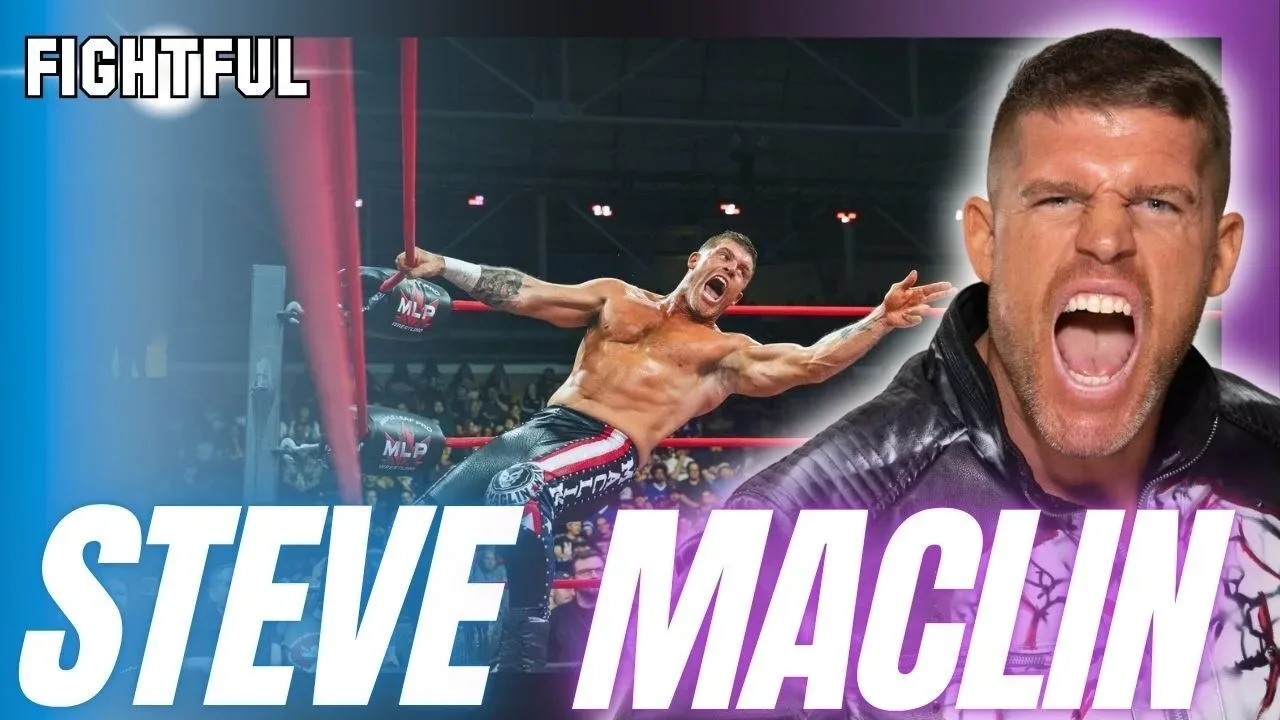
Steve Maclin is still carrying the emotional high of Maple Leaf Pro Wrestling’s Northern Rising, where he stepped into the ring with Adam Copeland in a Street Fight only weeks after suffering a broken fibula.
For Maclin, the match was not simply another major booking. It represented the meeting point of a difficult recovery, a high-profile opportunity, and the chance to share a ring with a wrestler he has long viewed as one of his heroes. Speaking after the event, Maclin made clear that Northern Rising remains a deeply personal career moment.
“I’m feeling great. I’m still buzzing from Northern Rising,” Maclin said. “It’s like a dream come true of a matchup and a day that I will cherish and now probably chase the rest of my career.”
The Street Fight placed Maclin opposite Copeland at one of Maple Leaf Pro Wrestling’s most notable events. Copeland’s career has made him one of the most recognizable names in modern professional wrestling, and Maclin described the experience of facing him as a balance between professional confidence and the excitement of a lifelong fan.
For more background on this topic, read Donovan Dijak Wins PROGRESS Proteus Championship at Chapter 199: Bonestorm.
Maclin said the occasion allowed him to feel settled in his role as an experienced performer while also reconnecting with the part of him that first fell in love with wrestling.
“Just for that feeling of comfort and being an adult in this business, but then also still having that inner child in me enjoy every moment and then looking across at one of my heroes,” Maclin said. “Dude, it’s so cool.”
A Short Turnaround From a Broken Fibula
What made Maclin’s Northern Rising appearance especially significant was the timeline leading into it. Ten weeks before the event, Maclin broke his fibula while wrestling Isaiah Broner at NCG Drive To Glory.
A broken fibula can create obvious concerns for any professional wrestler, particularly given the demands placed on the lower body during matches. Wrestling requires repeated movement, balance, footwork, impact absorption, and the ability to work safely with another performer. Maclin’s match with Copeland was also a Street Fight, a stipulation that carries its own physical intensity and makes a successful return from a leg injury even more meaningful.
Maclin said his leg is doing well after the injury and confirmed that he had been cleared before Northern Rising. He also stressed that clearance and rehabilitation do not necessarily mean the work is completely finished.
“Leg is feeling good,” Maclin said. “Just got done with doing a leg workout and it’s been a road to recovery and rehabbing. I’m still going to rehab probably for a long time, regardless, but at the same time I’m back to full strength.”
The distinction is important. Maclin is not presenting the recovery as something that ended the moment he was able to return to the ring. Instead, he is approaching it as an ongoing process, continuing his work in the gym while preparing for whatever comes next in his wrestling schedule.
His comments indicate that he was fully cleared before the Copeland match and felt ready to compete at Northern Rising. With the leg back at full strength, Maclin said he is prepared to take opportunities wherever they arise.
“I’ve been fully cleared since before Northern Rising and I’m ready to just take on the world wherever I’m needed,” Maclin said.
Northern Rising Delivered a Major Personal Milestone
Maclin’s reflections on the Copeland match centered less on the mechanics of the Street Fight and more on what the moment meant to him. That is understandable given the circumstances. Returning from a broken fibula within a relatively brief period would be meaningful on its own. Doing so for a matchup against an established hero adds another layer to the story.
Professional wrestling often creates moments where a performer’s personal fandom and professional career collide. Maclin framed Northern Rising as exactly that type of experience: a major assignment that he could approach as a seasoned wrestler while still appreciating the rare feeling of standing across the ring from someone who influenced him.
He described the day as one he will cherish, and his comments suggest that it has set a new standard for the type of emotion and satisfaction he wants to pursue moving forward. There was no indication from Maclin that the match marked an endpoint. Quite the opposite, he said it gave him a feeling he intends to chase throughout the remainder of his career.
That outlook fits the larger picture of Maclin’s return. Rather than speaking only about getting through an injury, he spoke about moving beyond it and pursuing the next challenge. Northern Rising was a prominent stage for that message because it showed him competing after the setback in a match designed to be physically demanding.
Rehabilitation Remains Part of the Plan
While Maclin is optimistic about his condition, he did not dismiss the need for continued maintenance. His comments about likely rehabbing “for a long time” point to a practical approach after the fibula injury.
For wrestlers, returning to action is only one stage of recovery. Conditioning, strength training, mobility work, and continued monitoring can all remain priorities after a performer is medically cleared. Maclin’s update makes clear that he has resumed leg workouts and considers himself back to full strength, but he is also committed to the work required to keep the injury from becoming an obstacle again.
The measured tone of that update stands alongside his clear enthusiasm. Maclin is not describing himself as tentative or limited. He says he is ready to take on the world. At the same time, he is acknowledging that recovery remains something to manage responsibly over the long term.
That combination of confidence and continued rehabilitation offers a straightforward picture of where he stands: cleared, active, training, and focused on maintaining the strength that helped him reach Northern Rising.
A Look Back at the Road to the Match
Fans who want to follow Maclin’s route from injury to Maple Leaf Pro Wrestling’s Northern Rising can do so through a two-part documentary on the Boots To Boots YouTube channel. The project highlights his journey to the event, including the road back from the broken fibula and the buildup to the Copeland Street Fight.
The documentary provides added context to the stakes surrounding Maclin’s return. His appearance at Northern Rising was the result of a compressed recovery period following the injury at NCG Drive To Glory, where he had been wrestling Isaiah Broner. By the time he reached the MLP event, he had not only been cleared but was entering a match against Copeland that carried major personal importance.
Maclin’s comments after the event leave little doubt about how he views the experience. Northern Rising was a dream matchup, a test of his recovery, and a reminder of why the business still matters to him after years in it.
He has emerged from the event saying his leg feels good, that he is back at full strength, and that he is eager for the next assignment. The recovery work is set to continue, but Maclin’s focus is now firmly on the future—and on finding more moments that can match the rush he felt when he stood across the ring from Adam Copeland.

Darryl Polo
Darryl Polo is a passionate wrestling fan covering WWE, AEW, TNA and beyond. He loves great rivalries, breakout stars and the moments that keep fans talking long after the bell. How we work.