
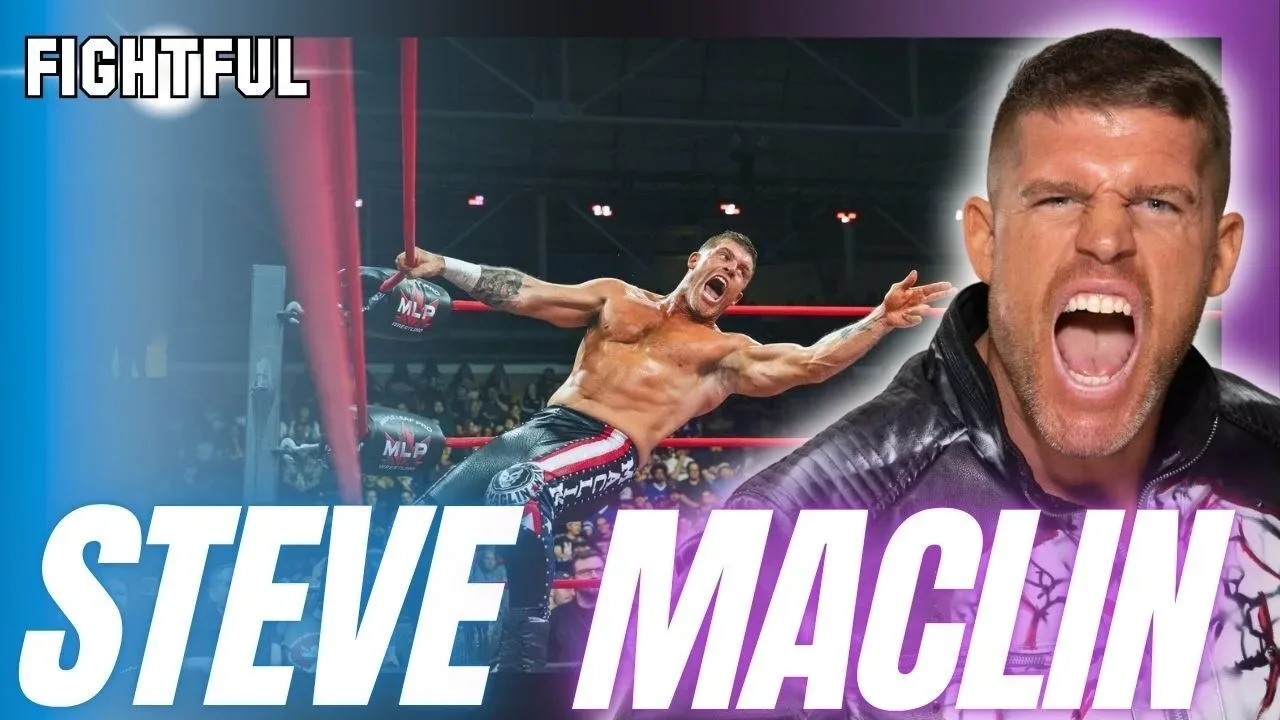
Steve Maclin says Adam Copeland’s public praise following their match at MLP Northern Rising stands among the most meaningful moments of his professional wrestling career.
Copeland offered a striking assessment of Maclin after the bout, separating any personal friction from his evaluation of Maclin as an in-ring performer. “No matter what I think of Steve Maclin as a person, that man should be the most wanted free agent in this industry,” Copeland said. “He’s that damn good.”
For Maclin, the words landed with unusual force. In reflecting on the moment, he described it not simply as a compliment from a respected peer, but as validation for the full body of work and persistence behind his 15 years in wrestling.
“It’s better than anything I’ve ever done in pro wrestling,” Maclin said. “There’s moments in my life that I’ll think of now, it’s just validation of the last 15 years of my life.”
For more background on this topic, read Paul Heyman Details His Volatile WCW History With Ric Flair and the Drinking Session That Changed Everything.
That reaction speaks to why a brief post-match statement can mean so much in a profession built on constant evaluation. Wrestlers are judged in public every time they enter the ring, but they also spend years hearing differing assessments behind the scenes. A performer can be told that certain roles suit them, that other possibilities do not, or that decision-makers simply do not see a particular level of potential. Maclin said Copeland’s words cut through that uncertainty.
Copeland is a performer Maclin grew up watching, and Maclin specifically emphasized the significance of receiving that endorsement from someone he considers among the best of the Attitude Era. The timing made it even more powerful: Maclin was still down at ringside, physically spent from the match, when Copeland began speaking.
An emotional scene after Northern Rising
Maclin recalled that a fan-recorded video captured the aftermath in a way that has become especially important to him. He said he posted the clip to Instagram after it was sent to him, grateful that the moment had been preserved from the audience’s perspective.
In Maclin’s recollection, he rolled out of the ring and leaned back while taking in what had happened. His wife was also down following a Gore, and Maclin described crawling over so that the two of them were lying beside one another as Copeland started his remarks.
“I’m so happy I have this video because it’s a moment that was perfectly shot by this fan where you just see me roll out of the ring and I just lean back and I’m just soaking in the moment,” Maclin said. “Then my wife’s laying there after getting Gored, and then I crawl over to my wife and then we’re both laying there. Like, ‘Ah, we’re not going anywhere right now.’”
It was in that exhausted, unguarded setting that Maclin heard the praise from Copeland. Rather than treating it as another routine wrestling moment, he said he immediately recognized the scale of what was being said. He looked to his wife and became emotional as Copeland continued the promo.
“Then Adam starts cutting this promo, and I just looked at my wife and started tearing up,” Maclin said. “I’m like, ‘Fuck, this is insane.’ Like it’s just weird. It’s weird. It’s just so cool.”
The scene illustrates the personal side of an industry that often presents its biggest moments through spectacle and competition. In this case, the memorable element for Maclin was not just the match itself, but the respect voiced after it by a veteran whose career has long carried weight with wrestling fans and fellow performers alike.
Copeland’s words carried added weight
Copeland’s phrasing was notable because it was direct and unequivocal. He did not merely describe Maclin as talented or praise a single performance. He said Maclin should be “the most wanted free agent in this industry,” a statement that placed the focus squarely on Maclin’s value as a wrestler.
Maclin took the comment as a major professional endorsement, especially because it came from a Hall of Famer he associates with the era that shaped him as a fan. He said that hearing that kind of conviction from Copeland was difficult to fully process in real time.
“There’s a lot of times in wrestling where you don’t think you’re good enough and there’s times where you’ve been places and people tell you, ‘You can do this,’ ‘You can’t do that,’ or ‘I just don’t see that for you,’” Maclin said. “Here I am being validated by one of the best ever to do it from the Attitude Era and my generation of watching it.”
Maclin’s comments did not frame the praise as an endpoint. Instead, he described it as something he intends to carry forward. The recognition has become a source of pride and motivation that he will take with him each time he wrestles.
“It means a lot,” Maclin said. “It’s something that I take to heart. I take with pride too, to carry that on every time I step in a ring.”
A meaningful endorsement without minimizing the rivalry
There is also a pointed edge to Copeland’s original statement. By opening with “No matter what I think of Steve Maclin as a person,” Copeland acknowledged that their relationship was not being presented as simple friendship or uncomplicated admiration. Yet the rest of his message made clear that any issue on that level did not alter his opinion of Maclin’s ability.
That distinction is important in wrestling, where rivalries and character conflicts can sharpen the impact of respect when it is finally expressed. Copeland’s praise did not depend on presenting Maclin as universally liked. It centered on Maclin’s capability, his work, and the idea that his standing as a performer should command attention across the industry.
For Maclin, that made the endorsement feel even more genuine. The message was not softened into a generic show of mutual appreciation. It was a forceful declaration from an opponent who made clear that his assessment was based on what Maclin brings to the ring.
Maclin’s response likewise was not about trying to turn the moment into a broader prediction. He did not claim that Copeland’s comments guarantee a particular opportunity or outcome. Instead, he focused on the deeper meaning of being recognized after years of navigating wrestling’s demanding and often uncertain path.
Maclin’s journey remains in focus
The Northern Rising moment has also been documented beyond the fan-shot clip Maclin mentioned. A two-part documentary following Maclin’s road to MLP Northern Rising is available through Boots To Boots. The project offers another record of the journey surrounding the event and the moment that left such an impression on him.
Maclin also discussed working with Rhino elsewhere in his interview, adding another layer to a conversation centered on experienced names and the perspective that comes from sharing the ring with them. But it was Copeland’s post-match message that clearly resonated most deeply.
Professional wrestling is full of milestones that can be measured in titles, main events, match results, and contracts. Maclin’s reaction to Copeland’s words is a reminder that some of the most enduring moments are less tangible. They come when a wrestler receives affirmation from somebody whose work helped define their own understanding of what wrestling could be.
For Maclin, that affirmation arrived while he was lying outside the ring, recovering alongside his wife after a punishing scene, as Copeland addressed the crowd. The result was a memory Maclin believes will stay with him well beyond the immediate aftermath of MLP Northern Rising.
And while the comment may have been delivered in the middle of a charged wrestling setting, Maclin’s response makes its meaning clear: he sees it as a hard-earned acknowledgment of 15 years of effort, setbacks, self-doubt, and continued work. It is praise he intends to remember—and represent—every time he steps through the ropes.

Darryl Polo
Darryl Polo is a passionate wrestling fan covering WWE, AEW, TNA and beyond. He loves great rivalries, breakout stars and the moments that keep fans talking long after the bell. How we work.