
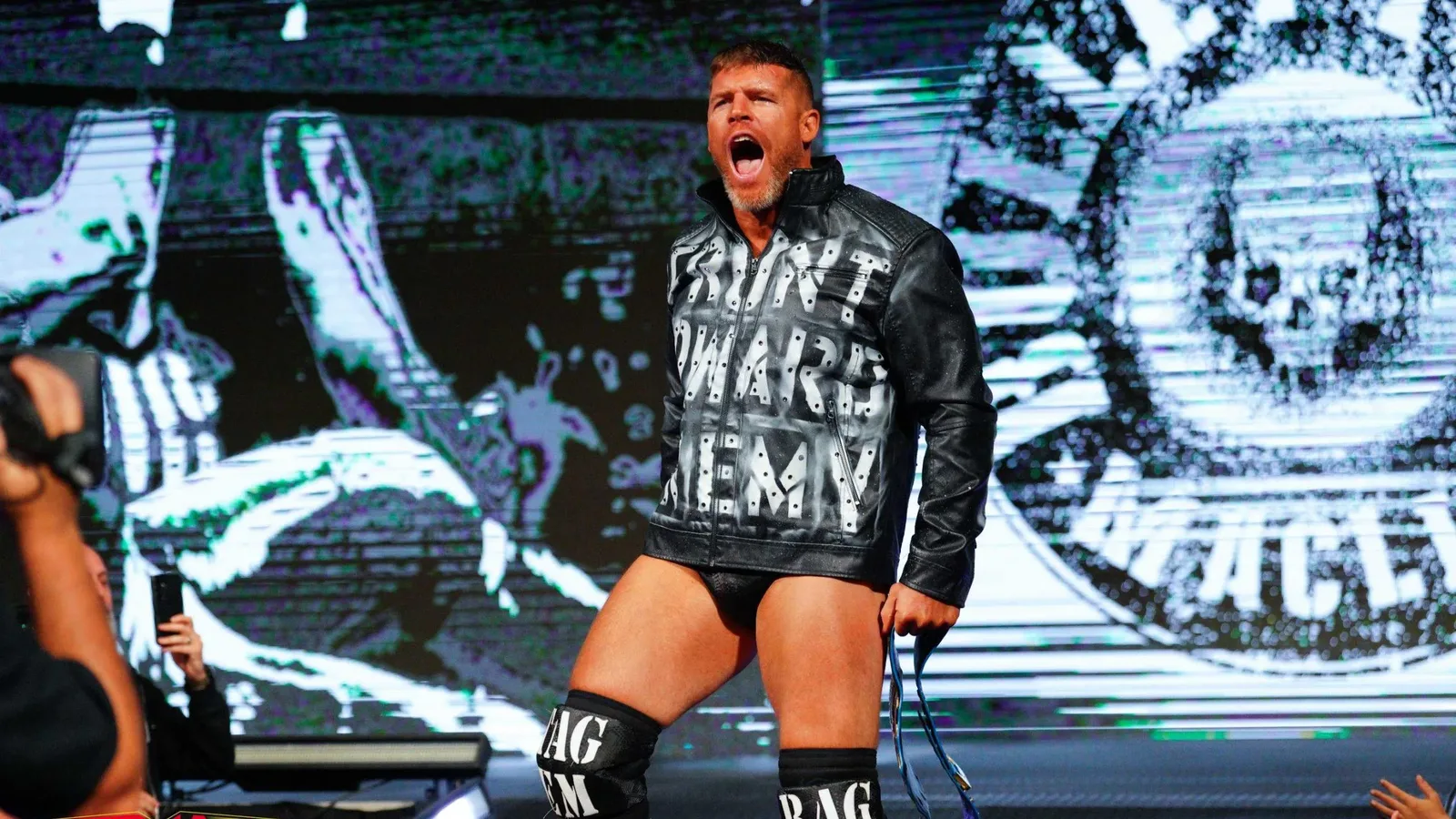
Steve Maclin’s match with Adam Copeland at Maple Leaf Pro’s Northern Rising carried far more meaning than a standard main-event assignment.
Maclin and Copeland met on October 3 at Maple Leaf Gardens, a venue with enormous historical importance in Canadian professional wrestling. Copeland won the bout, but the significance of simply reaching that moment was clear for Maclin. The match paired him with an opponent he had long wanted to face, while also giving Copeland the chance to wrestle in a building he had hoped to perform in.
For Maclin, however, the path to Northern Rising was nearly derailed shortly after he learned the match was happening. Speaking in a Maple Leaf Pro documentary focused on the event, Maclin recalled becoming overwhelmed when he was told he would be working with Copeland.
“I got told that I was working with Adam Copeland, and I literally just started tearing up,” Maclin said. “It was out of happiness.”
For more background on this topic, read C*4 Wrestling To Hold Final Preston Event Centre Show On November 27.
That response underlines the weight of the opportunity. Copeland is one of the most accomplished wrestlers of his generation, with a career that has included major success in WWE and a prominent current run in AEW. For Maclin, a wrestler who has built his reputation through a mixture of national television exposure and high-profile independent appearances, sharing a ring with Copeland was a personal professional milestone.
Maclin said his wife was present when he received the news, making the moment even more emotional. In his view, it represented the kind of opportunity a performer cannot simply assume will arrive.
“It’s just a moment you don’t ever think is going to happen in your career,” Maclin said.
A Serious Injury Changes the Picture
The excitement did not last uninterrupted. Maclin explained that two days after learning about the planned Copeland match, he suffered a broken leg while working an independent show. He described the injury as a spiral fracture of his fibula and recalled immediately fearing that the match, along with other possibilities in front of him, could be lost.
The timing was especially concerning because Maclin had entered free agency and was having conversations about what might come next in his career. A significant injury can alter a wrestler’s availability quickly, particularly when major opportunities are tied to a defined date. Maclin said his mind raced through the implications: he had just entered free agency, was in discussions with various places, and was preparing for the Copeland match.
Rather than allowing the setback to end the plan, Maclin focused on obtaining a medical assessment. He returned home, got X-rays, and learned he would not require surgery. The projected time in a walking boot was six weeks, a timeline that gave him a chance to remain focused on October 3.
“That’s all I kept in my head was October 3rd, I’m going to be fine,” Maclin said.
Maclin’s account reflects the difficult balance wrestlers often face between protecting their health and preserving rare career opportunities. His injury was not a minor inconvenience. A spiral fibula fracture is a serious development, and he stated that his foot bent outward at the time of the injury. Still, the fact that surgery was not needed gave him a target to work toward rather than forcing an immediate end to the Northern Rising plan.
Maclin said he needed to appear for Maple Leaf Pro in Windsor during the recovery process in order to keep the story moving toward the Maple Leaf Gardens main event. His objective was direct: make it to Northern Rising and make the Copeland match happen.
Maple Leaf Gardens Raises the Stakes
The setting made the match even more meaningful. Maple Leaf Gardens remains one of wrestling’s most recognizable historic venues, particularly for performers with Canadian ties. Hosting Northern Rising there gave Maple Leaf Pro a distinctive stage, and a Maclin-Copeland main event naturally carried a strong personal element for both men.
Copeland was able to cross off a bucket-list building by wrestling at Maple Leaf Gardens. Maclin, meanwhile, got the bucket-list opponent. Their meeting placed an established international star across from a wrestler determined to show what he could do when the stage was at its largest.
Maclin did not frame the match simply as a feel-good moment. He also recognized the competitive purpose behind it. Facing Copeland meant having a chance to elevate his own profile by standing opposite a wrestler whose name and career accomplishments bring immediate attention to any event.
“This is putting me on the map and showing the world who Steve Maclin is,” Maclin said.
That perspective is central to Maclin’s comments. He understood the difficulty of being positioned as the person attempting to spoil a special night for Copeland in such a meaningful location. Yet he also understood that wrestling is built on those stakes. If a performer wants to establish himself on a bigger level, he has to embrace the possibility of taking the spotlight from a more decorated opponent.
Maclin said that being the man to ruin the occasion for Copeland was part of being a man in that situation. It was not necessarily a role he described as pleasant, but it was one he saw as necessary if he was going to capitalize on the opening in front of him.
Copeland Earns the Northern Rising Victory
When October 3 arrived, Maclin and Copeland did make it to the ring at Northern Rising. Copeland ultimately emerged victorious in the Maple Leaf Gardens main event, closing a night that had substantial significance for the promotion and the wrestlers involved.
The result did not diminish the importance of the match for Maclin. His story was not about claiming a victory over Copeland; it was about fighting through uncertainty to reach a match he once did not expect to receive. The journey from emotional reaction, to frightening injury, to a recovery timetable, and finally to the scheduled main event made the bout one of the more personally consequential appearances of his career.
It also illustrates why individual matches can matter so much outside championship implications. Not every pivotal contest is defined by a title change, a major contract announcement, or a decisive storyline turn. Sometimes its value lies in the people involved, the building, the timing, and the obstacles that had to be overcome just to make the bell ring.
Maclin’s comments suggest Northern Rising represented all of those things at once. The emotional initial call confirmed how highly he valued the chance to work with Copeland. The broken leg immediately put that chance in jeopardy. The recovery process became a countdown toward one date, and that date ended with Maclin competing in a historic building against one of the most recognizable Canadian wrestlers of the modern era.
A Defining Opportunity in Free Agency
Maclin also placed the episode within the broader context of free agency. He said he was in discussions with different places when the injury occurred, making the potential consequences more complicated than one missed booking. Availability, momentum, and the ability to demonstrate value are all crucial during that period of a wrestler’s career.
By making the Maple Leaf Pro commitment and reaching the Copeland match, Maclin ensured that the opportunity did not disappear under the circumstances he described. While Copeland got the win at Northern Rising, Maclin gained a prominent showcase and a career memory he clearly will not forget.
The documentary comments make one point unmistakable: Maclin viewed his match with Copeland as more than a date on a card. He saw it as validation, motivation, and an opportunity to introduce a wider audience to the version of Steve Maclin he believes belongs on major stages. After briefly fearing the match was gone, getting to Maple Leaf Gardens on October 3 was a victory of persistence all its own.

Darryl Polo
Darryl Polo is a passionate wrestling fan covering WWE, AEW, TNA and beyond. He loves great rivalries, breakout stars and the moments that keep fans talking long after the bell. How we work.