Spike Dudley built much of his wrestling identity around an unmistakable contrast. At roughly 140 pounds, he was routinely positioned opposite performers who dwarfed him, and that visual discrepancy made every throw, slam, and high-impact collision feel even more dramatic. It also meant that his matches and segments demanded a significant degree of trust, communication, and judgment from everyone involved.
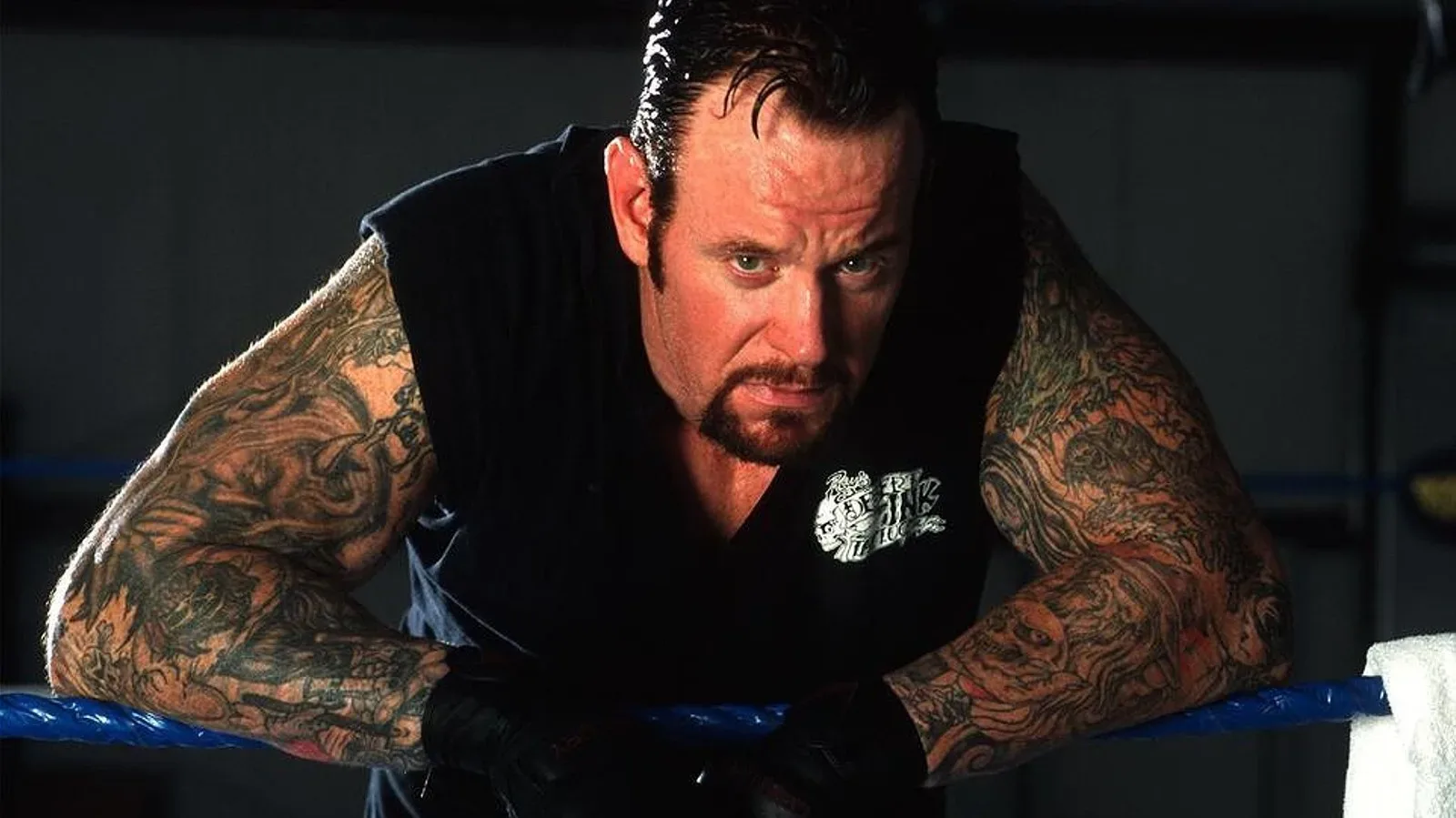
One WWE Raw moment involving The Undertaker has remained especially memorable for that reason. During an appearance on Busted Open Radio, Spike revisited the planning behind a confrontation with “The Deadman” while The Undertaker was WWE Hardcore Champion. What viewers saw as a striking example of Spike being launched by a far larger opponent was, in fact, the product of a conversation in which Spike himself argued for an even more dangerous-looking spot.
The story offers a revealing look at the balance that exists in professional wrestling between a performer’s desire to create a lasting moment and a veteran’s responsibility to protect an opponent. Spike wanted to take the risk. The Undertaker initially wanted no part of it, fearing that the stunt could go badly wrong. It took another Dudley, Bubba Ray Dudley, to help convince him that Spike understood the danger and could handle the landing.
A Simple Plan Did Not Feel Big Enough to Spike Dudley
Spike explained that he and The Undertaker had discussed their planned sequence before going out for the Raw segment. The initial outline was comparatively straightforward: a powerbomb through an object and a chokeslam. For many wrestlers, particularly opposite a star of The Undertaker’s size and reputation, that would have been more than enough to build a memorable encounter.
For more background on this topic, read Perry Saturn Calls Jim Ross ‘Fake To Your Face’ While Recalling Charles Barkley Incident.
But Spike said he immediately felt there should be something more. Recalling the exchange on Busted Open Radio, he said,
“We always talked a little bit before the match: ‘Okay, I’ll give you the powerbomb through the thing and I’ll give you the chokeslam.’ And I went: ‘That’s it?’”
Spike was quick to clarify that his response was not a refusal to take The Undertaker’s offense or an attempt to diminish the planned material. Instead, he was thinking about the unique visual opportunity created by his size. He was the smaller man in the ring with one of WWE’s most physically imposing attractions, and he believed they could push that contrast further.
As Spike put it, his thought process was not that he would not sell for The Undertaker. Rather, he saw the situation and thought,
“Dude, I’m 140 pounds. Let’s do something!”
That mindset fit the role Spike frequently occupied. His size made him an underdog, but it also enabled WWE to present spectacular moments that would not look the same with two similarly sized competitors. The danger, of course, was that creating the biggest possible image could not come at the expense of safety. That was precisely where The Undertaker’s immediate concern entered the conversation.
The Chokeslam Proposal That The Undertaker Rejected
Spike did not arrive at the discussion with a detailed list of options, diagrams, or an extensively mapped-out alternative. He said the idea essentially came to him in the moment: The Undertaker would chokeslam him from inside the ring, sending him over the top rope to the floor outside.
It was an ambitious suggestion. A standard chokeslam is already a major visual, particularly with a wrestler of The Undertaker’s stature delivering it. Adding the ropes and an outside landing would raise the difficulty considerably. The move would require exact positioning, commitment from both wrestlers, and confidence that the landing area would be sufficient for the intended impact.
The Undertaker’s answer was emphatic. Spike recalled that the WWE legend repeatedly refused, telling him it was too dangerous and expressing fear that the attempt could seriously hurt him.
“No. No, no, seriously! No. That’s stupid,”Spike remembered The Undertaker saying.
“I’m not going to do it, I’m going to kill you.”
The response matters because it underscores the decision-making that audiences do not see once a wrestling segment reaches television. The idea may have been exciting, and Spike may have been eager to do it, but willingness alone does not turn a risky concept into a responsible one. The Undertaker’s reaction was grounded in protecting the performer across from him.
Spike nevertheless continued to make his case. He told The Undertaker there was padding on the floor and insisted he would be all right. The Undertaker still declined at first. From Spike’s recollection, “The Deadman” was not being difficult about the spot; he was firmly rejecting something he believed had too much potential to go wrong.
Bubba Ray Dudley Helped Settle the Debate
The conversation eventually drew the attention of Bubba Ray Dudley. Spike said Bubba learned what was being discussed, and The Undertaker asked him to speak with Spike and persuade him to abandon the idea.
Instead, Bubba Ray’s response gave The Undertaker some reassurance. Spike recalled that Bubba indicated his fellow Dudley could probably take the move. That endorsement shifted the discussion. The Undertaker, who had been resolutely opposed to the proposal, finally agreed to attempt it.
“And then he went: ‘Okay! Let’s give it a shot!’”Spike recalled on Busted Open Radio.
It is a concise story, but the sequence of events is telling. Spike originated the idea. The Undertaker raised the safety objection. Bubba Ray offered his own assessment of Spike’s ability to absorb the impact. Only after that exchange did the spot receive approval. The moment was not simply a case of a larger wrestler throwing a smaller one around for spectacle; it was a negotiated decision among experienced performers familiar with the physical demands involved.
For Spike, who spent years taking punishing offense from opponents much larger than himself, that confidence was central to his career. His presentation relied on the audience believing he was in peril, while his work depended on his ability to execute and receive difficult sequences as safely as possible. The Undertaker’s hesitation, meanwhile, reflected the other side of that responsibility: the wrestler delivering the move also has to be convinced that the risk is manageable.
Why the Segment Still Stands Out
The Undertaker and Spike Dudley represented very different kinds of WWE characters and in-ring presences. The Undertaker was an established supernatural force and a physically dominant champion. Spike was the undersized competitor whose resilience frequently made him a natural target for larger opponents. Placing them together instantly created a clear story without needing much explanation.
The chokeslam idea magnified that story. A move from the ring to the outside would emphasize The Undertaker’s power while putting Spike in the vulnerable position that had long defined his appeal. For a performer with Spike’s frame, even standing across the ring from The Undertaker presented a compelling visual. Being launched over the top rope turned that contrast into an image built to stay with viewers.
Spike’s recollection also highlights an important distinction in wrestling storytelling. A performer can be fearless and still need someone else to apply caution. The best-known veterans are often remembered for making huge moments possible, but those moments also depend on knowing when to say no, when to reconsider, and when the people involved have established enough trust to proceed.
The Undertaker’s initial refusal did not diminish the final segment. If anything, it adds context to why the moment has endured for fans who remember it. There was a real concern behind the move, and the decision to go forward was not treated casually. Spike had to advocate for the concept, Bubba Ray had to offer his perspective, and The Undertaker had to determine whether he could execute it without causing harm.
Spike Dudley’s Lasting Reputation for Taking the Fall
Spike Dudley’s career included countless instances where his smaller stature became a central part of the action. That did not make the work easy or disposable. On the contrary, the ability to take dramatic offense convincingly while maintaining control and trust with an opponent is a specialized skill. Spike’s account of the Undertaker spot demonstrates that he was not merely placed into those situations; at times, he actively sought out ways to make them more memorable.
His suggestion to The Undertaker was bold, perhaps even impulsive by his own admission. Yet it came from a performer who understood how much the visual could add to the segment. The Undertaker’s reluctance came from a performer who understood the consequences if the execution went wrong. Bubba Ray Dudley’s involvement provided the final piece of confidence needed for the move to happen.
That combination of ambition, caution, and peer trust is why the story behind the Raw moment is as interesting as the moment itself. Spike Dudley wanted the audience to see something extraordinary. The Undertaker wanted to make sure he survived it. In the end, the WWE segment became another defining example of what Spike could bring to the ring when the opportunity called for a dramatic fall.
In pictures
Darryl Polo
Darryl Polo is a passionate wrestling fan covering WWE, AEW, TNA and beyond. He loves great rivalries, breakout stars and the moments that keep fans talking long after the bell. How we work.