
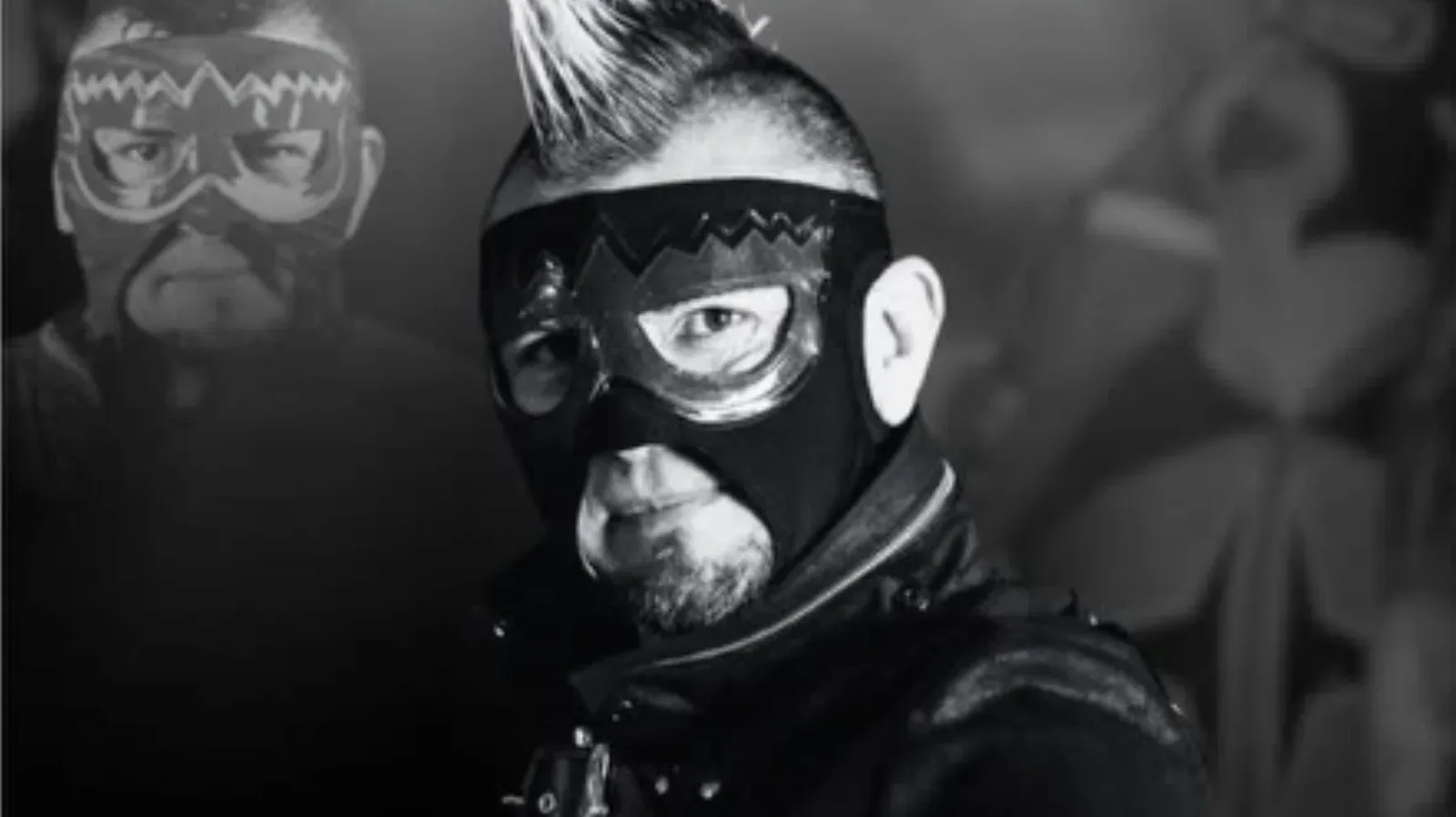
The independent wrestling community is mourning the death of longtime California wrestler and trainer SoCal Crazy, whose real name was Nestor Bustos. He was 47 years old.
SoCal Pro Wrestling announced that Bustos had died following a lengthy battle with colon cancer. The promotion remembered him not only for his work in the ring and as a trainer, but also for the personal relationships he built throughout a career that lasted more than a quarter-century.
“Everyone here at SoCal Pro Wrestling is devastated to announce the passing of long time wrestler, trainer and most importantly he was our friend, SoCal Crazy! He was surrounded by family and loved ones since yesterday and fought to the very end. We want to send out condolences to all of his friends, family and fans... We'll post more soon.”
Bustos was a fixture of the West Coast independent scene from the time he made his in-ring debut in 2000. Over the next 25 years, he became a familiar and respected presence for wrestlers, promoters, trainees, and fans throughout California. His career placed him alongside a wide range of performers who came through the region, including Adam Pearce and The Young Bucks during their own journeys in professional wrestling.
For more background on this topic, read MLP Mayhem Results: Nikki Storm Defeats Dani Luna, Copeland Addresses Maclin.
While the independent circuit is frequently defined by changing promotions, different venues, and constantly shifting cards, performers such as Bustos provide its continuity. A wrestler working that long in a regional scene does more than compile matches and championships. They help maintain the connections between generations of talent, promotions, and audiences. Bustos’ status as both an active wrestler and a trainer gave him a particularly important place in that environment.
A Career Rooted in California Independent Wrestling
SoCal Crazy’s career began in 2000, at a time when California’s independent wrestling landscape was producing wrestlers who would later find major national exposure while also supporting a deep pool of regional talent. Bustos remained active through many changes in that scene, continuing to appear for promotions across the West Coast and establishing a reputation as a dependable veteran.
His longevity was accompanied by championship success. Bustos held the New Wave Pro Wrestling Heavyweight Championship for a record 442 days, a reign that stands as one of the most notable achievements associated with his in-ring career. He also collected numerous other titles while working for promotions across the West Coast.
Championships are a visible measure of a wrestler’s standing, but a lengthy reign also reflects the confidence a promotion places in a performer. Carrying a heavyweight title for more than a year requires consistency, availability, and the ability to be trusted in a prominent role. Bustos’ 442-day run with the New Wave Pro Wrestling Heavyweight Championship remains a defining statistical marker of his time in the business.
His work was not limited to pursuing accolades. As a trainer, he had another responsibility within independent wrestling: helping prepare others for the demands of the ring. Training can be among the most lasting contributions made by a veteran performer. It involves passing along fundamentals, ring awareness, and the professional standards needed to navigate a difficult industry. SoCal Pro Wrestling’s statement specifically recognizing Bustos as a trainer underscored that dimension of his legacy.
The news of his death has therefore resonated beyond the record of titles he held or events he worked. To those who encountered him in training environments, locker rooms, and local promotions, Bustos was part of the foundation of a wrestling community that depends heavily on personal mentorship and long-standing friendships.
Returning to the Ring After His Diagnosis
Bustos was diagnosed with colon cancer in 2022. Even as he faced that serious health challenge, he continued his wrestling career after receiving medical clearance to return to the ring in April 2023.
His decision and ability to resume wrestling reflected his commitment to the profession he had pursued since 2000. Returning to competition after a cancer diagnosis is not a detail that defines an entire career, but it does speak to the determination that marked Bustos’ final years as an active performer.
He continued wrestling for another three years following his return. His final recorded match took place at a SoCal Pro Wrestling event in June 2026. That appearance came 26 years after his debut, an extraordinary span for any independent wrestler and especially notable for someone who had continued to work while confronting major health concerns.
In the months before his death, Bustos’ cancer became more aggressive. He was hospitalized several times as his condition worsened. SoCal Pro Wrestling said he was surrounded by family and loved ones and fought until the end.
The circumstances of Bustos’ passing bring an understandably painful conclusion to a career that remained active far longer than many in independent wrestling are able to sustain. Yet his final years also offered a clear illustration of how deeply connected he remained to wrestling. Even after his diagnosis, he returned to the ring when medically cleared and continued contributing to the scene that had been central to his life.
Remembering a Wrestler, Trainer, and Friend
Professional wrestling is often discussed through its biggest televised names and major-company events, but the industry is sustained by countless regional performers whose work takes place far from those stages. Independent wrestling relies on people willing to travel, train, promote events, mentor newcomers, and perform in front of devoted local crowds. Bustos was one of those figures in California for decades.
His career also connected him to different eras of the state’s wrestling scene. He began during the early 2000s, worked alongside wrestlers who would go on to wider recognition, and remained involved long enough to train and share cards with younger generations. That breadth of experience is significant in a regional community where wrestlers often learn from those who came before them.
For fans, SoCal Crazy was a recognizable name on independent cards. For fellow wrestlers and trainees, he was a veteran whose experience extended well beyond a single promotion or championship. For SoCal Pro Wrestling, he was described plainly and powerfully as a friend.
That last distinction is especially meaningful. The bonds created in professional wrestling are often built through years of shared travel, training, physical sacrifice, and time spent in locker rooms. When a wrestler has been active for 25 years, the number of people touched by that career can reach far beyond what is visible on a match record. The response to Bustos’ death reflects the loss felt by a community that knew him in many capacities.
Support for His Family
A GoFundMe campaign has been established to help support Bustos’ wife, Khai Karma. She has been battling an autoimmune disease, adding another difficult challenge for the family during this period of grief.
The campaign provides an avenue for those who knew Bustos through wrestling, as well as supporters from the wider community, to assist his family. The need for that support is a reminder of the personal realities that can sit behind the public identity of a wrestler. Beyond the character known as SoCal Crazy was Nestor Bustos: a husband, a friend, a trainer, and a longtime member of the California wrestling community.
Bustos leaves behind a career measured in more than two decades of matches, championships, and appearances. His record 442-day New Wave Pro Wrestling Heavyweight Championship reign will remain an important part of his in-ring history. His return after a cancer diagnosis will be remembered as a testament to his resolve. Most of all, the tributes from those who worked with him point to the impact he made on people around him.
SoCal Crazy’s death is a significant loss for West Coast independent wrestling. His contributions as a wrestler and trainer, along with the friendships he formed over a 25-year career, ensure that his presence will continue to be felt throughout the community he helped shape.
Condolences go out to Khai Karma, Bustos’ family, friends, trainees, colleagues, and the many fans who followed SoCal Crazy throughout his career.
In pictures

Darryl Polo
Darryl Polo is a passionate wrestling fan covering WWE, AEW, TNA and beyond. He loves great rivalries, breakout stars and the moments that keep fans talking long after the bell. How we work.