
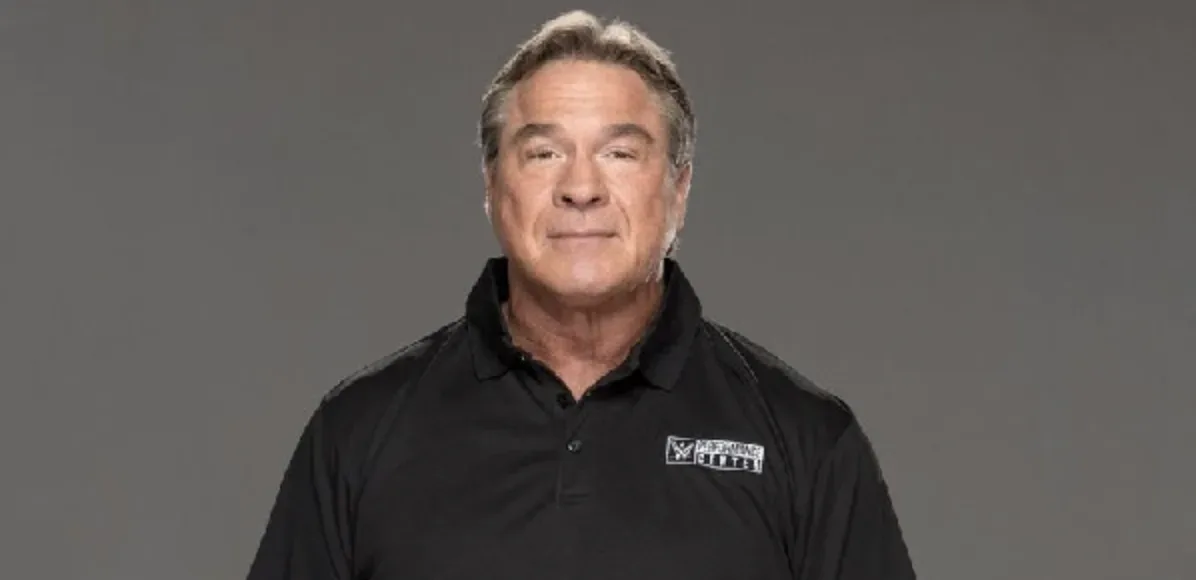
WWE Performance Center coach Terry Taylor has returned to coaching duties after undergoing knee surgery, with NXT talent Shiloh Hill offering an encouraging update on the respected veteran’s recovery.
Taylor’s operation had been reported in June. Hill, who is currently training under Taylor at the Performance Center, confirmed during an appearance on Busted Open After Dark that the procedure was successful and that Taylor is already back in the classroom and working with WWE’s developing talent.
The update is a positive one for the WWE Performance Center, where Taylor remains one of the most experienced professional wrestling minds available to athletes beginning or refining their careers in NXT. Hill described Taylor as looking well following the operation and emphasized that his coach has retained the same enthusiasm he brings to every training session.
“Right now, I’m in Terry Taylor’s class… He’s been in the business probably longer than anybody in the NXT ecosystem… He looks great and he’s got the energy of us. He’s always excited, ready to go to practice. He just got his knee operated on a little while ago. He came back like a month early or something. He’s still a wrestler at heart…”
For more background on this topic, read Matt Cardona Recalls Test’s ‘No-Look Handshake’ at WWE’s December to Dismember.
Hill’s comments suggest Taylor returned to the Performance Center ahead of the anticipated timetable, though no further details regarding the operation, the specific knee issue, or any medical guidance tied to his recovery were discussed. The central takeaway from Hill’s firsthand account is that Taylor is back coaching and continuing to bring an active, hands-on approach to his work.
Terry Taylor’s Experience Remains a Major Asset at the Performance Center
Few people working in the current NXT developmental system can match Taylor’s breadth of experience across different eras of the wrestling business. Taylor built a long in-ring career before transitioning into influential behind-the-scenes roles, giving him a perspective that spans wrestling’s territorial period, major national promotions, television-focused expansion, and the modern Performance Center model.
That type of knowledge is particularly valuable in WWE’s training environment. Performance Center recruits arrive with vastly different backgrounds. Some have years of independent wrestling experience, while others come from college athletics, combat sports, strength and conditioning programs, or other fields entirely. Coaches must help talent develop physical fundamentals while also teaching them how to perform for live crowds, understand television production, present believable characters, and work safely with a wide range of opponents.
Hill’s remark that Taylor has been around longer than virtually anyone in the NXT ecosystem speaks to the role veteran coaches can play in that process. A coach’s value is not limited to drills or ring mechanics. Experienced personnel can provide context on pacing, audience engagement, match structure, psychology, professionalism, and how performers adapt when an initial plan changes.
Taylor’s apparent eagerness to return so soon after surgery also reflects the personal investment many longtime wrestling figures maintain in the industry. Hill called him “a wrestler at heart,” a description that helps explain why Taylor was so motivated to resume his work. Even after an accomplished career and years spent passing knowledge along to others, the drive to be around a ring, work with talent, and contribute to the next generation clearly remains strong.
Shiloh Hill Shares a Firsthand Training Update
The update carries additional weight because it came from Hill, who said he is presently in Taylor’s class. Rather than offering a secondhand account, Hill described the day-to-day energy he has seen from Taylor in the Performance Center setting.
For a developing wrestler, the opportunity to train with coaches who have decades of experience can be crucial. WWE’s system is designed to prepare performers for the demands of NXT television and, potentially, the main roster. That preparation includes the obvious physical aspects of wrestling, but it also requires consistency, resilience, awareness, and a willingness to learn from feedback.
Hill’s assessment of Taylor focused less on the details of rehabilitation and more on the coach’s presence. He said Taylor looks great, is excited to work, and arrives ready for practice with the energy of the younger athletes around him. Those observations indicate that, from Hill’s perspective, the surgery has not diminished Taylor’s connection to his role or his enthusiasm for instruction.
It is also notable that Hill framed Taylor’s early return as an extension of his wrestling mentality. In professional wrestling, dedication is often discussed in terms of appearances and in-ring performance. Coaching requires a different type of commitment, but the same urgency can apply. A coach who is invested in the progress of a class can have a lasting impact on the talent who pass through it.
Hill Has Also Worked Through His Own Recovery
Hill’s appearance included an update that arrives after a difficult summer for the NXT prospect. He previously dealt with a facial fracture that required time to heal. His ability to speak about his current work in Taylor’s class signals that he is continuing his developmental path following that recovery period.
The connection between Hill’s own situation and his comments about Taylor is straightforward: both men have recently dealt with physical setbacks while remaining tied to the training environment at the Performance Center. Hill did not compare the injuries or offer additional medical specifics regarding Taylor’s knee, but his comments conveyed appreciation for a coach who returned to work quickly and continued to lead by example.
For wrestlers at any stage, time away due to injury can interrupt momentum. In a developmental setting, it can also mean missed repetitions, missed evaluations, and missed opportunities to build chemistry with peers. That makes the support of coaches and the stability of a training program especially important for performers working their way back.
Hill’s own experience gives added context to why Taylor’s determination may stand out. A talent who has had to pause and recover understands the frustration that can come with being unable to train or perform normally. Seeing a veteran coach return with visible energy can serve as a meaningful example inside a demanding environment.
A Positive Sign for WWE’s Developmental System
Taylor’s return is ultimately good news for WWE’s Performance Center and its NXT roster of prospects. Developmental programs depend heavily on continuity from their coaching staff, especially when those coaches possess deep industry experience and established relationships with talent.
There is no indication in Hill’s comments that Taylor’s role has changed. On the contrary, Hill identified him as the instructor of his current class and described him as fully engaged in practice. While it remains unclear exactly when Taylor had the procedure or how his rehabilitation was structured, Hill’s account makes clear that he has resumed his responsibilities.
The update also underlines the importance of veteran voices behind the scenes. The wrestlers seen on weekly WWE programming represent only part of the operation. At the Performance Center, coaches help shape future television talent long before they reach a nationally televised match. Their influence can be felt in the fundamentals, confidence, ring awareness, and professional habits of the athletes they train.
For now, Taylor appears to be doing well after the knee operation and is back where Hill believes he belongs: around aspiring wrestlers, sharing knowledge, and bringing a wrestler’s mentality to every practice.
Hill’s comments offer the clearest available update on Taylor’s status. The WWE coach has successfully undergone surgery, returned earlier than expected, and resumed his place working with NXT talent at the Performance Center.

Darryl Polo
Darryl Polo is a passionate wrestling fan covering WWE, AEW, TNA and beyond. He loves great rivalries, breakout stars and the moments that keep fans talking long after the bell. How we work.