
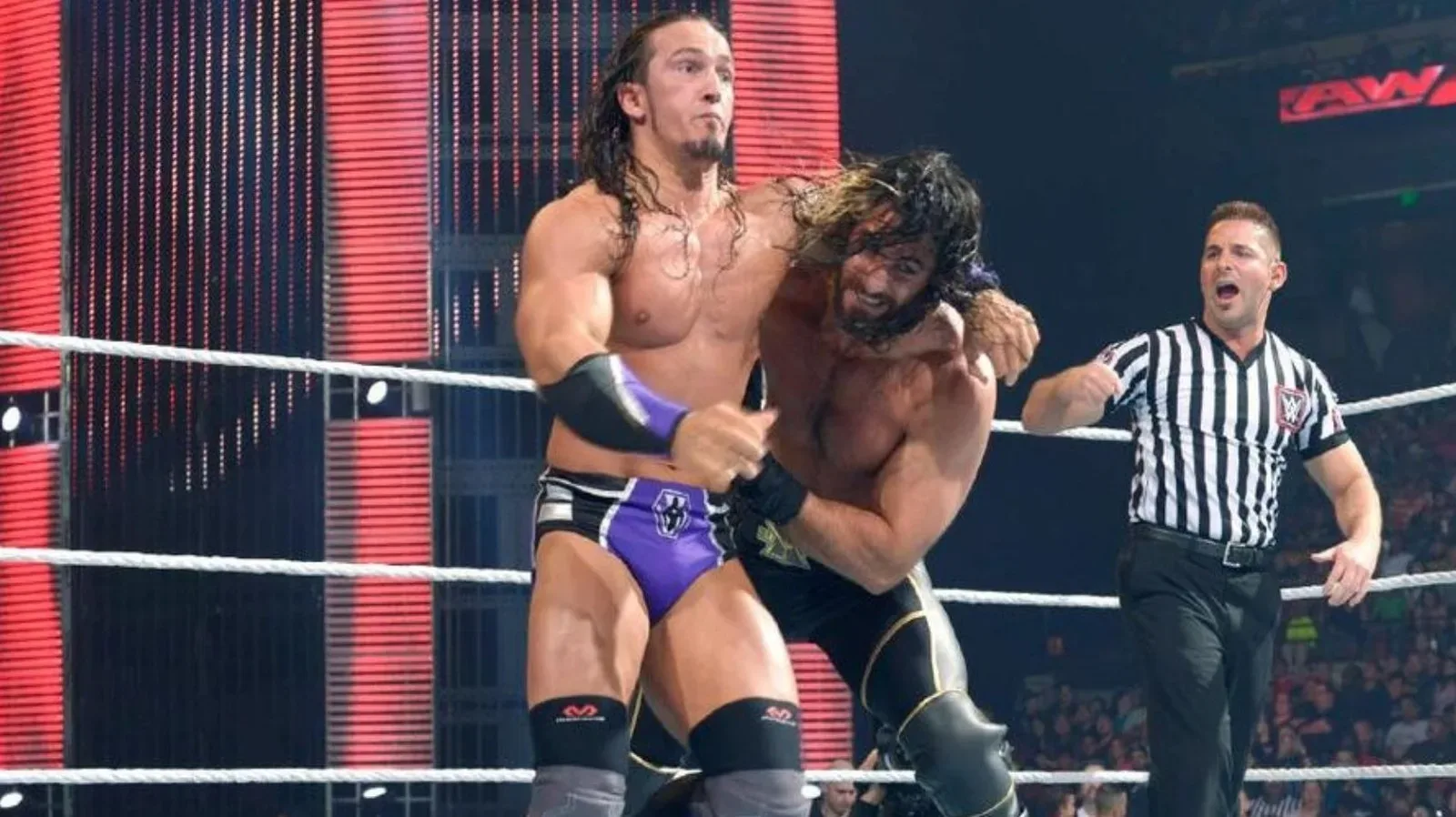
WWE’s Seth Rollins has offered an emotional reflection on the death of Pac, the AEW wrestler widely known to WWE audiences as Neville and known personally as Benjamin Satterley.
Speaking during a clip from No Contest Wrestling, Rollins described Satterley as much more than an exceptional in-ring performer. While Pac’s athleticism and distinctive body of work made him one of the most admired wrestlers of his generation, Rollins emphasized that the person behind that reputation left an equally profound impression on friends and peers.
It was a difficult subject for Rollins to address, and he noted that the appearance marked the first time he had spoken on camera about Satterley. Rather than trying to reduce a complicated friendship and a full life to a single sentiment, Rollins spoke about the warmth, humor and humility he associated with Pac.
“He was just an awesome dude,” Rollins said on No Contest Wrestling. “He was so funny and so unique.”
For more background on this topic, read Kali Armstrong Set To Challenge La Catalina For AAA Reina de Reinas Championship On WWE NXT.
Those words carried particular weight because Rollins and Satterley shared a history that extended far beyond their time in major promotions. Both men built their reputations through years of hard work, and both eventually became globally recognized names. Their paths crossed as opponents, colleagues and contemporaries, but Rollins’ comments centered primarily on the human side of the man many fans knew as Pac or Neville.
Rollins remembers meeting Satterley in Europe
Rollins recalled first meeting Satterley during his initial trip to Europe, when Rollins was 21 years old. For a young wrestler traveling internationally and measuring himself against the level of talent around him, Satterley’s ability made an immediate impact.
Rollins said he had considered himself athletic before that encounter. Watching Satterley perform, however, gave him a new perspective on what was possible in a wrestling ring. In a joking but admiring recollection, Rollins said he briefly felt as if he might need to consider another profession after seeing what Satterley could do.
That response speaks to the level of regard Pac commanded among fellow wrestlers. His speed, balance and precision were defining features of his presentation, but they were not simply crowd-pleasing traits. To other performers, they represented the standard of someone whose physical gifts had been paired with discipline, preparation and a clear understanding of professional wrestling.
For Rollins, that admiration did not fade as their careers developed. He said people looked up to Ben, not only because of his ability but because he did not appear to be defined by his own accomplishments. Rollins portrayed Satterley as someone grounded despite the extraordinary nature of his work.
“We looked up to Ben. We admired him,” Rollins said. “He was so incredible at what he did in the ring but he was also so humble about that part of his life.”
A tribute focused on the person behind Pac
Public remembrance of a wrestler often begins with matches, championships, signature moves and career milestones. Those achievements matter, especially for a performer whose name has become associated with a high standard of competition across WWE and AEW. But Rollins’ comments made clear that Satterley’s legacy cannot be understood solely through the work audiences saw on television or at live events.
Rollins described a person who was loyal, down to earth and considerate toward others. He spoke about kindness, love and a warmth that people felt in Satterley’s presence. It was a portrait of someone valued not merely as a gifted wrestler, but as a trusted friend whose personality stayed with those who knew him.
That distinction is especially meaningful in professional wrestling, where performers often spend enormous stretches of time away from home and develop close bonds through travel, training and shared pressure. The people who see one another in locker rooms, airports, gyms and long drives often know a side of their peers that the audience never sees. Rollins’ remarks offered a glimpse of the qualities that made Satterley important in those spaces.
His tribute also underscored the gap between a performer’s public identity and their private character. Pac was a forceful, intense presence in the ring, while Neville was a name familiar to WWE viewers from another chapter of his career. Yet for Rollins, the central name was Ben. That is the person he remembered: a peer whose talent was exceptional, but whose conduct and character earned just as much respect.
Pac’s influence reached across promotions
Satterley’s career connected audiences from multiple eras and promotions. His WWE run as Neville established him as one of the most physically spectacular wrestlers on the roster, while his later work as Pac in AEW brought another prominent stage for his intensity and athletic style. Those chapters ensured that fans from different corners of the wrestling world encountered his work and formed their own memories of it.
Rollins’ comments demonstrate how those career paths were also connected by relationships built earlier in their lives. Before the television exposure, before the familiar names and before the platform that comes with major promotions, there was a young Rollins traveling to Europe and seeing an athlete who changed his perception of the craft.
That kind of influence is difficult to quantify. It may not appear in a win-loss record or a title history, but it can affect how another wrestler approaches training, ambition and the possibilities of their profession. Rollins has long been regarded as one of WWE’s premier athletes, making his recollection of being awed by Satterley all the more striking.
It also reinforces a recurring truth about wrestling: even the most accomplished names continue to be inspired by their peers. Great performers can recognize greatness in others, and Rollins’ memory of his first encounter with Satterley reflected both humility and genuine appreciation.
“An awesome human being”
As Rollins brought his thoughts together, he separated Satterley’s wrestling legacy from the legacy held by those who loved him. He did not minimize what Pac accomplished in the ring. Instead, he made the case that the memories carried by friends, colleagues and loved ones should stand alongside every professional achievement.
“I hope his legacy in the wrestling world will be one thing,” Rollins said, “but his legacy amongst the people who loved him and knew him was just that he was an awesome, awesome human being.”
It was a simple conclusion, but one that captured the heart of his tribute. Rollins remembered the brilliance that initially caught his attention, the humility that earned enduring respect and the kindness that shaped Satterley’s relationships with others.
For fans mourning Pac, reflections from people who shared the ring and the road with him offer another way to understand his impact. The matches and moments remain part of his professional legacy. So too do the stories of laughter, loyalty and generosity now being shared by those closest to him.
Rollins’ message was ultimately one of grief, admiration and gratitude. He remembered a wrestler who could make even another elite athlete rethink what athleticism looked like. More importantly, he remembered Ben Satterley as someone whose decency and warmth mattered deeply to the people fortunate enough to know him.
In pictures

Darryl Polo
Darryl Polo is a passionate wrestling fan covering WWE, AEW, TNA and beyond. He loves great rivalries, breakout stars and the moments that keep fans talking long after the bell. How we work.