
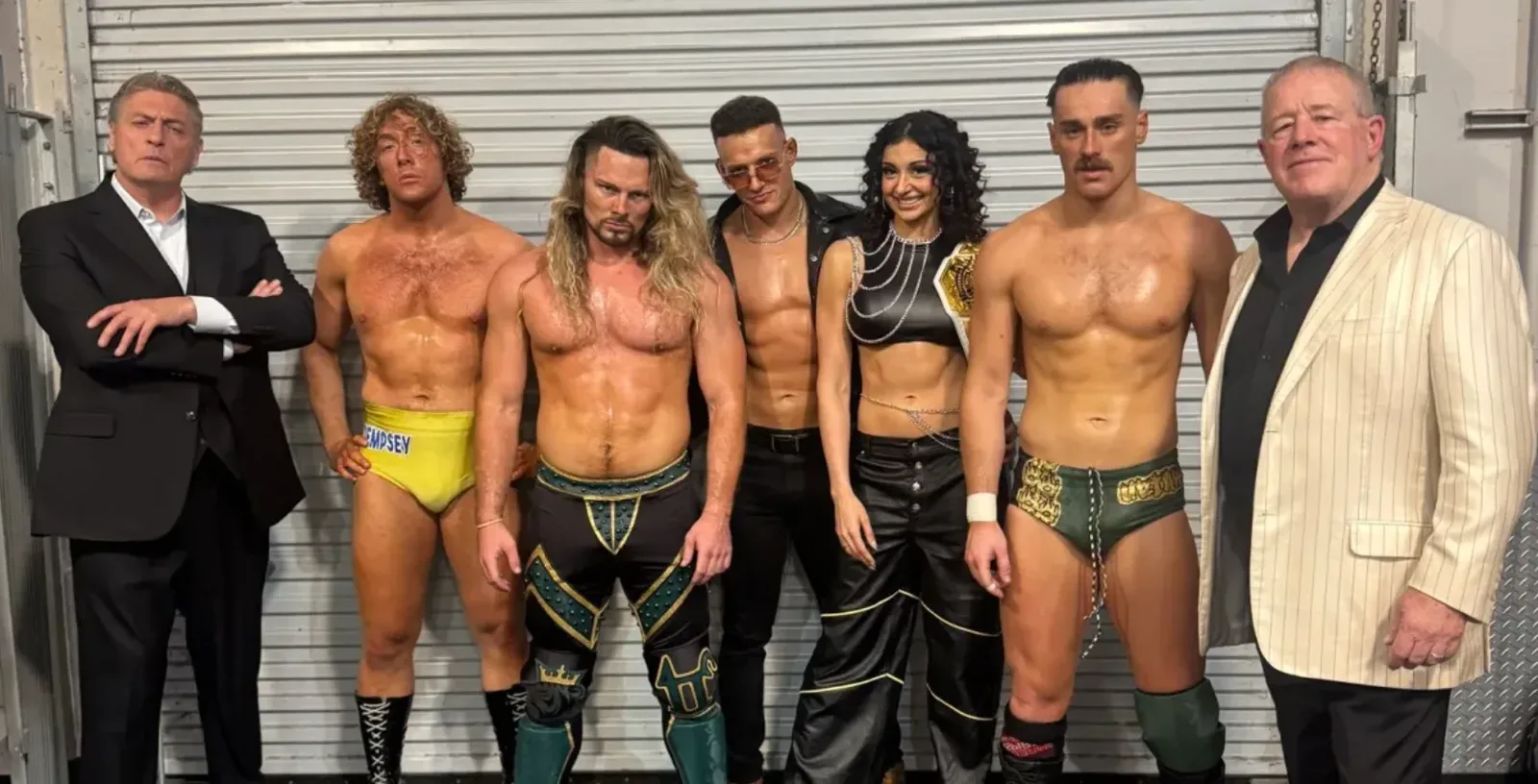
Santino Marella believes the members of WWE NXT’s Birthright faction are handling a uniquely difficult opportunity: performing under the attention that comes with recognizable wrestling family names while trying to establish themselves as talents in their own right.
Birthright began taking shape in NXT in March and is currently comprised of Uriah Connors, Charlie Dempsey, Arianna Grace, Stacks and Lexis King. The group has recently been involved in a feud with Zilla Fatu, placing the faction in one of the more visible ongoing stories on the NXT brand.
The stable’s central idea naturally carries an extra layer of scrutiny. Several members have direct family connections to well-known names in professional wrestling, including Marella’s daughter Arianna Grace. Rather than viewing that history as an automatic advantage, Marella said it can create substantial pressure for those trying to build careers in the ring and on television.
Speaking on the We R Wrestling podcast, Marella addressed the expectations surrounding Birthright and explained why he feels the group’s members need to do more than simply meet the standards associated with their backgrounds.
For more background on this topic, read Syuri Reunites With Asuka for Dinner, Reflects on Longstanding Bond With Kana.
“It’s interesting because, it comes with some pressure too. You have to perform and, but the pressure is interesting. It’s not just to live up to your parent’s expectations, you have to exceed expectations that anybody puts on you because you don’t want anybody to be able to say to you that you’re only here because of your dad.”
That distinction is an important one for a faction such as Birthright. Wrestling lineage has long been a major part of the industry’s identity. A famous surname can immediately give a performer context, help audiences understand their presentation and create an easy starting point for a character. It can also invite questions that performers without that connection may not face as directly.
For a wrestler entering WWE through a family legacy, the audience may arrive with a set of expectations already in place. Fans can compare style, charisma, physicality, achievements and even mannerisms to the generation that came before. The comparison may be flattering, but it is rarely simple. A second- or third-generation performer must demonstrate that their place on the roster is based on their own ability to connect with viewers, develop a character and deliver when given major television time.
Marella said that challenge can lead wrestlers with famous relatives to push themselves harder, specifically because they want to remove any basis for claims that their opportunities were handed to them.
“So they have to, they generally outwork everybody. Everyone in the faction is working really hard to take away people’s ability to say that you’re only here because of your parents, you know, and they’re getting the spotlight. They’re getting a lot of time. It seems to be a featured storyline and and they’re capitalizing on the opportunity, they’re doing really well.”
Birthright’s NXT Spotlight
Birthright’s current place in the NXT landscape gives the group a platform to make that case every week. With Connors, Dempsey, Grace, Stacks and King aligned, the faction has multiple personalities who can contribute to segments, matches and confrontations. Their ongoing issue with Zilla Fatu has further put the group at the center of an active NXT program.
Factions are often especially valuable in developmental wrestling because they give performers a shared purpose and allow several wrestlers to gain television exposure at once. They can also help establish character dynamics quickly. A group can create a clear visual identity, amplify a rivalry and provide its members with frequent opportunities to show different aspects of their personas.
For Birthright, the family-legacy concept also gives the stable an immediate thematic foundation. The name itself points toward inheritance, expectation and the advantages and burdens that can accompany a recognizable wrestling heritage. Those themes are not merely background details in this case; they are central to how the group may be perceived by viewers.
Marella’s comments suggest that the performers understand the challenge. The goal is not simply to benefit from the attention that comes with their backgrounds. It is to turn that attention into meaningful momentum by delivering in a featured NXT storyline and proving that their individual contributions merit the time they receive.
Arianna Grace and the Next Generation
Arianna Grace’s role in Birthright gives Marella a personal perspective on the faction. As a former WWE Intercontinental Champion and a performer whose Santino Marella character became one of the company’s most memorable comedic personas, he knows what it takes to connect with a WWE audience. He also knows that his daughter’s path cannot be a copy of his.
Grace is forging her own identity in NXT, and her place within Birthright adds another dimension to that process. The faction places her alongside other performers connected to prominent wrestling families, while also creating an environment where each member must stand out. Being part of a group can offer support and visibility, but it also means every wrestler needs a distinct voice so that the stable does not become defined by just one person.
The same principle applies across Birthright’s lineup. Charlie Dempsey, Uriah Connors, Stacks and Lexis King each bring their own presence to the act. Their collective identity may be rooted in lineage, but their long-term success depends on whether audiences see them as compelling performers beyond that shared premise.
Marella’s emphasis on work ethic speaks to the broader reality facing the group. NXT has traditionally been a place where wrestlers develop their in-ring craft, refine their character work and learn how to perform under the demands of WWE television. A prominent faction storyline can speed up that learning process because the performers are asked to carry more responsibility in front of a wider audience.
There is little room to rely solely on a last name once the bell rings or a live promo begins. The performers have to sustain the crowd’s interest, respond to the moment and make viewers care about the outcome of their rivalries. Marella’s assessment is that Birthright is doing exactly that during its present run.
Turning Expectations Into Momentum
Birthright’s feud with Zilla Fatu provides the group with a direct opportunity to continue building that momentum. Rivalries are where factions can show their unity, their weaknesses and their individual personalities. They also offer viewers a chance to decide whether the group’s concept has substance beyond its initial presentation.
For Marella, the early signs have been encouraging. He pointed to the spotlight the group is receiving and said the members are capitalizing on it. That is a notable endorsement from someone watching both as a wrestling veteran and as the father of one of the faction’s members.
The pressure connected to legacy is not going away for Birthright. If anything, visibility tends to make those conversations louder. But Marella’s view is that the group’s response has been the right one: work hard, embrace the time they are being given and make it difficult for critics to dismiss their achievements as the product of family ties.
As the NXT storyline with Fatu continues, Birthright will have further chances to show what the faction can accomplish together. The group may have been brought together by a concept tied to the past, but its members are now responsible for defining what that name means in the present.

Darryl Polo
Darryl Polo is a passionate wrestling fan covering WWE, AEW, TNA and beyond. He loves great rivalries, breakout stars and the moments that keep fans talking long after the bell. How we work.