
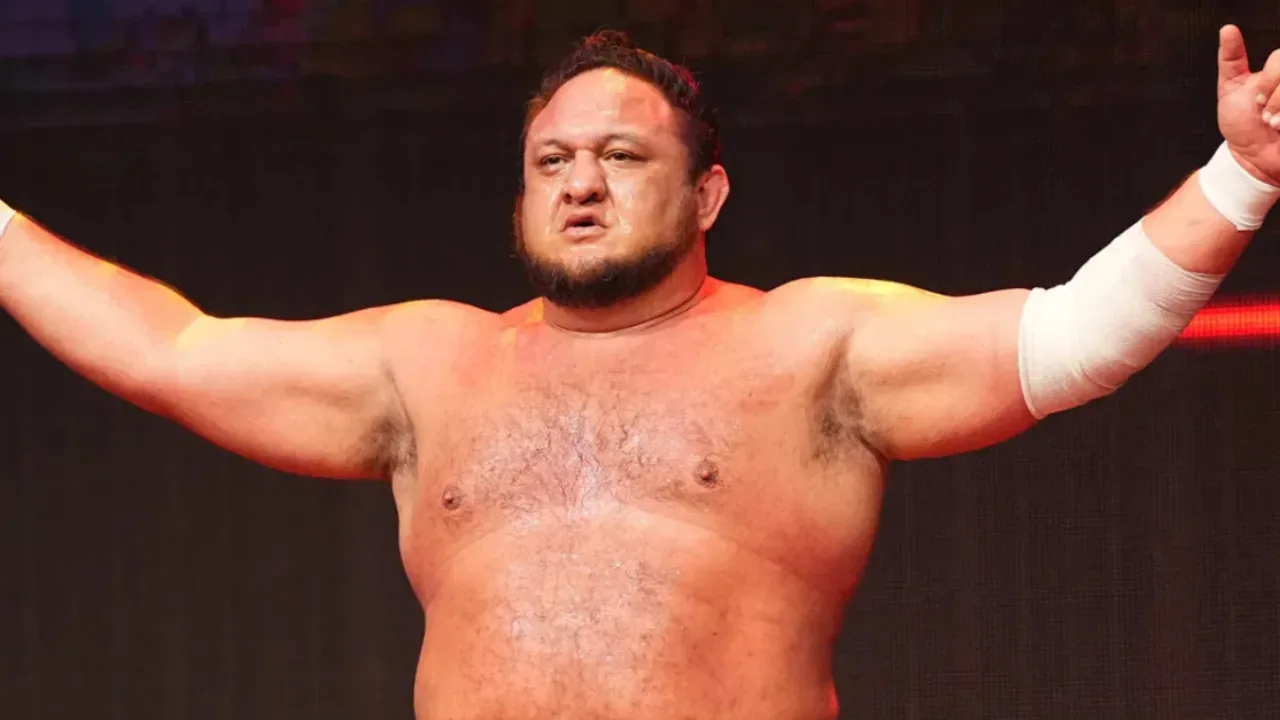
Samoa Joe has reflected on one of the most uncertain periods of his professional career, revealing that he believed his time as an active wrestler may have ended after suffering a concussion in February 2020.
The concussion occurred while Joe was filming a commercial. What followed was a dramatic professional detour: a move away from in-ring competition, a stint behind the WWE commentary desk, two separate releases, a return in a corporate-oriented role, and eventually a fresh opportunity that included both acting work and a move to AEW.
Speaking with Craig Altman of Grace Family Church, Joe described how quickly the situation changed after the injury. In his view at the time, the concussion did not simply interrupt his wrestling schedule. It appeared to bring his career as an active performer to a close.
“Within the span of two months, I had received a concussion and my career was essentially over,” Joe said.
For more background on this topic, read Dark Sheik Says Drake Wuertz Appearance Prompted Her GCW Walkout.
For a wrestler whose identity had long been tied to physical competition, that prospect represented an enormous shift. Joe had built a career around his presence in the ring, and the sudden removal of that element forced him to confront an uncertain future. Rather than immediately returning to action, he was assigned to WWE commentary.
Commentary Created a New Role During an Uncertain Time
Joe’s commentary work became a notable chapter of that period. He remained in the role from 2020 until August 2021, giving him a visible place on WWE programming even while he was away from the ring. The assignment allowed Joe to stay connected to the weekly product and bring the perspective of an experienced wrestler to television broadcasts.
Joe made clear that he appreciated the opportunity, even as it arrived amid difficult circumstances.
“I was sent to the commentary desk, which was awesome, a good time,” Joe said.
That positive assessment is significant because commentary can be a complicated transition for an athlete whose active future is unclear. It can provide a platform and a measure of stability, but it can also reinforce the reality that a performer is no longer competing. In Joe’s case, the role became a productive part of a much larger stretch of professional upheaval.
His time at the desk was not the end of the instability. Joe explained that he was released while working through that transition. He was subsequently brought back, a development he characterized as unexpected and welcome.
“In that time, I was let go and fired. I was hired back, miraculously, thankfully, and I moved into a more corporate position,” Joe said.
The return did not ultimately provide lasting security. Joe said WWE’s corporate structure later changed, and he found himself released once more only two months after moving into that new position.
“But then the corporate structure changed, and two months later I found myself fired again,” Joe said.
A Sequence of Setbacks Did Not End Joe’s Story
Joe’s comments lay out a compressed series of events that could have led many performers to conclude their wrestling careers were finished. A concussion had altered his immediate future. His role changed from wrestling to broadcasting. That new path was interrupted by a release, followed by a rehire and a move to a different internal position. Then came another release.
WWE released Joe again in January 2022. At that point, the question surrounding his future was no longer limited to when he would return to the ring. It was whether he would receive another meaningful opportunity in the wrestling industry at all.
Instead, Joe’s career took another unexpected turn. He landed a role connected to Twisted Metal and later signed with AEW. The combination of an acting opportunity and a new wrestling home underscored the degree to which his professional outlook had changed from the period he described in the interview.
There is a sharp contrast between Joe believing that his in-ring career was “essentially over” and the position he eventually reached. His story is not presented as a straightforward recovery narrative in which every step went according to plan. It was marked by uncertainty, changing responsibilities and repeated employment disruptions. The eventual outcome came through a series of opportunities that were not apparent when he first moved to commentary following the concussion.
The Weight of a Concussion for an Active Wrestler
Joe’s account also illustrates why concussions can be especially consequential in professional wrestling. The physical demands of the sport mean that a concussion does not merely affect a performer’s ability to work one scheduled match. It can reshape every decision surrounding training, travel, ring clearance and long-term career planning.
For an established wrestler, time away from the ring can also create a difficult emotional adjustment. The performer remains part of the business, but the central component of the job—the act of competing before an audience—is suddenly absent. Joe’s commentary role offered a different way to contribute, but his own recollection shows that he initially saw the injury as potentially decisive for his future as a wrestler.
His remarks do not frame the commentary assignment as a negative experience. In fact, he specifically called it “awesome” and said it was “a good time.” Still, the role existed within a larger period in which Joe was processing the possibility that his active career had ended. Both ideas can be true at once: the commentary work was valuable, and the circumstances that placed him there were deeply challenging.
The broader employment changes only added to the stakes. Being released once is a major professional setback. Being released, rehired, shifted into another role and then released again can make long-term planning particularly difficult. Joe’s use of the words “miraculously” and “thankfully” for his rehire conveys how uncertain that window had been before the second release arrived.
Joe’s AEW Run Carries Added Perspective
Joe’s eventual signing with AEW gives the earlier chapter additional perspective. His journey did not follow the route he expected after the February 2020 injury, but it also did not conclude with that injury. The path moved through broadcasting, corporate work, releases and non-wrestling opportunities before AEW became the next major destination in his career.
That does not erase the frustration of the period he described. The sequence was difficult precisely because it involved more than a single setback. The concussion created an immediate question about his ability to wrestle again, and subsequent business decisions created further uncertainty even after Joe remained involved with WWE in other capacities.
Yet Joe’s reflections show a willingness to acknowledge the positive aspects of each stage without minimizing the difficult reality surrounding them. He enjoyed commentary. He was grateful for the chance to return after his first release. At the same time, he plainly remembered believing that his career was over and later having to confront being fired again.
For fans, the comments offer a candid look at the instability that can exist behind a wrestler’s on-screen role. A performer may appear regularly on television, as Joe did while calling matches, while simultaneously navigating major questions about health, employment and what comes next.
An Unpredictable Road Back
Joe’s career since that 2020 concussion stands as a reminder that professional wrestling careers can change direction quickly. An injury may lead to a new television role. A release may be followed by a rehire. A second release may open the door to a different promotion and opportunities outside wrestling.
When Joe first faced the aftermath of the commercial shoot injury, none of those later developments could have been assumed. He believed his active career was effectively finished. Years later, his journey includes a return to wrestling prominence through AEW as well as his involvement with Twisted Metal.
That is what makes his recollection especially compelling. It is not simply the story of a wrestler overcoming one injury. It is the story of someone navigating a succession of abrupt changes while trying to find a place in an industry where the next opportunity is never guaranteed. Joe’s path from concussion concerns and commentary to a new chapter in AEW was neither simple nor predictable, but it proved that the conclusion he feared in 2020 was not the final chapter.

Darryl Polo
Darryl Polo is a passionate wrestling fan covering WWE, AEW, TNA and beyond. He loves great rivalries, breakout stars and the moments that keep fans talking long after the bell. How we work.