
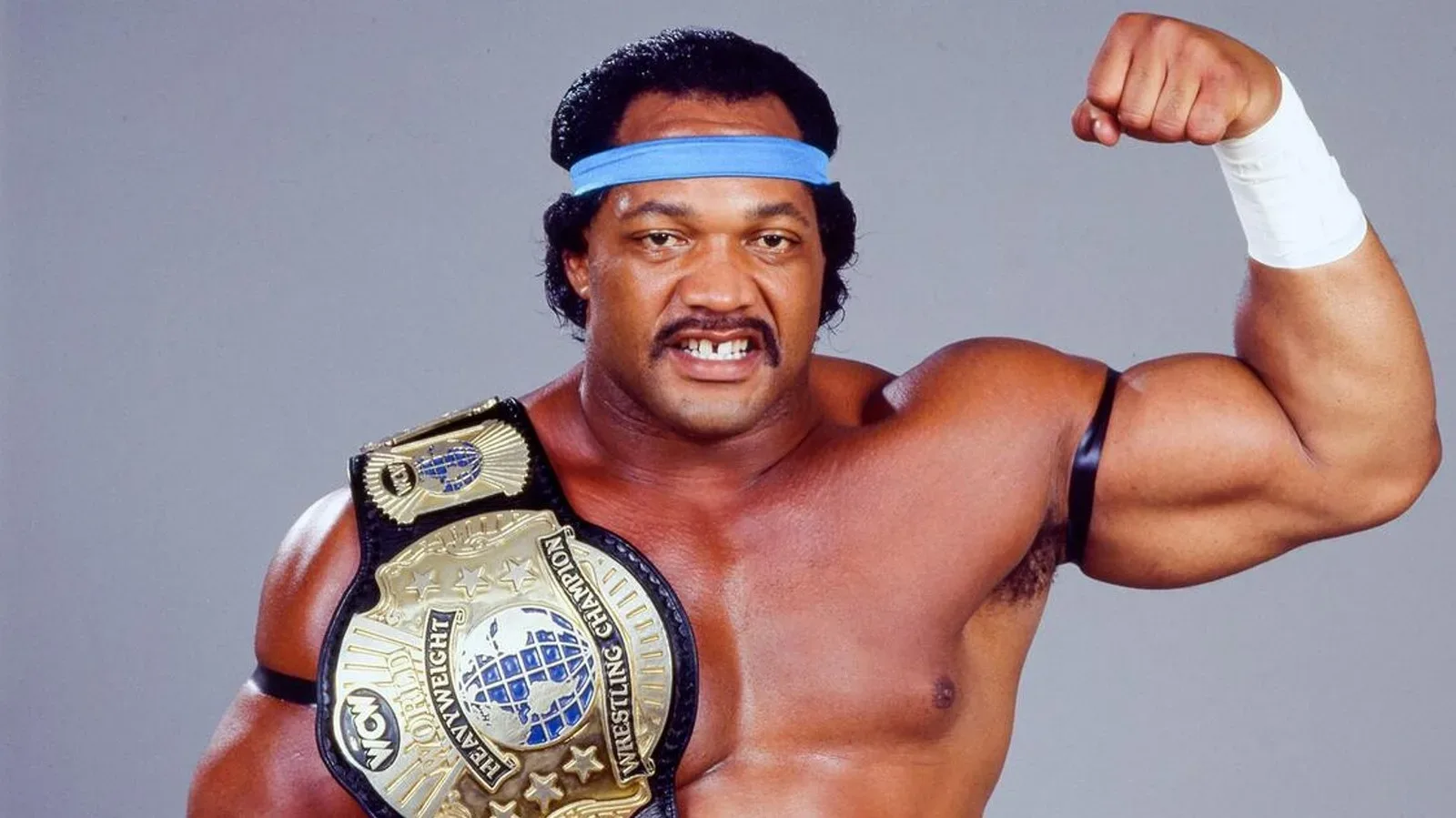
Ron Simmons’ victory over Vader for the WCW World Heavyweight Championship remains one of the defining moments in professional wrestling history. More than three decades after the upset, Simmons continues to hear from fans who view that August 1992 title change as a landmark not only for WCW, but for the broader wrestling audience.
Simmons, who became the first Black wrestler to hold the WCW World Heavyweight Championship, recently revisited the moment while appearing with JBL on INSIGHT with Chris Van Vliet. The former champion explained that it remains a match and an occasion he still revisits, because of the genuine reaction it created in the building and the meaning it has accumulated in the years since.
“It was a real moment in this business,” Simmons said on INSIGHT with Chris Van Vliet.
The phrase fits the setting as much as the result. Simmons’ championship win over Vader did not happen at one of WCW’s major pay-per-view events, where a world title switch might have been telegraphed through weeks of television promotion. Instead, it occurred at a house show in Baltimore, Maryland, on August 2, 1992. The match was subsequently shown on WCW Main Event, allowing a much wider audience to see an outcome that many fans in attendance had not expected.
For more background on this topic, read NOAH N-1 Victory 2026 Opens With Eight Tournament Matches at Korakuen Hall.
At the time, Vader was one of the most intimidating and dominant forces in the company. The powerhouse, accompanied by Harley Race, had established himself as a physically overwhelming champion. Beating Vader was not presented as an ordinary win for a rising contender. It was a dramatic breakthrough against one of WCW’s most formidable attractions.
Simmons recalled that the secrecy around the title change added to the impact. Without revealing more than he was comfortable sharing about the decision-making process, he stated that the participants themselves had not been aware of the change until shortly before it occurred. That helped preserve the sense that the audience was seeing something spontaneous and extraordinary rather than a carefully signposted storyline development.
“And that's where you got the realism of it, because no one would've ever expected that at a house show!” Simmons said on INSIGHT with Chris Van Vliet.
That element of surprise is a major reason the moment has endured. Wrestling crowds are often trained to look for familiar signals: the build toward a major event, the challenger receiving momentum on television, or the champion seemingly being positioned for a major defeat. Simmons’ triumph took a different path. The live crowd saw a title match where the possibility of a change may have felt remote, which made the final bell and championship celebration all the more powerful.
For Simmons personally, the accomplishment added another major chapter to a career already filled with historic milestones. Before becoming world champion, he and Butch Reed had been recognized as the inaugural WCW World Tag Team Champions. Simmons had also entered wrestling after a celebrated football career, bringing legitimacy, athleticism, and a commanding presence to every stage of his in-ring journey.
Yet the world title victory stands apart. It placed Simmons in a position no Black wrestler had held before in WCW and offered an image that resonated far beyond the immediate championship program. The sight of Simmons holding the top prize sent a message of possibility to viewers who had rarely seen that level of representation in a major American wrestling promotion.
JBL noted during the discussion that fans still approach him at conventions and bring up Simmons’ win over Vader. It is a reminder that the match is not simply remembered as an item on a championship history list. For many fans, it is attached to a personal memory: watching the show, reacting to the surprise, or seeing a wrestler break through a barrier they had not expected to see broken.
Simmons said he did not fully understand the scale of that response when he first won the championship. In the moment, a wrestler is often focused on the responsibility of the role, the travel, the matches ahead, and the realities of performing as champion. The larger cultural impact can take years to reveal itself through the stories supporters share.
“I get letters every week from someone saying they was at a bad place, dark place in their life, how it changed them and inspired them — and not just Black people, you understand me? All people of all walks of life, you know?” Simmons said on INSIGHT with Chris Van Vliet. “So it's really special and it really means a lot.”
That perspective is central to why Simmons’ title win continues to matter. Its importance is inseparable from the historic nature of becoming the first Black WCW World Heavyweight Champion, but Simmons emphasized that the inspiration fans have drawn from it reaches across backgrounds. For some, the moment represented overdue progress in wrestling. For others, it was an example of perseverance being rewarded on one of the industry’s biggest stages.
The title reign itself lasted through the closing months of 1992. Vader ultimately regained the WCW World Heavyweight Championship from Simmons at a live event near the end of the year. While Simmons’ run was relatively brief by the standards of some world champions, its legacy has never depended solely on the number of days he held the belt. The initial victory, the shock of the title switch, and the symbolism of the champion all ensured that the reign would be remembered.
There is also an important distinction between statistical legacy and emotional legacy in wrestling. A championship record can document who held a title and when it changed hands, but it cannot fully capture what a particular victory represented to those watching. Simmons’ words show that the ongoing impact is measured in the messages he receives from people who connected with the moment during difficult periods in their lives.
That connection has kept the 1992 win present in conversations about the most important championships in WCW history. Vader’s reigns, his reputation as a feared heavyweight, and the physical intensity of their rivalry remain part of the story. But Simmons overcoming that obstacle is what turned the match into a lasting historical touchstone.
It also illustrates the value of unpredictability in professional wrestling. A title change at a non-televised event, later shared with viewers through WCW Main Event, carried a different energy because it did not fit the usual expectation of how a championship moment was supposed to unfold. Fans who were there witnessed history live, while viewers at home were able to see the result after the fact and understand why the reaction was so profound.
Simmons has long been celebrated for the toughness and charisma he brought to wrestling, whether competing under his own name or later becoming synonymous with the “Damn!” catchphrase as part of the APA with JBL. Still, the WCW World Heavyweight Championship victory represents something uniquely enduring. It was a breakthrough that changed the company’s history and created a point of connection that remains vivid for fans today.
More than 30 years later, Simmons’ reflections make clear that he recognizes the responsibility and honor attached to that night in August 1992. What began as a shocking title change against Vader at a house show grew into an enduring source of pride, inspiration, and representation—one that continues to reach people well beyond the wrestling ring.
In pictures

Darryl Polo
Darryl Polo is a passionate wrestling fan covering WWE, AEW, TNA and beyond. He loves great rivalries, breakout stars and the moments that keep fans talking long after the bell. How we work.