
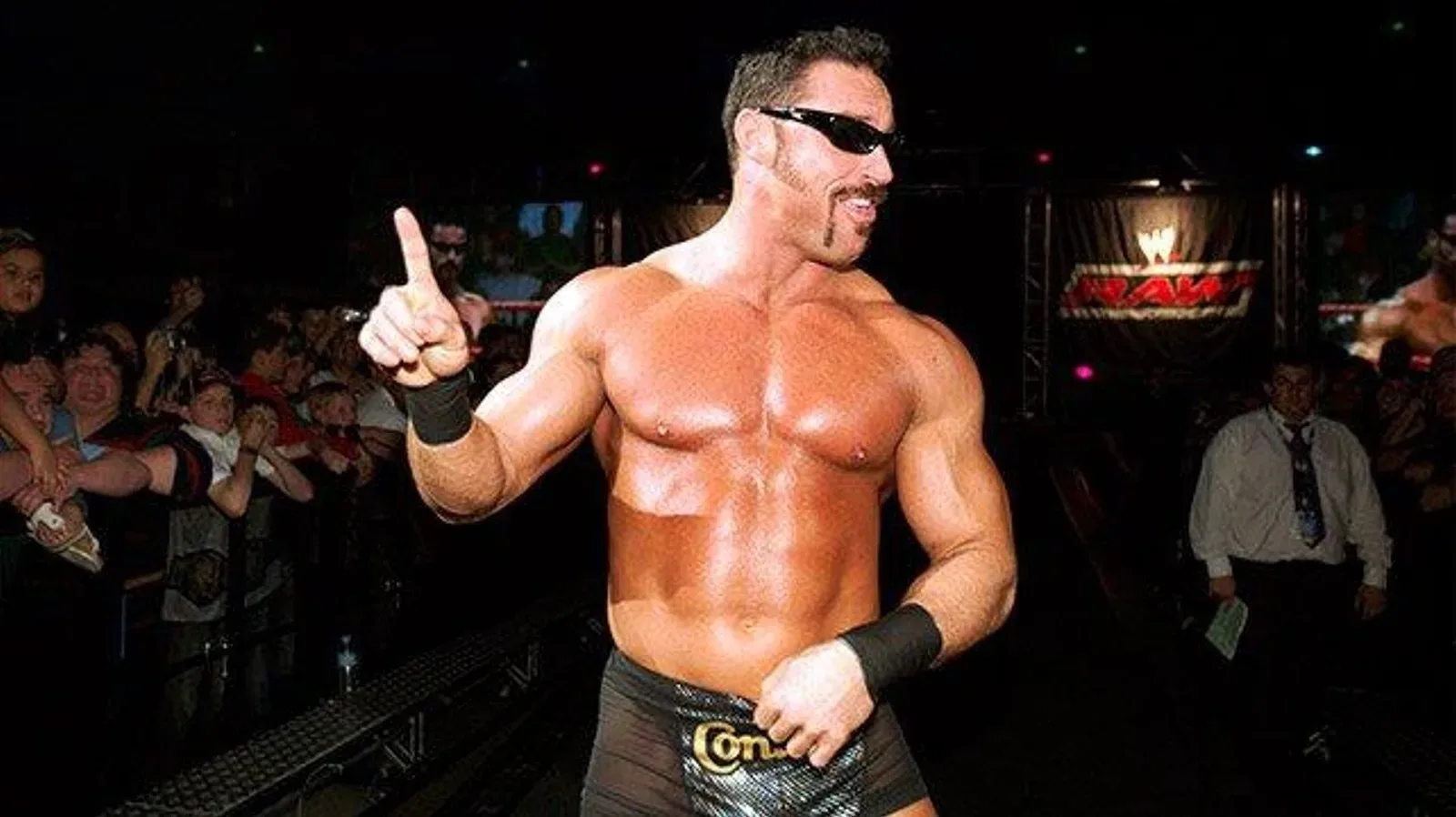
Rob Conway believes Vince McMahon saw substantial upside in him during his WWE run, including enough confidence in his wrestling ability to offer a comparison few performers would ever expect to hear.
Conway, who was prominently featured in the 2000s as one half of La Résistance with Sylvain Grenier before later receiving a singles presentation built around “Conway’s Law,” reflected on his time in WWE during an appearance on INSIGHT with Chris Van Vliet. He recalled a conversation in which McMahon praised his work between the ropes, but also delivered an important lesson about what the La Résistance act needed to be.
“He said, ‘Rob, I consider you to just be one tier below Bret Hart as a worker,’” Conway recalled on INSIGHT with Chris Van Vliet. “He said: ‘But you have a gimmick. You need to not worry about having such good matches. You gotta work the gimmick.’”
It was a striking assessment from McMahon, particularly given Hart’s long-established reputation as one of wrestling’s most technically accomplished and reliable performers. Conway did not portray the remark as a guarantee of a particular push or championship opportunity. Instead, his recollection centered on the larger directive: WWE had a specific role in mind for La Résistance, and the team’s responsibility was to make that role effective rather than chase acclaim for match quality alone.
For more background on this topic, read Seth Rollins Declares He ‘Hates Football For Life’ After Bears’ Loss and Caleb Williams Injury.
La Résistance Was Built to Draw Heat
Conway and Grenier’s La Résistance pairing was based around an antagonistic presentation, one that made visual character cues and crowd response central to the act. Conway said McMahon did not approach their matches by wishing the duo a great match in the conventional sense. His focus was much simpler and much more connected to their identity.
McMahon would urge the team to wave its flags, Conway said, because he considered that behavior a vital piece of the gimmick. The instruction illustrated the difference between executing a match as skilled athletes and performing as characters whose job was to provoke a reaction.
For Conway, that distinction eventually became clear. He said he and Grenier came to understand that their assignment was not to pursue five-star matches. They were there to generate heat. In wrestling terms, that meant making the audience emotionally invest in seeing them lose, strengthening the opposition, and ensuring that the character presentation remained recognizable from the moment they entered the arena.
That is not a minor adjustment in philosophy. A performer can have the physical ability to put together an impressive bout while still missing the larger objective of a television character. Conway’s account suggests McMahon valued his technical foundation, but believed the team would benefit more by leaning into the elements that made La Résistance stand out: the flags, the attitude, and the crowd’s negative response.
The story also offers a useful view of how WWE’s creative priorities could differ from those of a performer eager to demonstrate everything he could do in the ring. Conway’s reported conversation with McMahon was not a dismissal of wrestling ability. In fact, the Bret Hart comparison makes clear that McMahon recognized it. But McMahon’s message, as Conway remembered it, was that ability had to serve the act.
A Lesson Conway Carried Into His Singles Work
Conway later transitioned into a singles role, and he said he entered that period already aware that McMahon liked his in-ring work. That confidence appears to have informed how he approached the next stage of his WWE presentation.
“And so, whenever I became a singles wrestler, I already knew that Vince liked my in-ring ability,” Conway said on INSIGHT with Chris Van Vliet.
Conway added that he worked on his physique and made a major change to his appearance. Those adjustments were part of his effort to reshape how he was perceived on WWE programming. The evolution eventually included the “Conway’s Law” identity, a presentation that moved him away from the tag-team framework and gave him a more individual platform.
His recollection underscores how much a WWE performer’s look could matter alongside ring performance. Conway had the physical presentation McMahon favored, and Conway said he continued refining that element as he pursued greater visibility as a singles wrestler. The former WWE talent’s comments do not suggest that appearance was a substitute for ability; rather, he viewed his look, promo work, and wrestling as pieces that had to come together.
One anecdote from Conway particularly captures the emphasis placed on presentation. He remembered delivering a promo that he felt had gone very well, only to be told that it needed to be done again for a highly specific reason.
“One time I did a promo, and it went really good, and once I got it done and he goes: ‘You need to do it again; you need more oil,’” Conway recalled on INSIGHT with Chris Van Vliet.
The direction may sound unusually specific, but it fits Conway’s broader description of McMahon’s approach. The desired effect was not merely a competent interview. Every detail of the act, including the visual impression Conway made on camera, was treated as part of the overall character. For a wrestler seeking to establish himself as a featured singles presence, the presentation had to be as deliberate as the promo itself.
Intercontinental Title Aspirations
Conway said he was never promised anything by McMahon. That point is significant because it separates the positive feedback he received from any confirmed plan for his future. Praise, even praise as strong as a comparison to Hart’s level of in-ring work, did not amount to a commitment that a particular championship or main-event position would follow.
Still, Conway felt his early direction was pointing toward the Intercontinental Championship picture. He described that title as a logical stepping stone on the path toward main-event status.
“I was never promised anything, but I felt like... Where I was going at the beginning was towards the Intercontinental Championship; that’s kinda the stepping stone to being like a main event,” Conway said on INSIGHT with Chris Van Vliet.
The Intercontinental Championship has often held that kind of importance in WWE. While its meaning has varied across different eras, it has regularly been associated with performers moving upward, especially those being positioned beyond the tag division or the middle of the card. Conway’s comments frame it not as an entitlement, but as the level he believed his development and presentation were beginning to approach.
There is an important degree of uncertainty in that assessment. Conway was describing his own feeling about where the trajectory could have led, and he was explicit that no promise had been made. WWE plans can change rapidly, and positive internal feedback does not always translate into a sustained storyline, a championship pursuit, or a permanent spot at the top of the card.
More Than a Compliment
Conway’s recollection is notable because it combines a major compliment with a creative correction. McMahon’s reported praise placed Conway’s ring work in rare company, but the greater lesson was about knowing the assignment. La Résistance needed to function as an effective heel act, and Conway said it took time for the team to embrace that its success would be measured by heat rather than by the pursuit of standout matches.
That perspective stayed relevant when Conway became a singles performer. He knew his in-ring ability had been recognized, but he also understood the need to change his body, refine his look, improve the total visual package, and adapt to direction that could be as precise as asking for more oil before reshooting a promo.
For Conway, the story is ultimately not just about an unexpected Bret Hart comparison. It is about the balance WWE expected from its performers: wrestling skill mattered, but character, presentation, audience reaction, and the ability to execute a defined role mattered just as much. In Conway’s telling, McMahon saw the talent. The challenge was making sure that talent was used in the way the character required.
In pictures
Darryl Polo
Darryl Polo is a passionate wrestling fan covering WWE, AEW, TNA and beyond. He loves great rivalries, breakout stars and the moments that keep fans talking long after the bell. How we work.