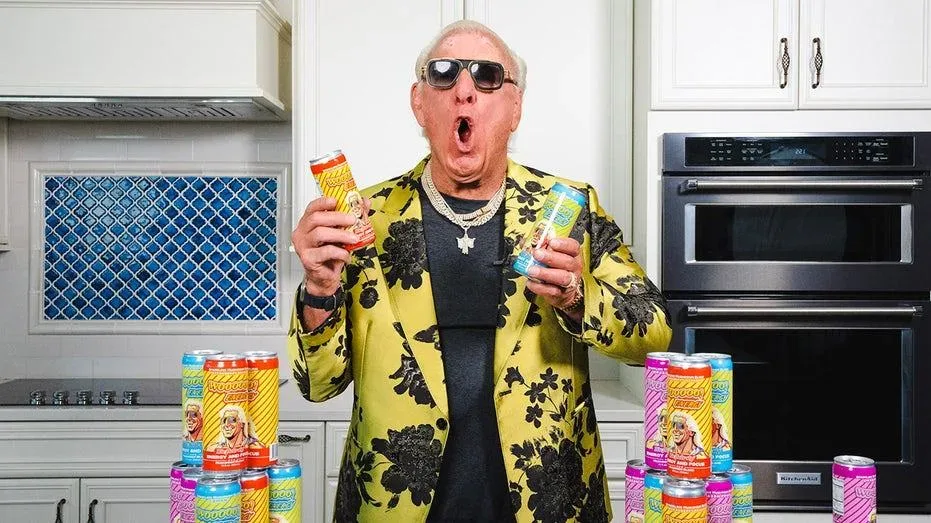
Ric Flair has filed a lawsuit against FAM Networks that seeks at least $10 million in damages while challenging the agency’s claimed rights to use his name, image and likeness.
The WWE Hall of Famer alleges that FAM Networks, described in the filing as an influencer talent agency, induced him to enter an agreement that gave the company sweeping and continuing control over his identity and social-media business. Flair, whose legal surname is Fliehr, is asking the court to unwind the agreement, return control of his Facebook page and declare that FAM has no right to his name, image or likeness.
At the center of the complaint is Flair’s assertion that he sought help preserving and expanding the digital value of a persona built over decades in professional wrestling. The filing claims FAM presented the arrangement as a way to restore a Facebook page said to have been hacked and demonetized, while also creating new business opportunities involving appearances, speaking engagements and collaborative projects.
Instead, Flair alleges that the promised opportunities and revenue did not materialize, while FAM secured a perpetual license connected to his identity. He claims to have missed out on at least $250,000 in revenue so far.
For more background on this topic, read Tommaso Ciampa Reflects On How The British Wrestling Scene Helped Launch His Career.
Flair Alleges He Was Not Given a Meaningful Opportunity to Review the Deal
The lawsuit paints the signing process as a major point of dispute. Flair alleges that he was given only 14 minutes to review the agreement and was led to believe he had legal representation involved when, he contends, he did not.
“What FAM did was simple: it waited until he needed help managing the digital legacy of everything he had built, presented him with a document he was not equipped to understand, told him he had lawyers when he did not, gave him fourteen minutes to read it, and walked away with a perpetual license to his identity.”
That allegation goes directly to Flair’s fraudulent-inducement claim. He is arguing not merely that FAM later failed to perform under an otherwise valid business arrangement, but that the agreement itself was secured through deceptive circumstances and promises.
Flair’s lawsuit also challenges the scope of the rights FAM allegedly received. For a performer whose public identity has remained commercially valuable long after his full-time in-ring career, control over his name, likeness, archive footage, social-media presence and branded appearances can be central to his ability to generate income.
Flair is one of wrestling’s most recognizable figures, with a career spanning the NWA, WCW, WWE and numerous other promotions and public appearances. The “Nature Boy” brand has long extended beyond matches and television, making digital content, sponsorships, live appearances and licensing opportunities especially significant to the legal fight.
Claims Over Facebook Revenue and Unfulfilled Business Promises
The complaint says FAM promised a defined revenue structure for different categories of work. Flair alleges that the company pledged 50 percent to him for “collaborative projects” and 10 percent for “passive content.” The filing further states that FAM represented it could restore and monetize his Facebook page to the point that it would produce six figures in monthly revenue.
Flair’s position is that these were contractual commitments, not loose projections or hopes for future growth. The lawsuit alleges that FAM did not provide the work it had represented it would provide, including speaking engagements, in-person appearances or personal projects that would fall within a 90 percent royalty tier.
“These were not aspirations. They were contractual obligations. FAM delivered none of them. It sourced not one speaking engagement. Not one in-person appearance. Not one personal project at the ninety percent royalty tier. It reposted existing content.”
The filing alleges that FAM’s work consisted primarily of repurposing content that already existed, rather than creating the new opportunities contemplated by the parties’ deal. Flair further claims that FAM made as much as $20,000 per month from his Facebook page while paying him nothing.
Those allegations have not been established in court. They represent Flair’s claims in the lawsuit, and the case will turn on the terms of the agreement, the communications leading to its execution, the handling of the accounts and any financial records that show what revenue was generated and how it was distributed.
A complete accounting is one of the remedies Flair is seeking. Such an accounting would require a detailed examination of money allegedly made through the use of his name, likeness and social-media properties. The request is particularly important given his claim that FAM retained profits tied to his online audience while failing to provide the income and opportunities it had promised.
Control of Social-Media Accounts Is a Key Issue
Flair alleges that FAM quietly took control of his social-media accounts and recategorized them in a way that made recovery extremely difficult. The Facebook page is specifically identified in his requested relief, with Flair asking the court to order the page returned to his control.
The dispute illustrates how valuable social accounts have become for wrestlers and other public figures. A verified or long-established page is more than a promotional tool: it can serve as a direct channel to fans, an advertising platform, a source of video revenue and a means to market appearances, merchandise and partnerships. Losing access can therefore affect both immediate income and a talent’s longer-term ability to independently manage a brand.
For legacy performers, those accounts can also function as a digital archive of career highlights and public-facing material accumulated over many years. Flair’s lawsuit frames the matter as an attempt to recover control of that legacy from a company he says was supposed to help manage it.
The complaint seeks rescission of the agreement, which would effectively void the deal if granted. Flair is also pursuing a declaratory judgment that FAM has no right to his name, image or likeness. Together, those requests aim to remove any continuing authority FAM may claim under the disputed contract.
Damages Sought in the Case
Flair is seeking several categories of damages and other relief. The suit demands at least $5 million in compensatory damages for alleged breach of contract. It also seeks compensatory and punitive damages of at least $5 million for alleged fraudulent inducement.
In addition, Flair is requesting damages to be determined at trial for alleged violations of New York Civil Rights Law and for alleged tortious interference with prospective economic advantage. The lawsuit also seeks disgorgement of any money by which FAM was allegedly unjustly enriched at Flair’s expense, along with attorneys’ fees and court costs.
The tortious-interference portion of the case concerns the allegation that FAM’s conduct damaged Flair’s ability to pursue future business opportunities. Given the claims that no speaking engagements, personal appearances or qualifying personal projects were obtained through the arrangement, Flair is contending that the deal did more than simply fail to create revenue. He alleges it obstructed potential avenues of business connected to his established public profile.
The requested $10 million figure reflects the two stated $5 million damage demands, though the filing also includes categories of damages that would be determined later and seeks additional equitable relief. The final value of any recovery, if Flair prevails on any claim, would depend on the court’s rulings and the evidence presented over the course of the litigation.
A Significant Fight Over a Wrestling Icon’s Commercial Identity
Flair’s case arrives at a time when ownership and control of a wrestler’s identity have become increasingly important business issues. Social-media monetization, short-form video distribution, brand licensing and digital advertising have all created additional ways for personalities to turn public recognition into revenue. Those opportunities also bring complicated questions about who owns accounts, who controls access and how income is divided.
For Flair, the lawsuit is a direct effort to reclaim authority over a name and image that remain among the most recognizable in wrestling. His complaint alleges that an agency brought in to expand the value of that identity instead obtained broad control over it and failed to pay him the returns he was promised.
FAM Networks will have the opportunity to respond to the allegations in court. Until then, the filing lays out Flair’s version of a business relationship that he says left him without control of his Facebook page, without the promised stream of digital and appearance-related income, and with an agreement he wants the court to erase.
The case now places the details of that relationship under legal scrutiny, including the agreement’s language, the alleged 14-minute review period, the status of Flair’s accounts, the revenue connected to his Facebook presence and the extent of any rights FAM may contend it received. For one of professional wrestling’s most enduring figures, the outcome could determine who controls a substantial portion of his digital future.
Darryl Polo
Darryl Polo is a passionate wrestling fan covering WWE, AEW, TNA and beyond. He loves great rivalries, breakout stars and the moments that keep fans talking long after the bell. How we work.