
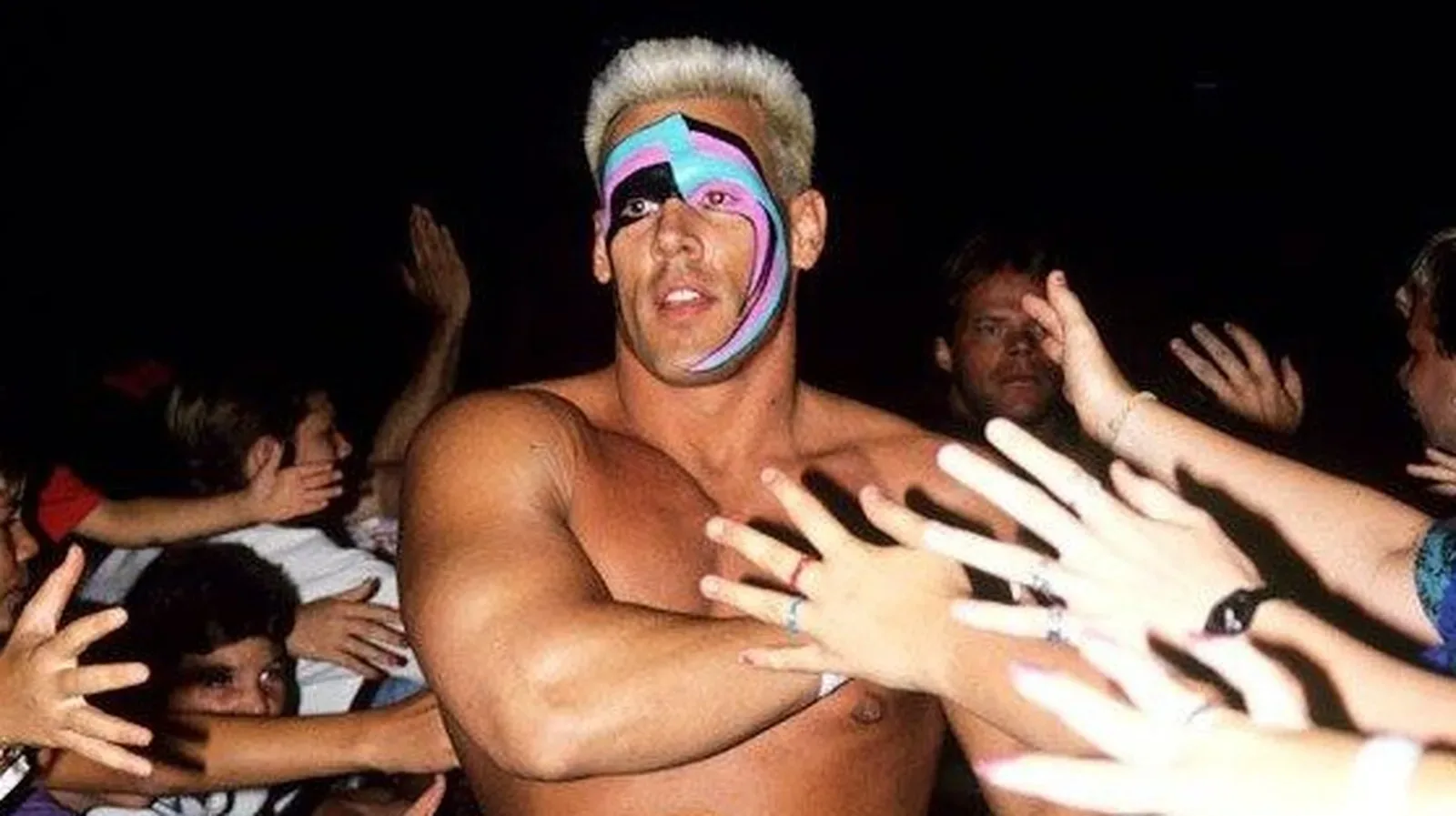
Paul Heyman has drawn a direct line between a dramatic moment from Thursday night’s Green Bay Packers game and one of WCW’s most memorable injury-recovery angles involving Sting.
Packers wide receiver Christian Watson was injured during Green Bay’s 27-19 victory over the Carolina Panthers at Lambeau Field in Green Bay, Wisconsin. Watson hurt his ribs after coming down with a catch and was reported to be coughing up blood. He was taken from the stadium to a local hospital by ambulance, a development that understandably made his status a major concern during the game.
CT scans reportedly showed that Watson had not suffered internal bleeding, and he was cleared to return to the field later that night. The visual of Watson emerging from the side door of the ambulance after being cleared immediately sparked pro wrestling comparisons among viewers, particularly to Sting’s famous return from an ambulance at WCW Clash of the Champions 17 in 1991.
View the referenced post on X
Heyman, who was involved in the original WCW story as Rick Rude’s manager, embraced the comparison in a post on X. “We did this with @Sting in 1991 in WCW (vs ‘Ravishing’ Rick Rude), and the industry has repeated it with great success in numerous circumstances,” Heyman wrote. “My most sincere compliments to the @NFL’s creative team. Nicely done!”
For more background on this topic, read Stephanie Vaquer Absence From WWE Raw Reportedly Due To Illness, Return Timeline Unclear.
The WWE Hall of Famer’s reaction was a knowing acknowledgment of how closely Watson’s return resembled a familiar wrestling storytelling device: a competitor suffers a frightening apparent setback, questions surround whether they can continue, and then the athlete makes a dramatic reappearance when the audience least expects it.
Why the Sting comparison was immediate
In 1991, Sting was WCW United States Champion and scheduled to defend the title against “Ravishing” Rick Rude at Clash of the Champions 17. The central issue heading into the match was Sting’s physical condition. He was dealing with the question of whether he was healthy enough to put the championship on the line. If he could not compete, the stakes were clear: Sting would have to surrender the title.
That uncertainty created the foundation for one of the era’s most recognizable visual moments. Sting ultimately arrived by charging out of an ambulance, signaling that he intended to compete despite not being fully recovered. The image gave the champion an immediate burst of momentum and played into Sting’s established identity as a resilient, fight-through-anything hero.
The outcome did not provide the feel-good ending Sting’s supporters may have wanted. Rude defeated Sting and became the new United States Champion. Even so, the ambulance arrival endured as the lasting image of the segment because it was built around an easy-to-understand emotional hook: a wounded champion refusing to stay down when his title and pride were on the line.
Watson’s circumstances were, of course, real-life football rather than a planned wrestling narrative. His reported trip to the hospital, the medical testing, and his clearance to return were matters of genuine concern. But the sequence carried a kind of sports-drama rhythm that wrestling audiences know well. An athlete disappears following an alarming injury, their availability becomes uncertain, and then they re-emerge in a manner that instantly changes the energy around the event.
That is why the Sting comparison traveled so quickly. It was not simply that an ambulance was involved. It was the combination of the ambulance, the uncertainty over a performer or athlete’s ability to continue, and the surprise of seeing that person return before the night was over.
Heyman’s connection to the original WCW moment
Heyman’s response carries added weight because he was not merely a fan watching Sting’s 1991 title defense from a distance. He was connected to Rude as his manager during that period, when Rude was part of The Dangerous Alliance. The group was a major force in WCW and included several prominent names, while Rude’s challenge to Sting provided a significant championship opportunity.
By referencing the Sting-Rude match specifically, Heyman pointed to the precise story that the NFL moment evoked. His post also underscored a broader truth about wrestling presentation: certain images and narrative beats remain effective because they are rooted in universal ideas of perseverance, jeopardy, and surprise.
Ambulance angles have appeared repeatedly across the wrestling industry over the years because they immediately communicate seriousness. An ambulance is not an ordinary backstage prop. Its presence tells the audience that the situation has escalated beyond a routine match injury or a standard post-match attack. When a wrestler later exits that ambulance and returns to action, the image reverses the expectation created only moments earlier.
Heyman’s phrase, “the industry has repeated it with great success in numerous circumstances,” speaks to that lasting value. Wrestling has frequently revisited versions of the comeback-from-medical-crisis story because the audience recognizes the stakes without requiring extensive explanation. The visual does much of the work.
In Watson’s case, the reaction was heightened by the fact that the situation unfolded at a live NFL game. Sports fans are used to injury updates and medical evaluations, but the manner of the return gave the situation an unexpectedly theatrical visual parallel. For wrestling viewers, Sting’s entrance at Clash of the Champions 17 was an obvious point of reference.
A classic wrestling device built on resilience
The comparison also reflects the way professional wrestling has long used physical adversity to define heroic figures. Sting’s character was especially suited to that type of presentation in 1991. As United States Champion, he was placed in a position where his toughness and willingness to defend the title were central to the story. The possibility of a forfeit established vulnerability; the ambulance exit restored his defiance.
There is a crucial distinction between portraying an athlete as invulnerable and portraying them as determined. The Sting angle worked because it did not suggest he was completely healthy. Instead, it framed him as someone willing to compete despite uncertainty about his condition. That made the eventual loss to Rude meaningful, while also preserving the emotional impact of Sting’s decision to show up.
The scene is also a reminder that the strongest wrestling angles often begin with stakes that are immediately clear. Sting’s championship was in danger. Rude had a path to winning the title. Sting’s health appeared to stand in the way. When the ambulance became part of the story, it provided a visual resolution to the question of whether the champion would appear at all.
Sports naturally create similar stakes without a scripted conclusion. Watson’s return after medical clearance became a major part of the game’s story because it followed a visibly alarming injury sequence. The fact that Green Bay went on to defeat Carolina, 27-19, only made the night more memorable for Packers supporters.
Heyman adds a wrestling perspective to a sports moment
Heyman is known for his ability to identify the mechanics of effective drama, whether in wrestling, combat sports, or broader pop culture. His reaction did not claim that Watson’s medical situation was part of a wrestling-style production. Instead, the post highlighted how powerfully the real event resembled a proven wrestling image.
The playful line about the NFL’s “creative team” was in keeping with the tongue-in-cheek language wrestling fans often use when real sporting events produce an outcome or visual that seems almost too perfectly timed. Heyman’s point was that the moment landed with the kind of impact that a successful wrestling segment aims to create.
After making the Sting comparison, Heyman also promoted his son’s talk show, The Roundtable, which premiered the previous Wednesday.
For WCW fans, however, the headline remains the unexpected revival of a 1991 memory. Sting bursting out of an ambulance to defend the United States Championship against Rick Rude remains a defining visual from that chapter of his career, even though Rude ultimately left with the title. More than three decades later, a dramatic football-game return gave Heyman and wrestling fans a reason to revisit it.
Watson’s return and Green Bay’s victory were real sports developments with real medical concerns at their center. Yet the resemblance to Sting’s famous entrance demonstrated why pro wrestling’s visual language remains so recognizable. When an ambulance arrives, the audience anticipates the worst. When the person inside reappears ready to continue, the moment becomes instantly unforgettable.
In pictures

Darryl Polo
Darryl Polo is a passionate wrestling fan covering WWE, AEW, TNA and beyond. He loves great rivalries, breakout stars and the moments that keep fans talking long after the bell. How we work.