
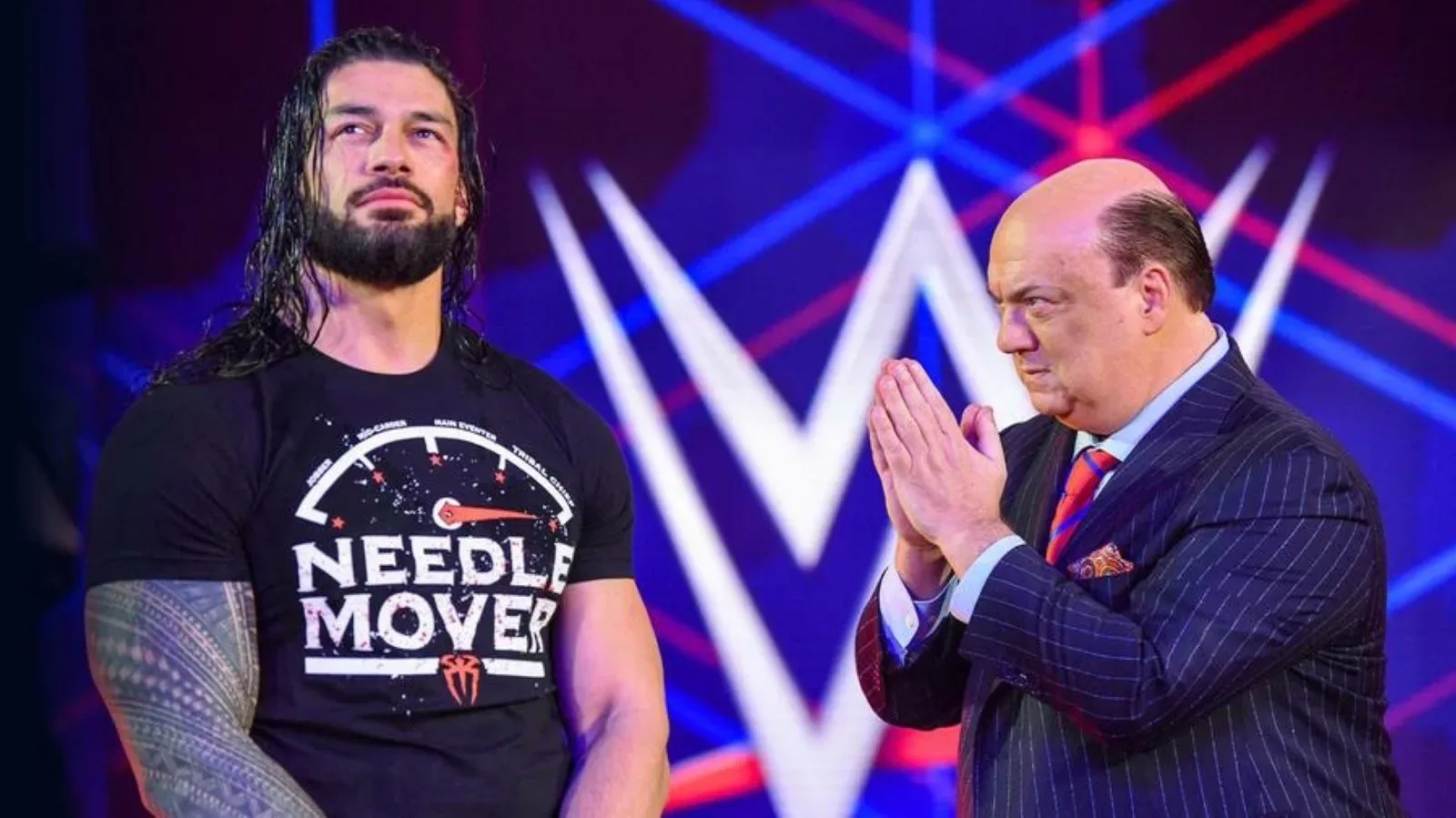
Paul Heyman has shed more light on the creative conversation that helped shape one of WWE’s most consequential character transformations of the modern era: Roman Reigns’ move away from the “Big Dog” identity and into the role of the Tribal Chief.
When Reigns returned to WWE programming in 2020 following an extended absence, he was paired with Heyman in a move that immediately changed the presentation around him. Heyman had previously become closely identified with Brock Lesnar as Lesnar’s advocate, while Reigns had long been presented under the “Big Dog” banner. The initial concept, however, would have retained both of those familiar labels.
Speaking on Six Feet Under, Heyman recalled asking Vince McMahon about the intended direction for the alliance. McMahon’s response, Heyman said, was simple: “The Big Dog and you’re his advocate.”
For Heyman, that approach was not enough. He believed a partnership between himself and Reigns could not simply place him in the same role he had played beside Lesnar, nor could it leave Reigns’ existing character substantially unchanged. If the two were going to work together, Heyman felt the presentation needed to signal that the audience was seeing a different Roman Reigns.
For more background on this topic, read Cody Rhodes Remembers Andy Williams As ‘Special, Intelligent, Artistic’.
“I was Brock Lesnar’s advocate. I must be something different to this character,” Heyman said.
That distinction became central to the Reigns-Heyman pairing. Rather than serving as the advocate for the “Big Dog,” Heyman became the Wise Man, a title that carried a different function, tone, and relationship to the man standing beside him. Reigns, in turn, became the Tribal Chief. The evolution eventually grew into the Bloodline story with The Usos, establishing a family-centered power structure around Reigns instead of simply adding a mouthpiece to an already established top star.
Heyman Wanted a True Metamorphosis
Heyman explained that he pushed for a character change of the kind that would be immediately apparent while also feeling earned. He did not view the adjustment as a matter of swapping out a nickname or adding a new manager. In his view, a successful reinvention had to reflect progression in the character and the world around that character.
To make his case, Heyman pointed to The Undertaker’s own evolution from the Deadman persona to the American Bada** incarnation. Heyman characterized that change as the kind of startling but logical metamorphosis he wanted for Reigns.
“It has to be that shocking of a metamorphosis, and it has to make sense,” Heyman said. “The Deadman grew into the American Bada** because times had changed around him.”
The comparison illustrates the larger creative principle Heyman was describing. A wrestling persona can remain connected to a performer’s history without being trapped by it. The key is making the next stage feel like a development rather than a random replacement. For Reigns, the move from the “Big Dog” to the Tribal Chief was designed to be more than cosmetic. It reframed his authority, his confidence, his relationship with family, and the way Heyman interacted with him on screen.
Heyman described the process as a progression. That progression, he said, reaches into details that may seem secondary but are important in creating a complete presentation. Clothing, color choices, and personal style all help establish who a character is. When a central figure changes, the people closest to that figure also need to look and behave as though they belong in the same world.
That perspective helps explain why Heyman did not see “advocate” as a transferable job title. The role had been specifically shaped around Lesnar. Reigns required an associate whose language, image, and purpose were built around Reigns’ new identity rather than Heyman’s previous body of work.
The Wise Man’s Role Beside the Tribal Chief
Heyman characterized his place in the Reigns presentation as a “professional marriage,” with Reigns as the central character and Heyman as the supporting player. That is a deliberate description from a performer who has frequently been a major presence in his own right. Heyman’s view is that a manager, adviser, or confidant can have enormous value without becoming the focal point of the act.
“I take great pride in that,” Heyman said. “A great supporting player makes the main character, and makes the main character in such a degree that the main character could not pull that off on their own, male or female.”
The idea is not that the supporting figure eclipses the lead. Instead, the supporting figure supplies structure, credibility, contrast, and emotional texture that allows the lead performer’s qualities to become clearer. In the Reigns-Heyman act, that meant presenting Reigns as the authority while Heyman often served as the interpreter of that authority, the voice capable of articulating the magnitude of a decision, a threat, or a family conflict.
Heyman’s comments also underline why the Wise Man label suited the character more effectively than advocate. An advocate implies representation, an individual speaking on behalf of another person. The Wise Man role suggested counsel, loyalty, strategy, and an intimate place within a hierarchy. That language naturally aligned with the Tribal Chief concept and with the Bloodline’s eventual emphasis on family and status.
It also gave the Reigns character a different kind of on-screen relationship with Heyman. Heyman was no longer simply attached to a dominant athlete in a familiar manager-client formula. The name “Wise Man” positioned him as someone whose worth came from counsel and understanding, while still making clear that Reigns was the figure at the center of the operation.
A Film Comparison for Wrestling’s Supporting Players
To explain his approach to being a supporting performer, Heyman turned to cinema and singled out Robert Duvall’s portrayal of Tom Hagen, the Corleone family consigliere in The Godfather. Heyman called Duvall the greatest supporting actor he had seen and used the character as a model for the kind of contribution he values.
Heyman noted that the films featured major figures such as Marlon Brando, Robert De Niro, and Al Pacino, yet he viewed Duvall as the element that helped hold the performances and the world around them together.
“Look at the cast, [Marlon] Brando, [Robert] De Niro, [Al] Pacino, and yet Robert Duvall was the glue and made everyone else around him look better,” Heyman said. “That’s the role.”
The comparison is revealing because it places Heyman’s work with Reigns in a broader storytelling framework. In that model, the supporting character is not merely there to deliver lines or fill time. The supporting character reinforces the stakes of the lead character’s decisions and helps make the surrounding cast feel connected to the same story.
That philosophy proved especially relevant as the Bloodline took shape around Reigns and The Usos. The concept was not built solely on a champion with a manager. It became a structured ensemble in which Reigns occupied the highest position, Heyman served as his Wise Man, and the family dynamic became a defining element of the presentation.
Why the 2020 Change Mattered
Heyman’s recollection makes clear that the eventual Tribal Chief direction was not simply the first concept placed on the table. The original vision he described would have united Reigns and Heyman while preserving the “Big Dog” and “advocate” terminology. Heyman believed that idea did not go far enough.
His argument was rooted in the belief that Reigns’ return after time away represented an opportunity. A major absence can create space for an audience to accept a performer in a new light, but only if the change is communicated decisively and consistently. Heyman wanted the shift to be recognizable in character language, visual style, attitude, and the function of the partnership itself.
The result was a presentation that differentiated Reigns from his prior WWE identity and differentiated Heyman from the role audiences associated with Lesnar. Reigns was no longer described as the “Big Dog.” Heyman was no longer positioned merely as an advocate. Their partnership instead became built around the Tribal Chief and his Wise Man.
For Heyman, that evolution was essential because the character had to reflect where Reigns was at that point rather than recreate what had come before. His remarks offer a concise look at the creative thinking behind the change: preserve the importance of the star, but ensure the new version is substantial enough to justify the audience’s attention.
In Heyman’s telling, the enduring strength of the Reigns partnership came from accepting that it was never supposed to be a repeat of his work with Brock Lesnar. It had to be its own professional relationship, its own visual language, and its own chapter for Roman Reigns.
In pictures

Darryl Polo
Darryl Polo is a passionate wrestling fan covering WWE, AEW, TNA and beyond. He loves great rivalries, breakout stars and the moments that keep fans talking long after the bell. How we work.