
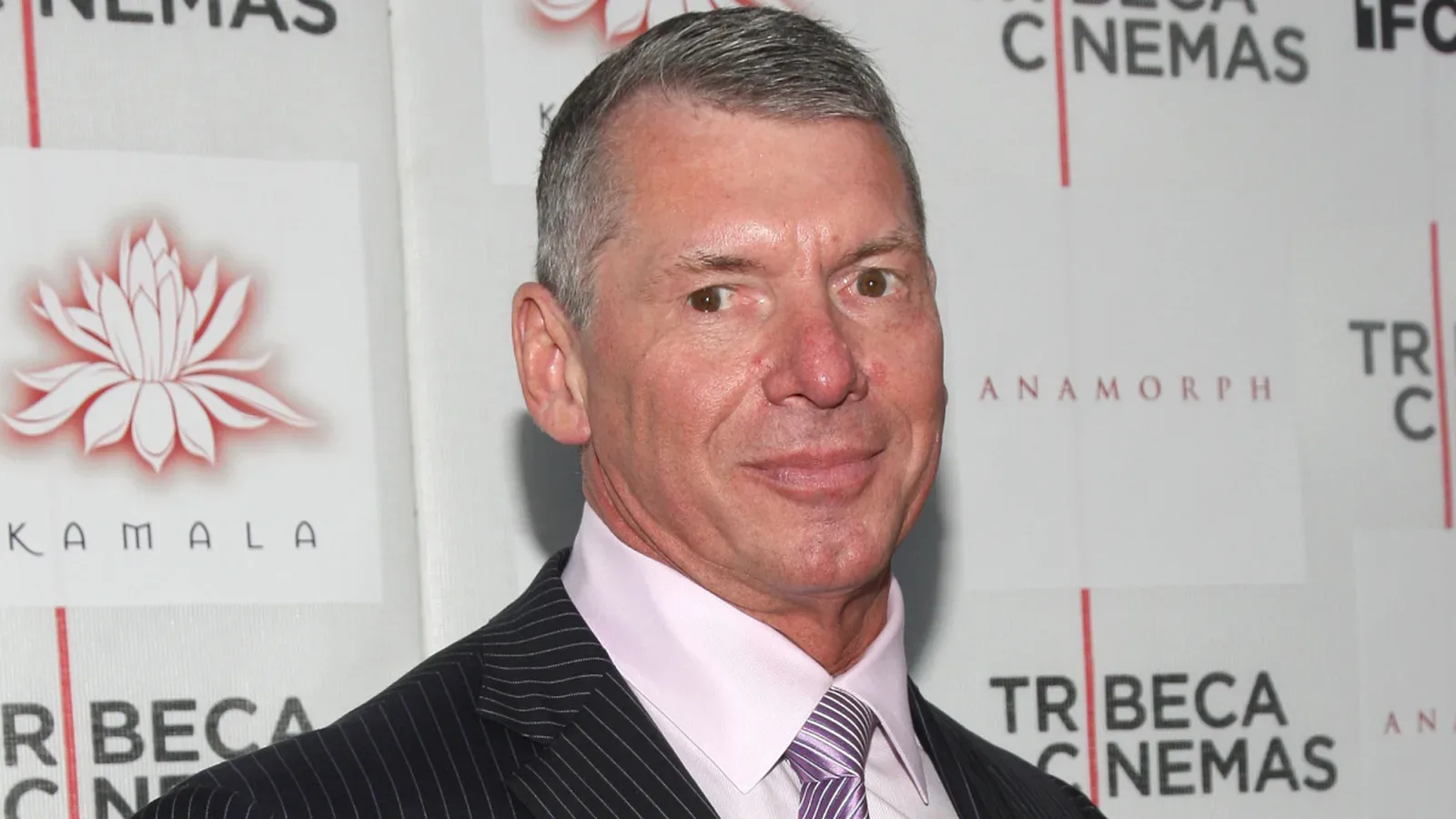
Paul Heyman has offered a candid perspective on the force that drove Vince McMahon throughout his decades leading WWE: an uncompromising and, in Heyman’s view, deeply personal pursuit of success.
During an appearance on In Depth with Graham Besinger, Heyman discussed McMahon’s background, the obstacles he faced early in life and the intensity he brought into the professional environment. Heyman, one of the most prominent creative minds and on-screen personalities to work closely with McMahon, did not present that drive as a simple matter of ambition. Instead, he framed it as something rooted in McMahon’s need to overcome adversity, establish himself and create a world where he could not be harmed.
The remarks arrive amid the continued scrutiny around McMahon and the controversies that have surrounded his career, including the sex trafficking scandal referenced in the discussion. Heyman’s comments did not seek to reduce those controversies to a discussion of business success. Rather, they focused specifically on the work habits, demands and psychological motivations he witnessed while working under McMahon in WWE.
Heyman connects McMahon’s drive to his early life
Heyman revisited several elements of McMahon’s childhood while explaining why he believed McMahon became so relentless in business. McMahon was the illegitimate son of Vincent J. McMahon and, as Heyman noted, endured an unstable upbringing that included multiple stepfathers and years of abuse. McMahon learned who his biological father was at age 12 and then spent years trying to win the approval of Vince Sr.
For more background on this topic, read Kevin Owens Survives CM Punk in Chaotic No Holds Barred SmackDown Main Event.
Heyman also cited dyslexia as one of the challenges McMahon had to confront. In Heyman’s assessment, those circumstances did not merely create a desire for achievement. They helped fuel a mindset in which success became a defense mechanism and control became central to McMahon’s identity.
“[McMahon] had to overcome [dyslexia], had to overcome his own personality, had to overcome a complicated mother, had to fight for his father’s love, and didn’t like the universe that he was in, so he created his own universe in which no one could ever hurt him,” Heyman said on In Depth with Graham Besinger.
Heyman characterized McMahon’s “ruthless pursuit of success” as both psychological and compensatory. He described it as a push toward becoming “Teflon” and “invincible,” language that illustrates how he views McMahon’s personal history and professional conduct as closely connected.
That interpretation also helps explain the scale of McMahon’s expectations. WWE was not simply a job or a company to McMahon, in Heyman’s telling. It was the cause around which everything else revolved. The more WWE grew, the more the work required from the people within it grew as well.
An ethic colleagues could admire but not replicate
Heyman’s central point was direct: he has never encountered anyone who worked as hard as McMahon. But that statement came with an important qualification. McMahon’s pace was not simply difficult to meet. Heyman said it was impossible.
“He expects you to keep up with his work ethic and that’s impossible,” Heyman said.
For Heyman, that contradiction defined the McMahon workplace experience. There could be genuine admiration for McMahon’s stamina, focus and determination, while at the same time there was pressure on everyone around him to operate at a pace that could not be sustained.
“Never have I met anyone that works as hard as Vince McMahon, and it is both inspiring and it is paralyzing, because trying to keep up with him is absolutely impossible,” Heyman said on In Depth with Graham Besinger.
Heyman said McMahon did not take vacations and could become so absorbed by work that he would miss major moments in the lives of people around him. It is a description of a man who placed the business ahead of conventional boundaries between work and personal life, while expecting others to display a similar level of commitment.
In the wrestling industry, where schedules have historically been demanding for performers, production personnel and office staff alike, the leader’s habits can set the tone for an entire organization. Heyman’s account suggests McMahon’s own approach established an unusually high bar, one that could motivate people but also exhaust them.
“A slave to the cause” of WWE
Heyman described McMahon as a “slave to the cause” of WWE. The phrase captures the complicated balance in his comments. On one hand, McMahon was the person in control, the executive whose decisions shaped the promotion and affected countless careers. On the other, Heyman portrayed him as someone governed by the demands of the company he built into a global force.
That level of devotion could create opportunity for people who showed initiative. Heyman said McMahon had unpredictable expectations, particularly when he recognized ability, energy or ambition in someone else. Rather than merely rewarding that person for their effort, McMahon would look for ways to channel those qualities back into WWE’s broader goals.
The result was an environment in which talent could be noticed, expanded and used quickly. Yet the same dynamic could mean that a person’s willingness to work hard became an invitation for even more to be asked of them.
“He’s riding that vehicle until the wheels fall off — you’re the vehicle and it’s your wheels that are falling off!” Heyman said.
It is a striking image from someone who has experienced multiple roles in the industry. Heyman has been an executive, producer, writer, promoter, manager and performer. His long professional relationship with McMahon gave him a vantage point few in wrestling possess, and his comments make clear that he sees the upside and cost of McMahon’s approach at the same time.
When asked what the best part of working for McMahon was, Heyman’s response reinforced that complexity.
“What’s the best part of [working for McMahon]? Everything I just said,” Heyman proclaimed.
The broader legacy of a demanding WWE culture
Heyman’s observations are consistent with a reputation that has followed McMahon for years. His extraordinary attention to WWE, demanding standards and desire to continually push the company forward have often been viewed as defining characteristics of his tenure at the top.
However, not everyone who worked in that environment has described it with Heyman’s degree of admiration. Former WWE writers have previously characterized the McMahon-led workplace as a “kingdom ruled by fear,” emphasizing the strain caused by demanding expectations and the uncertainty surrounding what McMahon might want at a given moment.
Those differing reactions do not necessarily contradict each other. They underline the two sides of the same operating style. A leader who demands more than others think is possible may inspire people who thrive under extreme pressure. That leader may also create a setting where people feel unable to keep up, fearful of making mistakes or depleted by the pace.
Heyman did not attempt to sanitize that tension. His language acknowledged the consequences of McMahon’s work ethic, particularly the way it could consume people who tried to match it. Yet he also made clear why that ethic left such a lasting impression on him: McMahon’s drive was not performative. In Heyman’s view, it was constant, personal and inseparable from the creation and growth of WWE.
Heyman’s remarks offer a layered view
In an industry often shaped by larger-than-life figures, McMahon remains one of its most consequential and controversial. His influence on WWE and professional wrestling is impossible to separate from the intensity with which he pursued success. Heyman’s interview provides a layered view of that intensity, neither dismissing its effect nor treating hard work alone as an uncomplicated virtue.
For Heyman, McMahon’s remarkable output came from a combination of ambition, childhood struggle, a desire for approval and an almost obsessive need to remain untouchable. That made him capable of building, demanding and enduring at a level Heyman says no one else could equal.
It also meant that the people around him were often asked to enter the same relentless machine. As Heyman put it, working for McMahon could be inspiring and paralyzing in equal measure — an experience defined by the opportunity to participate in WWE’s biggest ambitions, and by the near-impossible challenge of trying to keep pace with the man driving them.
In pictures

Darryl Polo
Darryl Polo is a passionate wrestling fan covering WWE, AEW, TNA and beyond. He loves great rivalries, breakout stars and the moments that keep fans talking long after the bell. How we work.