
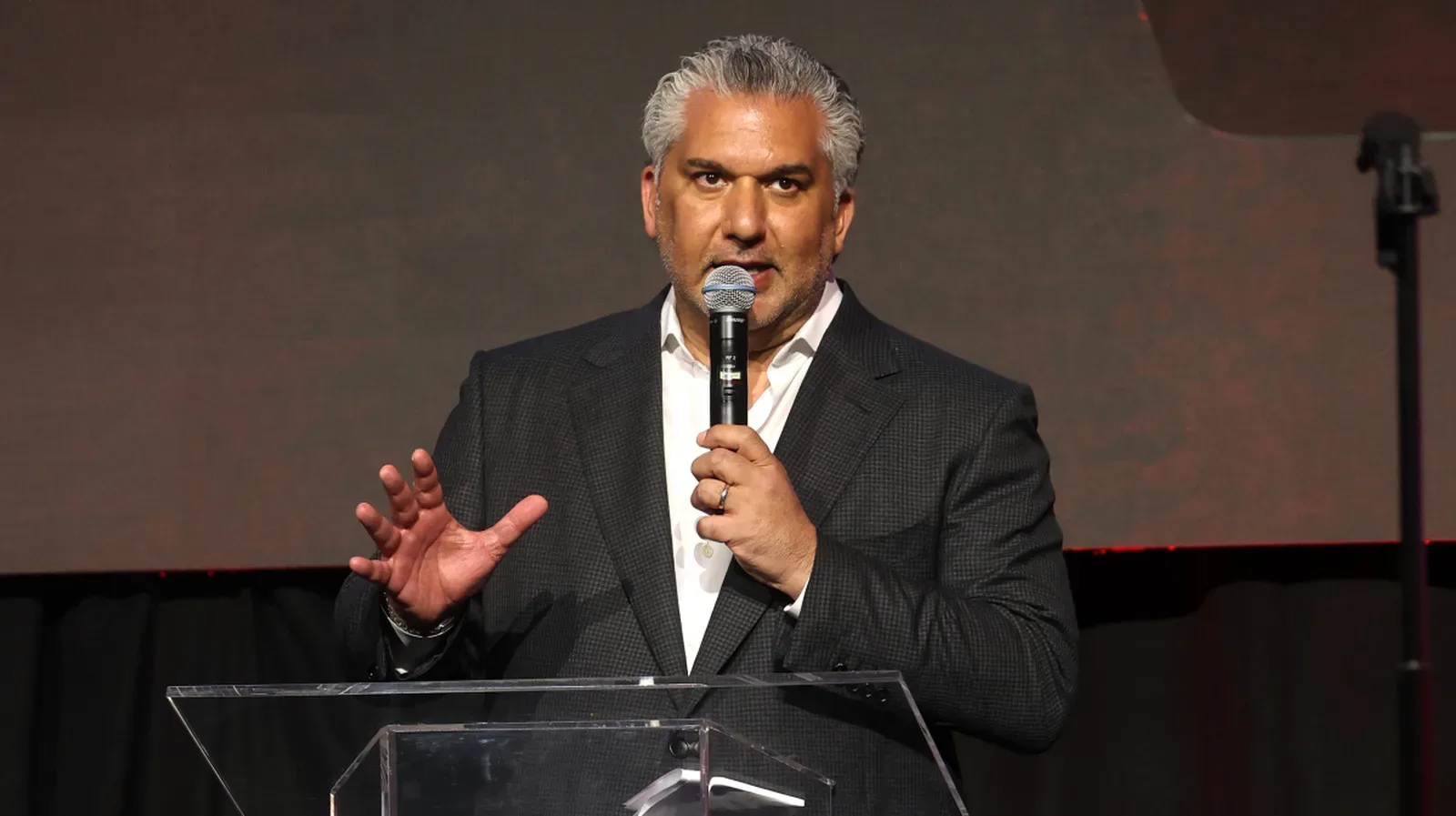
WWE’s move to Netflix has changed more than the platform on which fans watch its programming. It has also changed the way the company can assess the performance of its content, with WWE President Nick Khan outlining a broad set of audience measurements the promotion wants to examine as its streaming relationship develops.
WWE launched on Netflix in January 2025. In the United States, WWE Raw streams on Netflix every Monday night, while the service carries WWE’s weekly programming and premium live events in a number of international markets. That arrangement has placed WWE’s flagship weekly series inside a streaming ecosystem where viewing behavior can be measured over multiple time windows rather than being defined solely by a traditional overnight television rating.
Khan’s comments make clear that WWE is not treating live viewership as the only meaningful benchmark. The company wants to understand the audience that watches as the program airs, but it also wants data for those who start the show later that night, return within a day, or make time for the episode during the week that follows.
WWE Is Looking at the Full Viewing Cycle
For a weekly serialized program such as Raw, that distinction is significant. Wrestling remains appointment viewing for a substantial portion of its audience, especially when major matches, title developments, surprise appearances or storyline turns are advertised in advance. At the same time, WWE programming is constructed in a way that can encourage delayed viewing.
For more background on this topic, read Zoey Serrano Says Becky Lynch RAW Main Event Remains Her Favorite Match Despite Health Scare.
Unlike a one-time sporting event in which the final score can immediately resolve the central competitive question, WWE stories are built around the presentation as much as the result. A viewer may know which wrestler won a match after seeing social-media discussion or a headline, yet still choose to watch to see how the finish happened, what was said before the bout, whether there was interference, and what consequences followed afterward.
That is the core advantage Khan identified when discussing WWE’s interest in live numbers, first-day viewing and viewing over the first week after an episode becomes available. WWE is seeking a fuller picture of how its audience uses Netflix rather than limiting its evaluation to those who watch at the exact moment a show begins.
That approach also fits the structure of a three-hour program such as Raw. Some fans may watch the complete episode live. Others may begin late and finish after the live broadcast ends. Some may watch selected segments on the night of the show before catching up on the rest later. Still others may wait until the next day or later in the week, particularly if a major angle has created interest.
Netflix’s public reporting does not always make every one of those distinctions immediately visible to fans. Weekly viewership breakdowns for Raw, including global and domestic performance, are generally available when the program appears on the streamer’s Top 10 English-language TV charts. WWE, however, has access to a more detailed internal understanding of how its content is consumed, and Khan indicated the company wants to study that entire range of information.
Why Streaming Data Changes the Conversation Around Raw
For decades, weekly wrestling television was commonly discussed through the lens of linear-TV ratings, household figures and demographic categories. Those measurements remain part of the larger media conversation, but streaming creates a different environment. The audience is not restricted to a single channel, a fixed schedule or the traditional definition of an original broadcast window.
That does not mean live viewership has become irrelevant. A strong live audience still demonstrates urgency and can be particularly valuable for a program that depends on weekly momentum. WWE promotes its biggest matches and angles in advance because it wants fans to feel that they should tune in as events unfold. Live reactions also help make wrestling feel immediate, even when viewers are watching from home.
But the Netflix model allows WWE to evaluate additional questions. How much of an episode’s audience arrives after the live window? How quickly do viewers catch up after a major story beat? Does a premium live event or international tour generate extra interest in weekly programming? Are viewers returning regularly from week to week?
Those are questions that matter to a company seeking both a large audience and sustained engagement. A single episode can produce a spike, but long-term value is more likely to come from viewers making WWE part of their regular viewing habits. With an ongoing narrative product, consistency across weeks can be every bit as meaningful as a short-term surge around one especially newsworthy segment.
WWE’s format gives it a large amount of material to assess. The company can compare interest in different storylines, match types, performers and episodes. It can also measure whether a particular week’s events lead fans into the next show. A high-profile finish may be designed not only to create a reaction on Monday night, but also to give viewers a reason to return for the following chapter.
International Performance Is a Major Part of the Equation
Khan also emphasized the importance of knowing where Netflix is working best for WWE. That point reaches beyond a simple worldwide total. WWE operates in markets with different levels of familiarity, different viewing habits and different opportunities for live events, and the company wants to identify how its programming performs country by country.
Its international presence can have a direct effect on local interest. Khan noted that viewership rises when WWE visits a country such as Spain for a single night. A live event or televised production gives local fans an immediate reason to pay attention, while broader media exposure around the visit can bring new viewers to the product.
His larger point, however, was that an extended stay can communicate something more meaningful than a brief stop. When WWE spends more time in a market, audiences can see that the company is physically investing in that territory. That can make WWE feel less like imported programming and more like an active entertainment brand with a genuine presence in the region.
That local connection is important as WWE continues to frame itself as a global operation. Its talent roster includes performers from a wide range of countries, its premium live events have increasingly taken place outside the United States, and Netflix provides a platform through which the company can reach audiences in numerous territories at once. The streaming deal is therefore not only a distribution agreement. It is also a major part of WWE’s wider international strategy.
For WWE, a country-by-country breakdown can help show where touring, promotional activity and local investment are having the strongest impact. If a visit produces a noticeable increase in viewing, it can reinforce the value of returning. If the company sees sustained engagement after it leaves, that may be an even more useful sign that a market is developing beyond the immediate excitement of a live show.
The Importance of Storytelling to WWE’s Streaming Strategy
Khan’s explanation of delayed viewing ultimately comes back to the defining feature of WWE programming: serialized storytelling. Matches matter, championships matter and results matter, but WWE presents them inside longer narratives that can unfold over weeks, months or even years.
That makes the context surrounding a match especially important. The finish can alter rivalries, alliances and title pictures. A post-match confrontation may be the most important development of the night. A backstage segment, a promo or an unexpected interruption can become the piece that drives viewers toward the next episode. The result alone does not necessarily tell the complete story.
This dynamic gives WWE a reason to value viewers who watch after spoilers have circulated. Fans who already know a winner may still be interested in the performance, the crowd response, the production, the character work and the storyline implications. In a streaming setting, that creates an opportunity for episodes to keep accumulating an audience beyond their initial live airing.
It also underscores why a public Top 10 placement is only one piece of the broader picture. The Top 10 charts can provide a useful snapshot when Raw qualifies, but they cannot by themselves explain every aspect of the audience’s behavior. WWE’s internal data can help the company evaluate how viewers arrive at an episode and how its content performs over time.
A Broader Measure of Success
The Netflix era has given WWE a new set of benchmarks, but Khan’s comments suggest the company’s central goal is straightforward: understand the total audience for its programming rather than reducing performance to a single number.
Live viewers remain important. Viewing in the first 24 hours matters. So does the audience that builds across the remainder of the week. International data is also vital, particularly as WWE seeks to strengthen its position in markets where it tours and where Netflix carries its content.
As WWE continues to operate on a global streaming platform, the company’s evaluation of Raw will likely remain focused on both immediacy and longevity. The weekly show needs to create reasons for fans to watch now, but its story-driven format also gives viewers reasons to catch up later. For WWE, the most valuable Netflix data is not limited to who watched at one moment. It is the complete picture of how audiences around the world choose to follow the product.
In pictures

Darryl Polo
Darryl Polo is a passionate wrestling fan covering WWE, AEW, TNA and beyond. He loves great rivalries, breakout stars and the moments that keep fans talking long after the bell. How we work.