
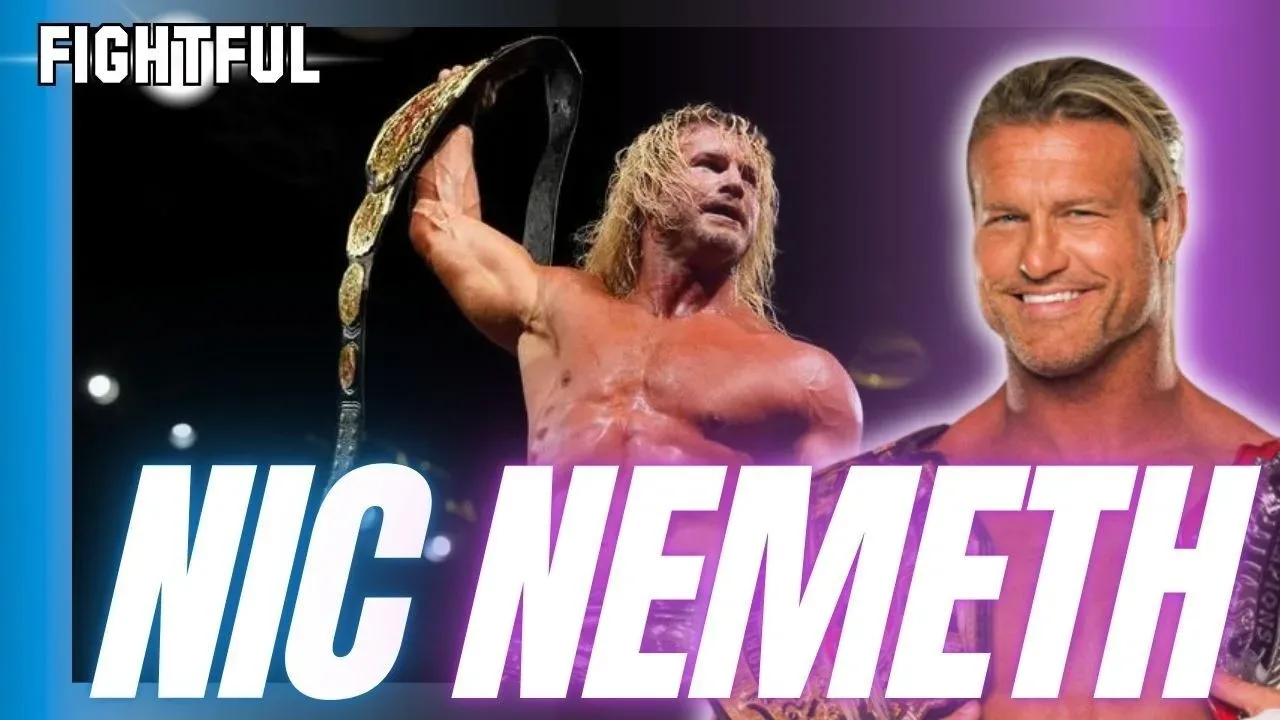
Nic Nemeth has built a reputation across nearly two decades in wrestling as one of the industry’s most committed sellers. Whether he was absorbing a strike, crashing into the turnbuckles, taking a finishing move, or making a near-fall feel like the end of a major fight, Nemeth’s physical reactions routinely made offense look devastating. That commitment earned admiration from fans and peers, but it also came with an unexpected downside during his WWE career.
Nemeth revealed that he was once approached by a person “very, very high up” in WWE and asked to ease up on how effectively he sold for opponents. The request, as Nemeth described it, was not rooted in a concern that he was failing to perform his role. Instead, it was tied to the reality that making opponents and their finishing moves look too powerful could position him as the wrestler audiences expected to see lose.
“Could you not be so good at selling and putting people over?” Nemeth recalled being asked. His response was simple: “I don’t know.”
The remark speaks to a long-running tension in professional wrestling. Selling is a foundational part of the craft, transforming sequences of choreographed offense into an emotional sporting contest. At the same time, the performer who makes every move look spectacular can become an especially useful opponent for the company’s featured stars. Nemeth said he understood that dynamic, and that it could affect a wrestler’s climb toward the top of the card, but he found it difficult to sacrifice the standards he had set for his own work.
For more background on this topic, read Lady Leigh Reflects on WWE Release One Year Later and Her Evolution in Japan.
Early Training Emphasized Going Big
Nemeth said his more exaggerated tendencies were especially prominent when he first began training. Arriving in wrestling after a college wrestling background, he did not have the independent wrestling experience that many other trainees already possessed. He therefore threw himself into the process, working to catch up and absorb every lesson available to him.
He recalled being taught to make pain visible throughout an arena, including the instruction to sell an arm wringer by moving to all four corners and ensuring every side of the crowd could understand the damage. The philosophy was clear: wrestling performers should communicate in large, unmistakable gestures.
Nemeth said he was training four days per week and returning at night to repeat class because he felt behind others with more experience. He internalized the instruction to make everything bigger, spending months concentrating on intensity, reaction, and the visual presentation of each move. Then WWE’s on-screen approach began to shift.
“Three months into that, Vince goes Reality Era,” Nemeth said, referring to the period when WWE presentation increasingly leaned into a more grounded and serious style. “Everything’s serious. Nobody’s selling.”
For Nemeth, the timing was awkward. He had just committed himself to an approach that prized broad physical storytelling, only to find that the company’s preferred aesthetic was changing. He said he had to teach himself to pull back, moderating the more overtly theatrical reactions that had been drilled into him during the opening stage of his training.
Balancing Realism With Wrestling Drama
Nemeth did not abandon his approach entirely. Instead, he tried to find a balance between the realism sought by WWE’s evolving presentation and the dramatic reactions that made big wrestling moments resonate. He cited Curt Hennig, better known as Mr. Perfect, as an important example of a wrestler who could be expressive and even cartoonish without losing credibility.
Nemeth noted that Hennig’s work from the AWA and early WWE years demonstrated how a gifted wrestler could elevate matches through body language and timing. Hennig could make an opponent’s offense memorable while retaining his own charisma, toughness, and star presence. Nemeth clearly viewed that as an ideal worth studying, even if the environment in WWE had changed since Hennig’s peak years.
His own compromise was to use major reactions selectively. Nemeth said he would still put his whole body into a collision with a turnbuckle or a knee strike that served as a finish. But he also wanted the final moments of a match to feel definitive, comparing the desired effect to an MMA knockout. When the finish came, he wanted the audience to believe the wrestler on the receiving end was truly out.
That mentality made Nemeth an unusually valuable performer in matches against a wide range of WWE talent. A wrestler’s finishing move is only as persuasive as the response it receives, and Nemeth’s commitment often added an extra layer of force to a spear, superkick, slam, kick, or strike. It was a major part of why his performances as Dolph Ziggler were so frequently discussed, even during stretches when he was not regularly presented as one of WWE’s top champions.
Vince McMahon Often Checked On Him
Nemeth said his selling was convincing enough that Vince McMahon repeatedly wondered whether he had been legitimately injured. He estimated that there were “20 or 30 times” when he came backstage and McMahon asked, “Oh, my God, are you okay?”
Nemeth’s answer reflected both his pride and his viewpoint on the assignment. “This is what you pay me for, brother,” he said. “Like this is why I’m doing this.”
His comments underline that the concern was not merely about appearing flashy. Nemeth saw selling as a central responsibility. In his view, a powerful reaction helps the opponent, serves the match, and gives fans a clearer reason to invest emotionally. If a wrestler takes a finishing move and looks unaffected seconds later, the audience has less reason to treat that move as special the next time it is used.
Still, WWE’s concern had a practical element. Nemeth said he was warned not to make Sheamus’ Brogue Kick look quite so devastating because the boss would have him take the move every week. He said the prediction proved accurate, as he took Brogue Kicks twice a week on Mondays and Fridays for roughly six months.
Nemeth said he enjoyed the visual effect even though the move hurt. He described the appearance as though he had been “murdered in a video game,” except in real life. That level of commitment delivered a striking image, but he also recognized how it could lock him into a particular role on television.
The Cost Of Becoming The Ideal Opponent
Nemeth was candid that the approach could hurt his career prospects. If management and fans consistently wanted to see him taking the finish, it naturally became more difficult to establish him as the wrestler who would win the biggest matches. “You can’t be World champ if they want to see you taking finishes every week,” he said.
That is a difficult calculation for any performer. A wrestler wants to be dependable, memorable, and generous in the ring. But a wrestler also wants to be protected as a viable main-event attraction. Nemeth said he did attempt to tone down certain reactions over the years, but it did not feel natural to him.
He recalled trying at a live event to avoid a dramatic snap-back bump from a tackle. The experiment did not last. “Nah, this doesn’t work. I can’t do it,” he said.
Nemeth attributed that response to pride in his work. Even if fellow wrestlers could not always return the same level of selling when he was on offense, he felt compelled to deliver the most convincing reaction possible. He acknowledged that he was effectively on his own in trying to maintain that particular standard, especially with Hennig no longer alive to offer the kind of reciprocal performance Nemeth admired.
The result is a revealing look at the choices behind one of WWE’s most recognizable in-ring styles of the modern era. Nemeth was not unaware of the career consequences. He understood that taking spectacular defeats could make him an indispensable opponent rather than a sustained world champion. Yet he continued to prioritize the moment in front of the audience.
Why Nemeth Still Believes In Big Reactions
For Nemeth, the objective remains creating the kind of moment that convinces a viewer—particularly a younger fan—that something extraordinary just happened. He wants a child in the crowd to leap up and wonder whether a wrestler lost a tooth, got knocked out, or was involved in a fight that had become personal.
That reaction, he said, is part of wrestling’s magic in 2025 and 2026. Even in an era when audiences understand the mechanics of the business more than ever, the best performers can still create a brief sense of doubt and urgency. Nemeth’s selling was designed to produce that feeling.
His reflections also arrive as he continues a prominent post-WWE chapter under his real name. Nemeth has remained an active figure in major wrestling, including his involvement around TNA Wrestling and Slammiversary, where he discussed Leon Slater ahead of their match. But his comments about WWE provide fresh perspective on the Dolph Ziggler persona and the in-ring philosophy that made it so enduring.
Nemeth’s story is ultimately not one of misunderstanding what WWE wanted from him. He clearly understood it. Rather, it is the story of a wrestler who knew the risks of making every major strike and finishing move look catastrophic, but believed the craft demanded that effort anyway. The request to stop being so effective at selling may have been unusual, but it also serves as a measure of just how completely Nemeth committed to making everyone he faced look dangerous.

Darryl Polo
Darryl Polo is a passionate wrestling fan covering WWE, AEW, TNA and beyond. He loves great rivalries, breakout stars and the moments that keep fans talking long after the bell. How we work.