Natalya has spent long enough in WWE to work under dramatically different creative structures, and she says that experience has taught her the value of adaptability as much as it has taught her how to advocate for herself. The veteran recently discussed the process of presenting character ideas to WWE decision-makers, contrasting her working relationship with Vince McMahon with the collaborative approach she has encountered under Paul “Triple H” Levesque.
For Natalya, the central lesson is not that every creative pitch will be accepted, or even that every assigned character will feel natural from the start. Instead, she views the process as a professional exchange. A performer has to be willing to try ideas that might not initially fit, while also earning the credibility to later make a case for material they believe in.
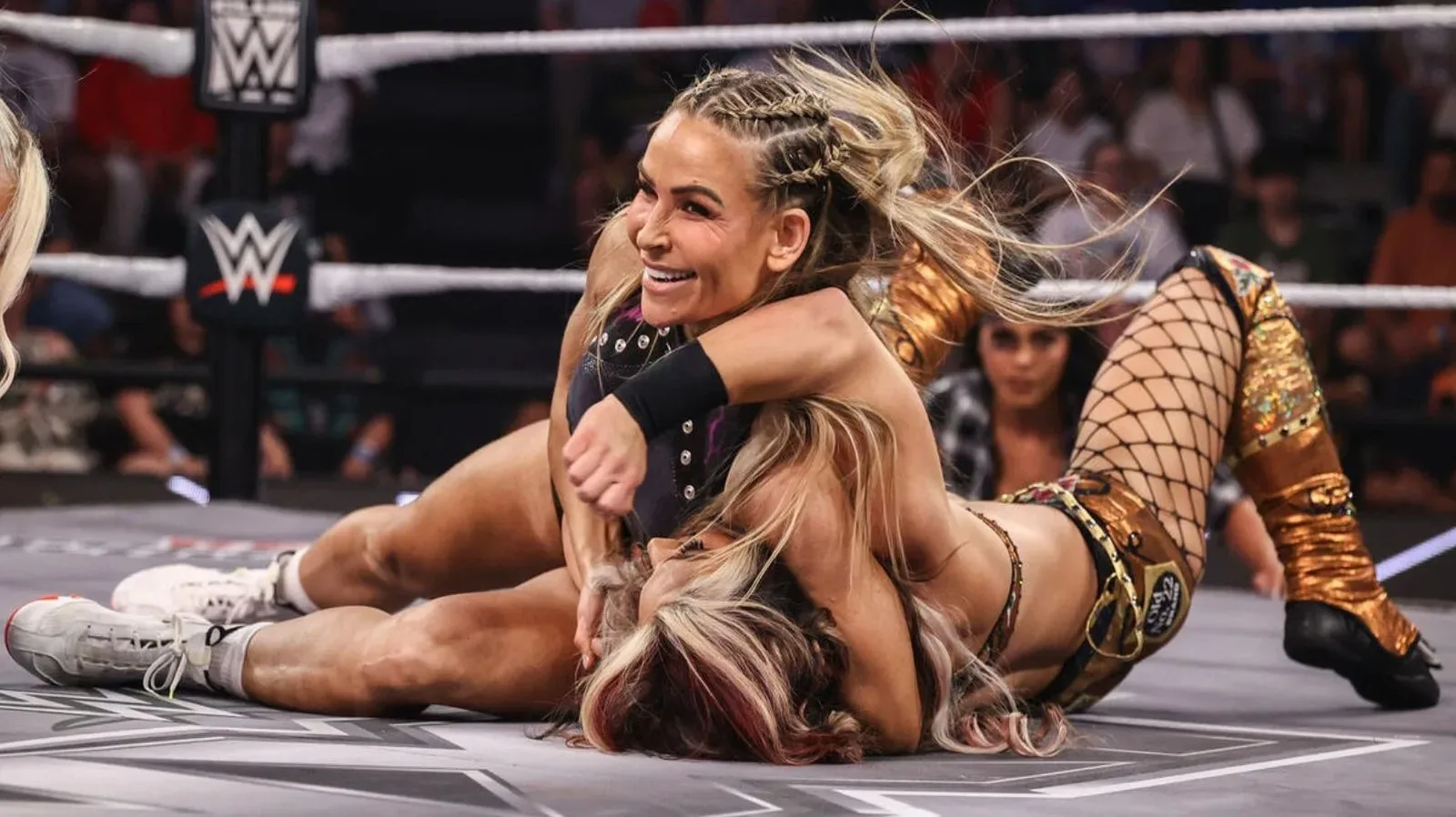
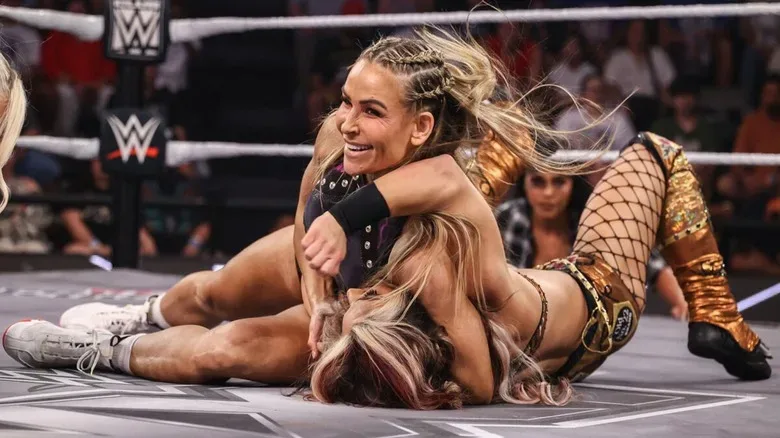
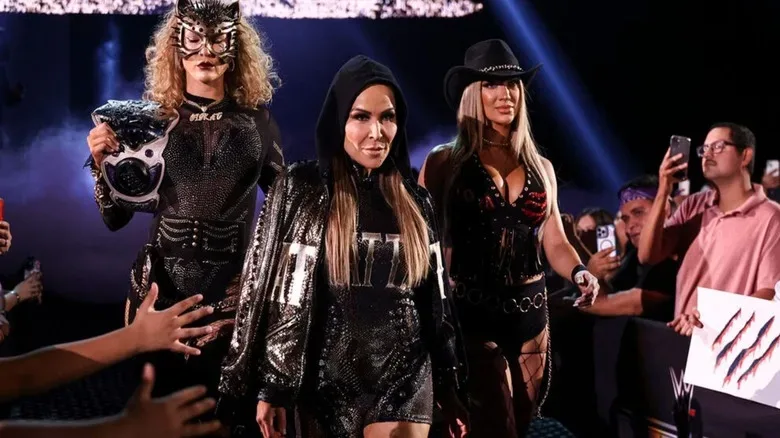
That mindset has become especially relevant as Natalya has introduced a more rugged version of herself under the name Nattie. The character, shaped around her Dungeon background and her status as a hardened, experienced wrestler, has appeared in AAA, WWE NXT, and on WWE’s main roster. It represents a different presentation for one of WWE’s longest-tenured women’s stars, and Natalya said Levesque played an important role in allowing it to develop on television.
Learning to Be Coachable in WWE Creative
Speaking on Busted Open Radio, Natalya reflected on the creative give-and-take that existed during McMahon’s time leading WWE. She credited McMahon for being open to some of her ideas, even when he was not initially convinced by them. At the same time, she acknowledged that she was sometimes asked to participate in concepts she did not believe were right for her.
For more background on this topic, read Gable Steveson Knocked Out in 12 Seconds at UFC 331.
One of the clearest examples was the much-discussed flatulence gimmick that became part of her early WWE run. Natalya was candid in describing her reaction to that material and the way it ultimately shaped later conversations about her character.
“We had this really cool relationship where there were suggestions that were made to me and I was like, ‘Ugh. I don’t love this,’” Natalya said on Busted Open Radio. “But, because I agreed to do that character, it was the flatulence character or whatever. I knew I didn’t like it. I knew it wasn’t the right thing, but when it didn’t work out, and trust me, it didn’t, then I was able to go and pitch to Vince other stuff I wanted to do and he said ‘yes.’”
Natalya explained that McMahon’s willingness to hear her subsequent ideas was, in her view, connected to the fact that she had been willing to commit to the earlier assignment. She said he told her that because she had given the prior concept an honest chance, he was prepared to let her and others try something different.
The point was not that every creative direction succeeds. WWE history is filled with characters, catchphrases, storylines, and presentation choices that connect immediately, along with others that are quickly left behind. Natalya’s perspective is that performers need to bring effort to the material they are given, even while maintaining the confidence to speak up when they have an alternative vision.
She connected that outlook to a familiar piece of advice from John Cena: a WWE performer needs to be coachable. In an environment where a wrestler is working within a larger television production, that quality can be just as important as having a strong individual idea.
Character Work as Part of a Bigger Production
Natalya compared her role in WWE to that of an actor taking part in a film or a play. The analogy reflects the reality that wrestling characters are shaped by many hands, including wrestlers, producers, writers, executives, and the broader needs of weekly programming. A performer may have personal preferences, but they also have a responsibility to execute the assigned role as effectively as possible.
She said that if she were hired for a movie, she would not approach directors such as Steven Spielberg or Robert Zemeckis by refusing to do something simply because it was not her first choice. That does not mean a wrestler should stop bringing ideas to the table. Rather, Natalya’s point is that collaboration requires both trust and a willingness to work through creative challenges.
That balance has been a major part of her longevity. Natalya has portrayed numerous versions of herself throughout her WWE career, from the proud Hart family representative to a tag team competitor, mentor, antagonist, and respected locker-room veteran. Her current Nattie persona draws from the credibility she has built over years in the ring while putting greater emphasis on intensity, toughness, and the legacy of the Dungeon.
The character also arrives at a stage in her career when Natalya has no need to establish basic credentials. She is already one of the most recognizable names in WWE’s women’s division and one of its most experienced active competitors. The creative challenge is therefore less about introducing audiences to Natalya and more about presenting a side of her that feels distinct from what viewers have seen before.
Triple H Supports the Nattie Evolution
Natalya said the move toward the Nattie character received direct support from Levesque. She explained that he watched her presentation at Triplemania and responded positively when she brought the concept to him. Rather than treating it as a one-off experiment outside WWE, Levesque reportedly saw an opportunity to explore the character across different platforms.
“With Triple H, when I brought the Nattie character to him, he watched my Nattie character at Triplemania,” Natalya said. “I really wanted to show him this different side of me, and Triple H was super supportive. He was very much, ‘Let’s do it.’ He was very collaborative.”
According to Natalya, the plan involved more than simply changing her ring name or having her wear a different look. Levesque wanted to work through the various components of the presentation, including trying the character in AAA and creating vignettes for WWE. That kind of gradual development can be particularly important for an established wrestler, since the audience needs time and context to understand why the presentation has changed.
The Nattie persona has already been tested in multiple environments. Natalya has brought it to AAA, and she has also used it in NXT, where she was recently defeated by Jaida Parker in a submission match. On the main roster, the character has been involved in a program with Maxxine Dupri. Natalya’s most recent appearance on WWE Raw came on March 16, when she defeated Dupri.
Those appearances have allowed WWE to position Nattie as something more than a cosmetic rebrand. Her character is rooted in the same technical foundation and fighting spirit that have defined much of Natalya’s career, but the framing is more severe. It places her experience at the forefront and gives her a sharper edge in confrontations and matches.
Patience and Timing Remain Key
Following her loss at NXT Heatwave, Natalya said she is excited to bring the Nattie character back to WWE’s main roster. She also praised Levesque’s approach to timing, saying one of the things she appreciates about his booking is that he waits until the right moment to use certain ideas.
That patience can be vital when introducing a new layer to a familiar performer. WWE’s audience has watched Natalya for years, and a sudden or poorly explained change could easily be dismissed as temporary. By allowing the character to appear in AAA, NXT, and selected main-roster situations, WWE has given the concept room to take shape instead of demanding an immediate final version.
Natalya’s comments also underline a broader reality of her career: reinvention does not always mean abandoning what came before. The Nattie character is still connected to the Hart family legacy, the Dungeon influence, and the in-ring expertise that have long been central to Natalya’s identity. The difference is in emphasis. This version seeks to present those traits with more grit and urgency.
For Natalya, the road from an unpopular early gimmick to a more personally meaningful character illustrates the importance of staying professional through every stage of the process. Some ideas will not work. Some will lead to opportunities that would not have existed otherwise. And for a veteran still looking to show a new dimension of her work, being coachable and being collaborative can coexist with having a clear vision of what comes next.
In pictures
Darryl Polo
Darryl Polo is a passionate wrestling fan covering WWE, AEW, TNA and beyond. He loves great rivalries, breakout stars and the moments that keep fans talking long after the bell. How we work.