
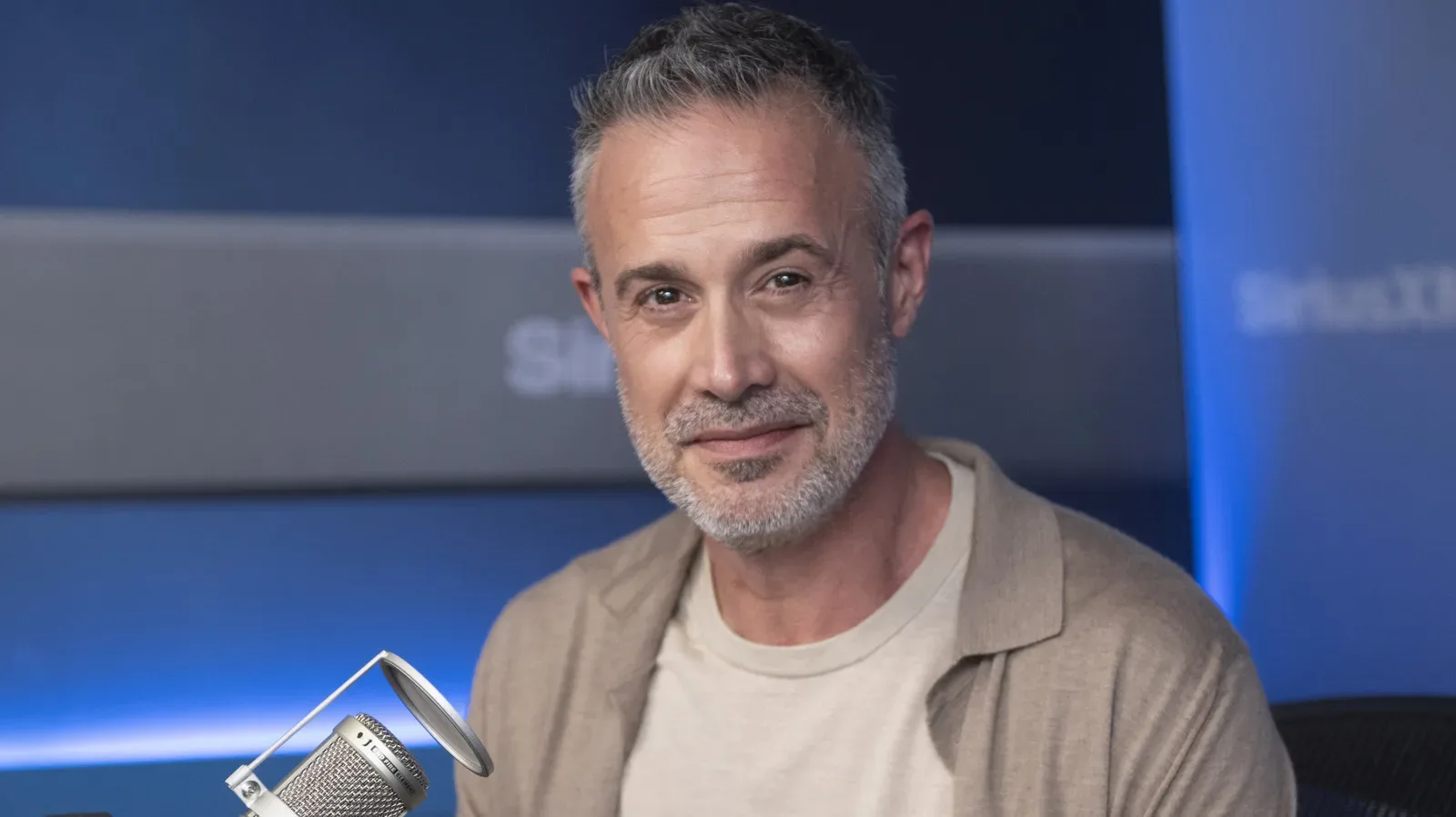
MVP has looked back on the early skepticism he carried toward Freddie Prinze Jr. during the actor’s WWE writing stint, explaining how a single creative moment changed his entire perspective.
Prinze, widely recognized for his acting work, was part of WWE’s creative staff from 2008 through 2011. His arrival came during a period in which MVP was firmly established on WWE television, and the performer was heading toward a major SummerSlam program with Jeff Hardy. While Prinze’s enthusiasm for wrestling was genuine, MVP admitted that he was not immediately ready to accept advice from someone he associated first with Hollywood rather than the wrestling business.
Speaking on Marking Out, MVP said his initial attitude reflected the old-school mindset he had developed around professional wrestling. He did not know Prinze well at the time, and he questioned whether an actor could offer meaningful direction on a segment that he believed was crucial to his own presentation heading into a major match.
“I did not like Freddie Prinze Jr. initially,” MVP said.
For more background on this topic, read Joe Hendry Says Most of WWE Album ‘Beyond Belief’ Was Written in December.
The timing mattered. MVP recalled that the issue arose around his 2008 SummerSlam match with Hardy. In MVP’s view, the storyline needed a particularly strong promo in the days leading up to the event. A promo can often define the emotional stakes of a rivalry, especially when there is limited time to deliver a final message before a premium live event. MVP believed the closing line of this specific segment had to land perfectly.
He had a writer he preferred working with, but that writer encouraged him to collaborate with Prinze as well. MVP acknowledged that he was resistant at first, driven by assumptions about Prinze’s background and the perceived divide between mainstream entertainment and wrestling’s traditional creative culture.
“My thought, in that old school wrestling mentality, [was]: ‘This old-teeny-bop-a** f**king ‘Tiger Beat’ actor, ‘I Know What You Did Last Summer’ a**, come tell me something about wrestling?’” MVP recalled on Marking Out.
Rather than presenting that reaction as something he remains proud of, MVP characterized it as an ignorant mindset. His account is notable because it reflects a familiar tension in wrestling: performers frequently place a premium on experience acquired inside locker rooms, rings, and wrestling territories. Someone entering WWE from another entertainment field can face immediate doubt, even if that person is a committed fan with useful storytelling instincts.
Prinze’s history with wrestling is well established. Although his public career began in acting, he has consistently spoken about being a lifelong fan of the medium. His WWE role was not a casual celebrity association; he spent several years contributing as a writer in an environment where creative suggestions must be shaped around performers, television timing, production demands, character continuity, and the constantly changing direction of weekly programming.
For MVP, the breakthrough came in the actual writing process. He remembered that he and the writer with whom he usually worked were trying to find the right ending for the promo but could not settle on a line that delivered the necessary impact. Prinze was in the room, walking back and forth and thinking through possibilities as the others worked.
Then Prinze offered an idea that connected.
“The crazy part is, all these years later, I don’t know what it was,” MVP said. “I just remember he said it and I didn’t want to like it but it was what we needed. I was not happy about that! But he was right.”
That admission captures why the memory has remained with MVP even though he no longer remembers the exact wording. The line itself may have been important for that particular SummerSlam build, but the larger impact was personal. Prinze identified the missing piece at a point when MVP and another writer had run out of answers. The contribution forced MVP to recognize that his assumptions had prevented him from seeing what Prinze could bring to the creative process.
Wrestling promos are not simply collections of memorable phrases. The strongest ones require a clear objective, the right emotional tone, and a conclusion that gives audiences a reason to invest in the next chapter. A final sentence can frame a match, reveal a character’s confidence or vulnerability, and create the image viewers carry into the event. MVP’s recollection suggests Prinze understood that assignment and found a solution when the room needed one.
The experience also illustrates the collaborative nature of WWE creative. Even when a performer delivers the words on camera, the finished segment may be shaped by input from writers, producers, fellow talent, and other members of the team. That does not lessen the performer’s role; rather, it underlines how many people can be involved in refining an idea before it reaches the audience. In this case, MVP’s story is about learning to trust an unfamiliar collaborator.
After the promo session, MVP spent more time around Prinze and discovered that the two had more in common than he expected. The uneasy first impression gave way to respect, then friendship.
“I realized I like this dude, man! ‘Freddie, you’re all right, man!’” MVP said. “To this day, he and I are good friends.”
The story gives additional context to Prinze’s reputation among wrestlers who worked with him during his WWE tenure. His name may initially draw attention because of his film and television career, but MVP’s account centers on Prinze as a creative collaborator who was able to earn credibility by contributing when it counted. He did not win MVP over through celebrity status. He won him over by making a practical, effective suggestion for a wrestling promo.
MVP’s candor is also significant because he did not present himself as having immediately made the correct judgment. He openly admitted that he had a preconceived notion about Prinze and that he was frustrated when the idea from the person he doubted turned out to be the one the promo required. That level of honesty makes the anecdote more than a simple compliment. It is a reflection on how easily instinct and tradition can become barriers to collaboration.
For WWE talent, creative partnerships can be especially valuable during major-event season. SummerSlam has historically been one of the company’s biggest annual shows, and the television leading into it carries increased pressure. Every promo, confrontation, and backstage segment is designed to provide the audience with a reason to care about the match. MVP felt that responsibility in 2008 as he prepared to face Hardy, and the effort to find the correct finishing line took on added importance because of that setting.
While MVP did not identify the exact phrase Prinze pitched, he made clear that the memory has endured because the idea was right for the moment. The lack of a specific line does not change the underlying point: the experience became the turning point in a relationship that began with distrust and evolved into mutual respect.
Prinze’s WWE writing period lasted three years, from 2008 until 2011, placing this MVP anecdote near the start of that run. His work behind the scenes was separate from his better-known on-screen career, but stories such as MVP’s show how he approached the job as someone invested in the product and capable of contributing to the company’s weekly storytelling.
More than a decade later, MVP still remembers the lesson. He entered that room reluctant to hear an actor’s perspective on wrestling. He left it having seen firsthand that a good idea can come from an unexpected place—and with a friendship that remains intact today.
In pictures

Darryl Polo
Darryl Polo is a passionate wrestling fan covering WWE, AEW, TNA and beyond. He loves great rivalries, breakout stars and the moments that keep fans talking long after the bell. How we work.