
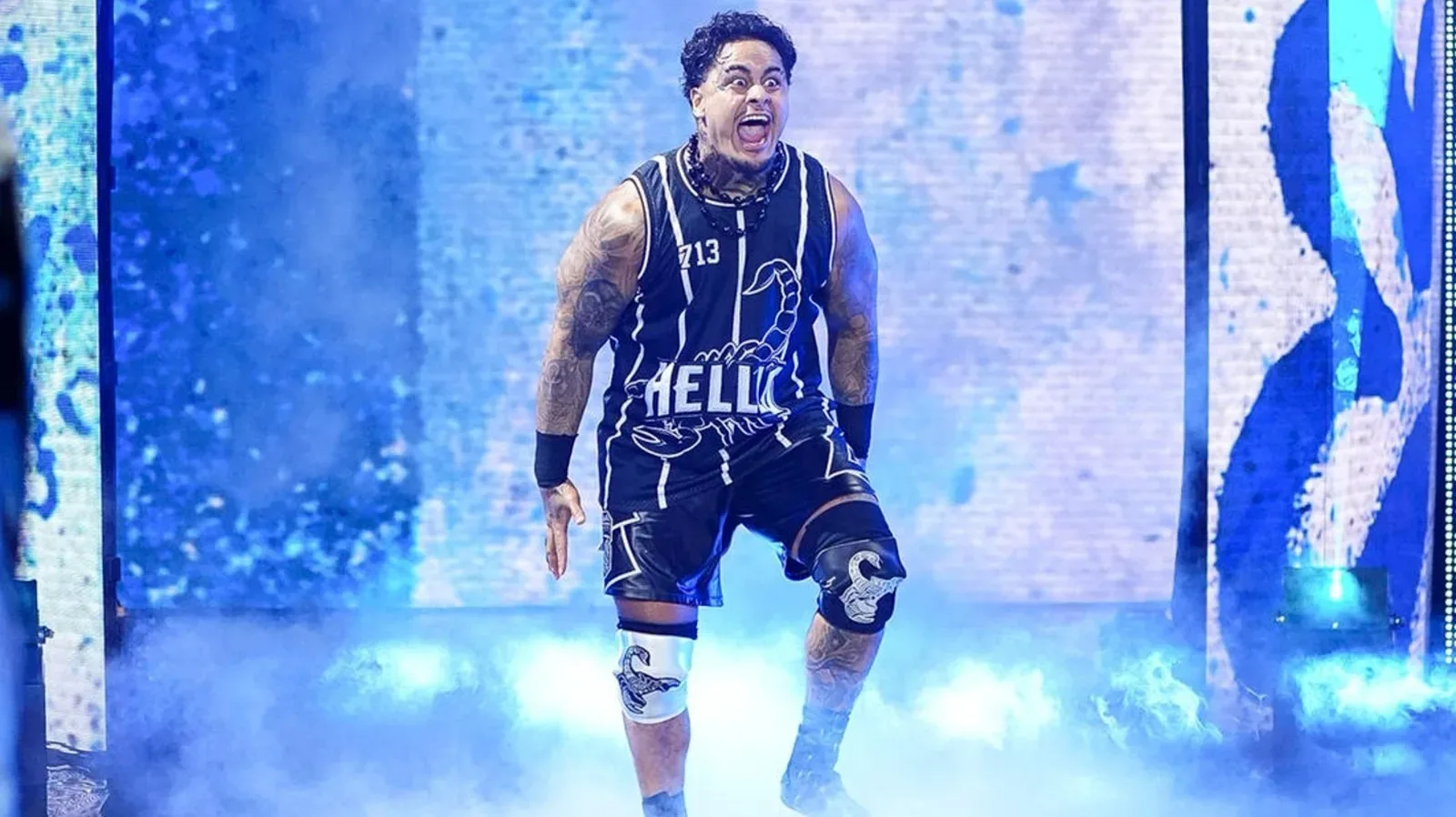
MVP sees a significant future for Zilla Fatu in WWE, but the former WWE star also believes the young performer faces a challenge that comes with being part of one of wrestling’s most recognizable families.
Speaking on Marking Out with MVP & Dwayne Swayze, MVP discussed Fatu’s potential in WWE NXT and the expectations attached to being the son of the late Umaga. In MVP’s view, the Fatu name can open doors and provide a valuable early advantage, but it cannot replace the work required to establish an individual identity and become a lasting success.
Fatu carries a surname with deep wrestling significance. MVP said that legacy immediately makes people take notice, particularly because of Umaga’s standing and the broader reputation of the Fatu family. That recognition, however, also creates a standard that a young wrestler will be measured against from the moment he arrives.
“It’s a huge head start because this is the son of Umaga, and we all know what and who Umaga was,” MVP said.
For more background on this topic, read Triple H Reflects on Shawn Michaels and Undertaker Transitioning Into New WWE Roles.
For MVP, that head start is real. A familiar family name is already marketable in an industry where audience recognition is valuable, and it can put a developing wrestler in a position to receive opportunities sooner than someone starting without that connection. Yet MVP made clear that the same name brings an immediate burden. Fans will not simply see Zilla Fatu as a newcomer; many will compare him to his father and expect him to uphold the family’s reputation.
“So there are certain expectations placed upon you. You got to carry that weight. You are expected to be as great as your father. Maybe not right away. You carry the Fatu name. You are going to move to the front of the line because your name is already bankable.”
The benefit and burden of a famous name
Wrestling family legacies can be a powerful foundation, but they are rarely simple. A recognizable surname can help a performer draw initial interest from viewers, promoters, and decision-makers. It can also give that wrestler access to advice from people who understand the realities of WWE, television production, travel, character development, and the long process of earning trust on a major roster.
At the same time, legacy creates comparisons that can be difficult to escape. In Fatu’s case, the connection to Umaga is especially prominent. MVP’s comments frame that connection as neither a shortcut to stardom nor an obstacle that should be resented. Instead, it is a major advantage that must be matched by preparation, performance, and personal growth.
MVP said the young NXT talent already possesses traits that give him a strong foundation for that work. He pointed to Fatu’s physical presence, charisma, and athleticism, qualities that are central to making an impression in WWE’s developmental system and eventually on a larger stage.
“He’s a big kid, good-looking kid, has presence, has charisma, has agility. He has a huge upside and could be a big star,” MVP said.
Those attributes matter because WWE success requires much more than a family connection. Presence can help a wrestler stand out when entering an arena or appearing on camera. Charisma can create a bond with an audience. Agility and physical ability can make the in-ring work compelling. Still, MVP’s assessment was not that Fatu has already reached his destination. He sees potential and a high ceiling, but also a young wrestler who must continue developing all of those elements.
“They see that in him,” MVP added, referring to the qualities he believes have put Fatu in a favorable position. But he returned to the central point that the family name and the opportunities it creates carry consequences as well.
“So, he’s moved to the head of the line because of the name, but that weight comes with it.”
NXT is a beginning, not an arrival
MVP also offered a reminder about the role of NXT in a WWE career. Reaching NXT is an important step, particularly for a prospect with substantial expectations around him. But in MVP’s view, arriving in WWE’s developmental environment should not be mistaken for having fully made it in the industry.
That distinction is important for any emerging wrestler. The next phase requires the ability to improve under pressure, adapt to a demanding performance environment, develop consistency, and make the most of every opportunity. Fatu may have a notable lineage, but MVP stressed that the path forward still depends on Fatu’s own effort.
“[The good things about him are] His talent, his ability, his desire, you know, his drive. He can be great. He’s young, though. He’s very young. He’s got to do the work.”
The emphasis on youth is notable. MVP sees time as one of Fatu’s greatest assets, provided he continues to learn and build on the potential that is already evident. Rather than putting an immediate demand on him to replicate everything associated with Umaga or the larger Fatu legacy, MVP’s comments recognize that growth is part of the process.
Fatu’s task is to become a complete WWE performer in his own right. That means refining his in-ring abilities, becoming more comfortable in high-pressure situations, and finding the distinct qualities that make audiences invest in Zilla Fatu beyond the name attached to him. Legacy may bring viewers to the first appearance, but a performer’s own work is what gives them a reason to remain invested.
MVP was direct in rejecting the idea that getting to NXT represents the finish line.
“And people think, well, you got to NXT, you made it. No, you didn’t. Because now you really got to turn up.”
That message applies particularly strongly to a performer entering WWE with early attention. More eyes can mean more opportunity, but they can also mean more scrutiny. Every match, promo, and development can be examined through the lens of family history. MVP’s advice is effectively that Fatu should embrace the advantage of his background while accepting the responsibility that comes with it.
A long-term belief in Fatu’s potential
MVP ultimately expressed confidence that Fatu can become a WWE star for years to come. His optimism is rooted in more than the Umaga connection. He identified talent, ability, desire, and drive as meaningful assets, while also noting that Fatu can benefit from the guidance available within his family.
That combination could be especially valuable as Fatu continues his NXT journey. Talent creates the possibility of success, while experienced guidance can help a young wrestler navigate the expectations, decisions, and adjustments involved in building a career in WWE. MVP’s comments suggest that Fatu has access to both a powerful legacy and a support system capable of helping him handle its pressures.
The key will be balancing the two sides of that inheritance. The Fatu name is already bankable and capable of moving him closer to major opportunities. Yet MVP’s assessment leaves no doubt that opportunity alone will not determine the outcome. Fatu must keep developing, keep working, and prove that the tools MVP sees in him can translate into sustained success.
For now, MVP believes the upside is substantial. Zilla Fatu has the size, presence, charisma, agility, and family foundation that can support a major run in WWE. The expectations will remain high because of who his father was and what the Fatu name represents. But MVP’s confidence is that, with the right work and continued growth, Fatu has the ability to carry that weight and establish a legacy of his own.
In pictures

Darryl Polo
Darryl Polo is a passionate wrestling fan covering WWE, AEW, TNA and beyond. He loves great rivalries, breakout stars and the moments that keep fans talking long after the bell. How we work.