
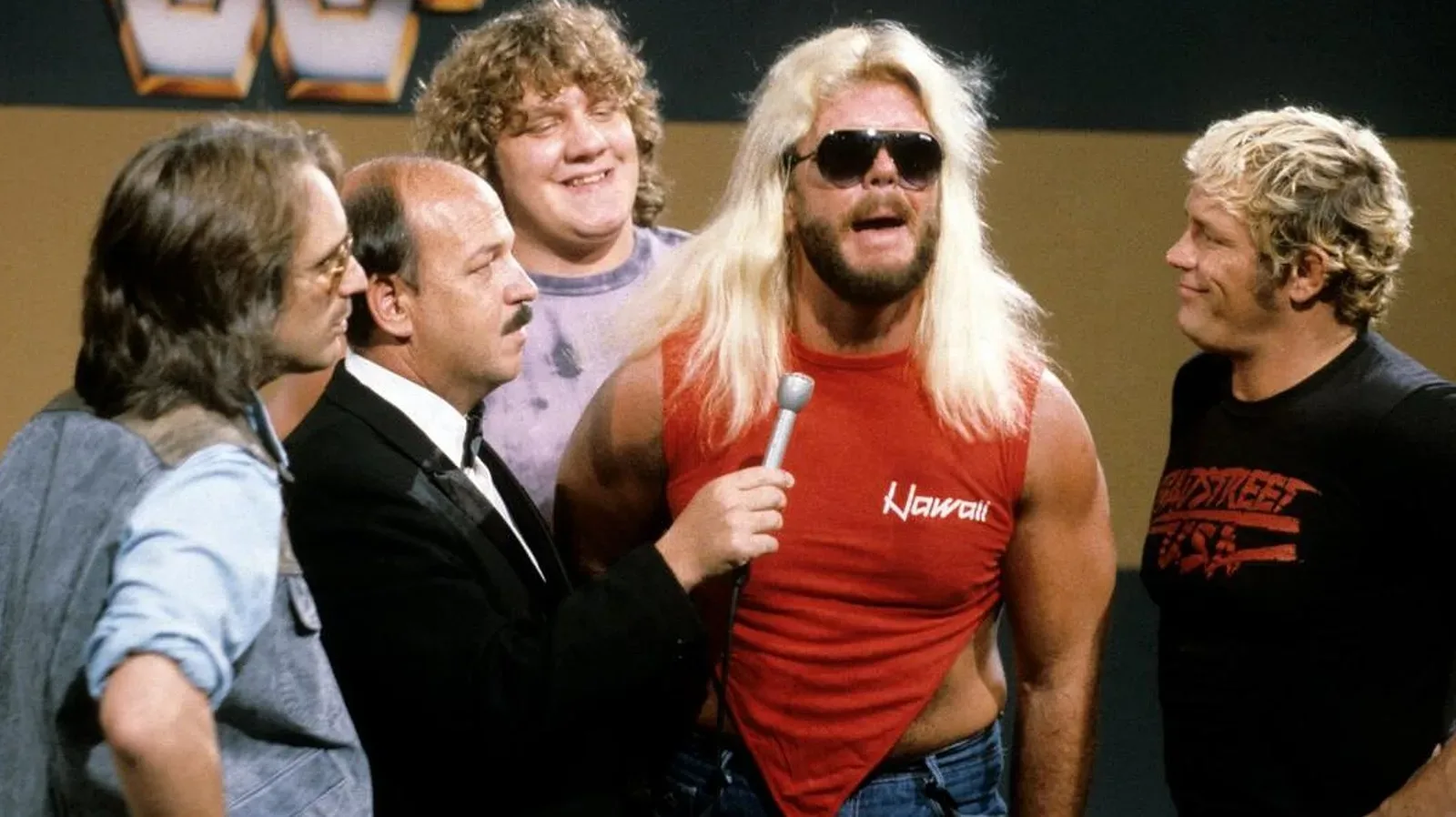
Michael P.S. Hayes has offered a candid account of why the Fabulous Freebirds’ first WWE run ended almost as quickly as it began in 1984.
The Freebirds’ early stay in WWE has long been associated with stories of creative frustration, clashes behind the scenes and a notorious incident involving André the Giant. Hayes, speaking on What’s Your Story? With Steph McMahon, addressed those stories directly and framed the group’s departure as a combination of business disappointment, personal circumstances and a serious breakdown in trust.
Hayes’ account does not deny the longstanding reports of heat between the Freebirds and André. Instead, he said the group’s conduct around the giant helped bring an abrupt end to an opportunity that André himself had helped create. The situation was particularly costly because the Freebirds had entered WWE with substantial momentum and because Hayes believed Vince McMahon had a specific vision for him as a personality.
“There’s some really loose ends on that about what really happened,” Hayes said on What’s Your Story? With Steph McMahon. “What really happened was we walked out.”
For more background on this topic, read Je’Von Evans Targets First WWE Title With Penta at Crown Jewel.
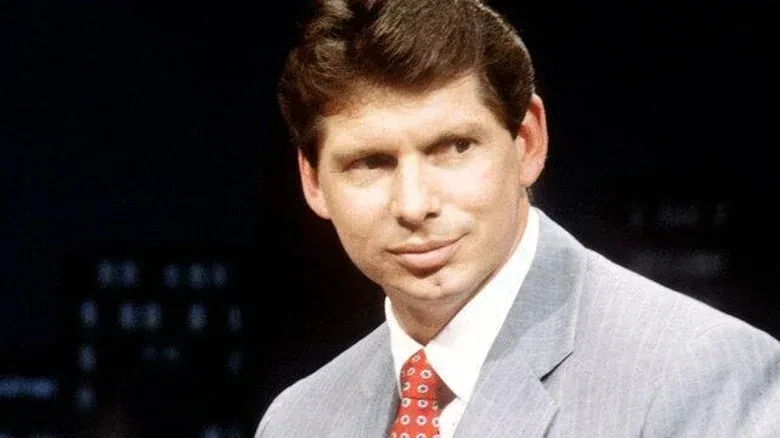
That distinction is important. Rather than describing the departure as solely a decision made by WWE, Hayes said he and Buddy Roberts later returned to discuss matters with McMahon. Hayes also suggested that McMahon’s interest may not have been equally centered on every member of the act. In his view, McMahon was especially interested in Hayes and the rock-and-roll image he brought to the Freebirds presentation.
Hayes Believed Vince McMahon Wanted His Rock-and-Roll Persona
The Fabulous Freebirds were a distinctive attraction wherever they traveled, but Hayes recalled a belief that WWE’s interest in the group was tied heavily to what he could bring as an individual performer and frontman. At the time, Hayes had a deal with Electric Records, adding another dimension to the music-driven image that had become inseparable from his persona.
Hayes said he had developed a personal philosophy of leaving territories once he felt he had built enough traction there. That approach became more complicated during the group’s WWE period because Terry Gordy had fallen in love with the woman he would later marry. The personal changes within the group, together with business issues Hayes felt had not been resolved, created an unstable backdrop for the Freebirds’ time in the company.
He recalled a conversation at the Vero Moda Inn near Madison Square Garden where he sensed that McMahon was unhappy. Hayes remembered McMahon telling him, “I don’t think I like this Michael...” The recollection underscores that the relationship had begun to deteriorate before the Freebirds’ eventual exit was finalized.
Hayes also said the group did not feel it was receiving the financial return it had expected at the outset. When he later tried to explain why he wanted to leave, he said money was central to the discussion. Hayes recalled telling McMahon that the Freebirds were not making what they had been told they would make immediately.
For a group built on confidence and a willingness to make bold career moves, the gap between expectations and reality became significant. Yet Hayes’ retelling makes clear that the money issue was only part of the story. The incident with André became the damaging event that overshadowed virtually everything else.
The Airport Encounter With André the Giant
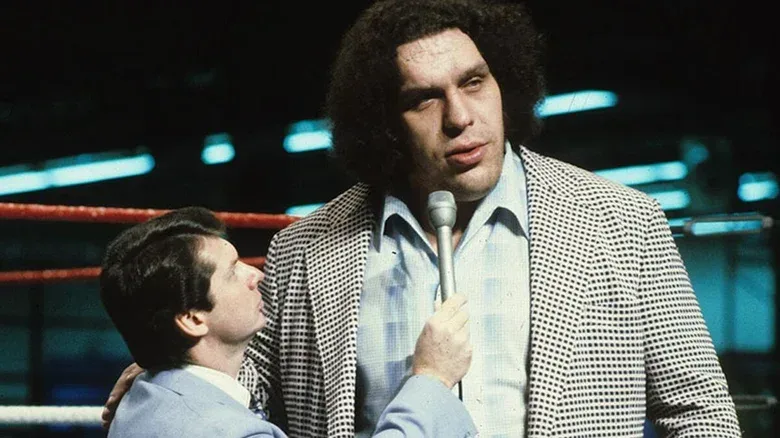
Hayes corroborated that the Freebirds had legitimate heat with André the Giant. He said the encounter unfolded after the group changed flights in Pittsburgh because of Gordy. When André appeared at the airport, Hayes said the Freebirds’ immediate instinct was to avoid him.
“And here comes André! And it didn’t take long,” Hayes recalled on What’s Your Story? With Steph McMahon. “The three of us were all hiding behind the pillars, ‘I hope he don’t see us, please don’t see us!’”
The tension stemmed from an earlier night in Youngstown, Ohio. Hayes said André was serving as an agent for the first time and was running the show there. The Freebirds were staying in Columbus, and Hayes believed he had the night off. Acting on that assumption, he said he drank heavily and took Valium before discovering that he was actually scheduled to work.
Hayes’ description of arriving at the next venue is deliberately self-deprecating. He recalled being physically supported by the other Freebirds as they entered a school where the show was taking place. André was there, drinking wine and playing what Hayes described as Cribbage or a similar game. When André asked whether Hayes was drunk, the others denied it. Hayes then said they released him and he immediately fell face-first.
The story became more than an embarrassing travel-day memory. Hayes said André had been instrumental in helping the Freebirds get into WWE in the first place. From Hayes’ perspective, showing up in that condition in front of André damaged the group’s standing with someone whose support mattered greatly.
“Through his actions,” Hayes said of himself, he ruined what could have happened. The Freebirds ultimately chose to leave, believing the situation with André had made the path forward untenable.
McMahon Continued Calling, But the Relationship Had Changed
Despite the Freebirds walking out, Hayes said McMahon did not simply close the door immediately. McMahon continued calling in an effort to get the group to reconsider, while Hayes said he ignored those calls for roughly a week. Hayes later attempted to explain his concerns and expressed a willingness to return and make things right.
At that point, the Freebirds were already committed to work in Japan. Hayes flew in for a meeting with McMahon that, in hindsight, became the final blow to any prospect of salvaging the relationship at that time.
Hayes referred to it as “the infamous meeting where I fell asleep.” He said he arrived carrying a beer and eventually passed out during the discussion. In the moment, Hayes said he did not fully understand why that would be viewed as a major problem. He saw the behavior through the lens of the Freebirds’ lifestyle and identity.
“At the time, I didn’t understand, because we’re Freebirds, that’s what we do,” Hayes said on What’s Your Story? With Steph McMahon.
But WWE was not going to view the incident as harmless rock-and-roll excess. Hayes said he later contacted a WWE booker and learned that he had lost McMahon’s trust. Whether Hayes understood the severity at the time or not, the meeting reinforced the impression that he could not be relied upon in the way McMahon wanted.
The immediate aftermath sent the three men in different directions. Hayes said Gordy went back to Dallas, Roberts was left in a difficult professional limbo, and Hayes headed to Florida to take over booking responsibilities there. The Freebirds’ initial WWE chapter was over before it had the chance to develop into the major run their reputation might have suggested.
A Later WWE Return Came With a Different Identity
Hayes did eventually return to WWE, but not as the Freebird figure he had once been. He was brought in as Dok Hendrix, an interviewer character who abandoned the visual hallmarks of his famous persona. Hayes said plainly that he was not fond of the gimmick, though he understood that it was what McMahon wanted from him at that stage.
“I knew that it was sink-or-swim,” Hayes said.
That later role was part of a long WWE association that ultimately became far more successful behind the scenes than the Freebirds’ turbulent 1984 stay. Hayes became a prominent figure in the company’s creative structure over the years, while the Fabulous Freebirds’ broader legacy was formally recognized with their WWE Hall of Fame induction in 2016.
Still, Hayes’ latest recollection offers a more human explanation for one of wrestling’s enduring what-if stories. The Freebirds did not merely encounter a bad creative fit or decide to move on to another destination. Hayes portrays the departure as a sequence of choices: expectations that were not being met, tension involving André, ignored calls from McMahon, and one meeting that convinced WWE’s chairman that trust could not be restored.
For Hayes, the story is not an attempt to erase the Freebirds’ responsibility. If anything, his account acknowledges how the group’s lifestyle and his own decisions contributed to the collapse. The confidence that made the Freebirds special also helped create the conditions for an opportunity in WWE to slip away.
In pictures

Darryl Polo
Darryl Polo is a passionate wrestling fan covering WWE, AEW, TNA and beyond. He loves great rivalries, breakout stars and the moments that keep fans talking long after the bell. How we work.