
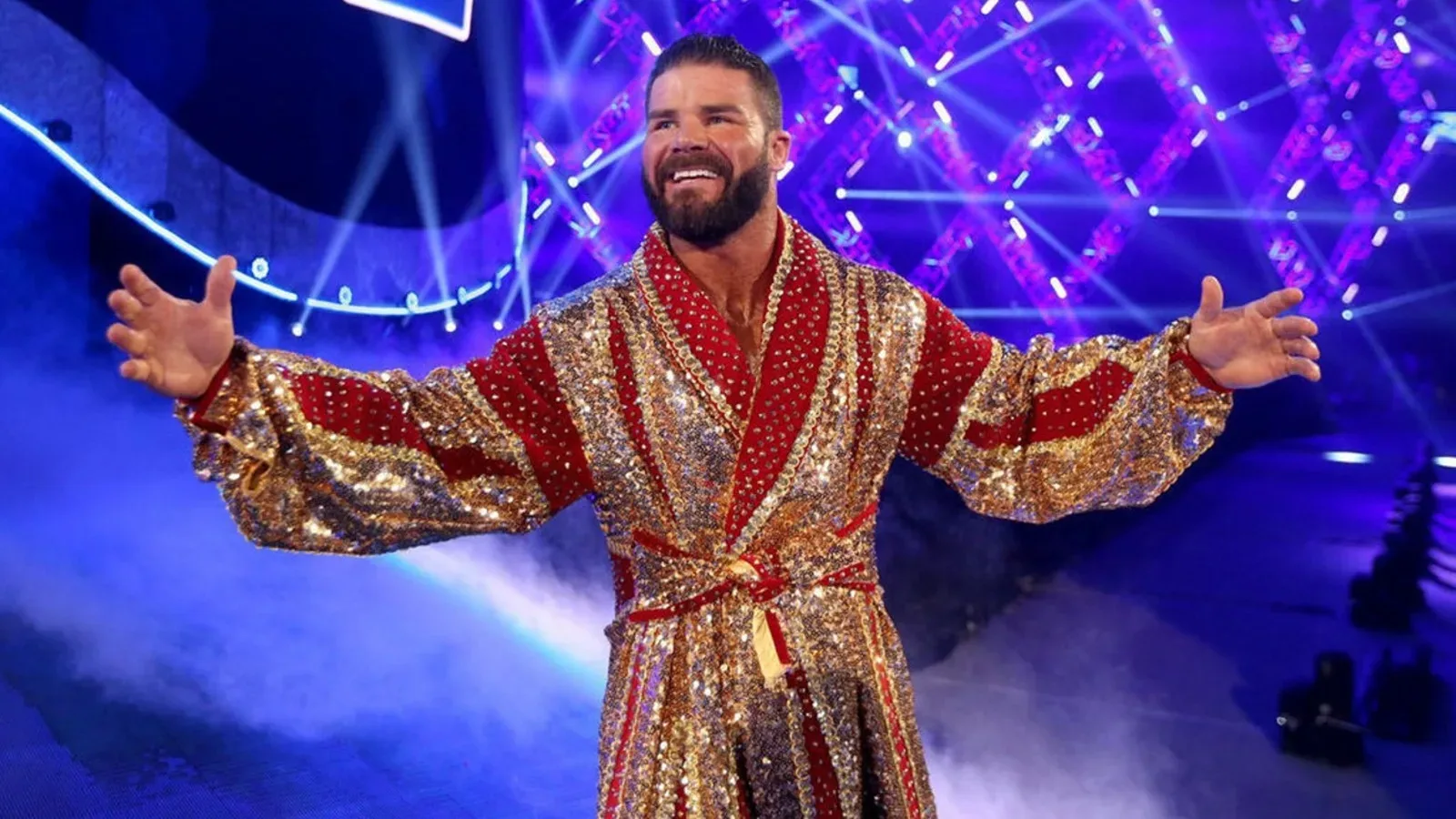
Michael Hayes has revealed how highly WWE leadership views Bobby Roode’s work behind the scenes, saying Paul “Triple H” Levesque has identified the former world champion as a potential successor to Hayes in a major producer role.
Speaking during an appearance on Stephanie McMahon’s What’s Your Story? podcast, Hayes discussed Roode’s transition from an accomplished in-ring career into production. The longtime WWE figure said Levesque directly framed Roode’s next chapter as an effort to develop someone capable of carrying forward the kind of influence Hayes has held for decades.
“But yeah, I just made up my mind that this is your new path and go for it, and I’ll tell you, Trips came up to me one day and he goes, ‘So Michael, you know you’re not gonna be around forever.’ You’re our Pat Patterson. I need you to make Bobby Roode ‘Michael.’”
The statement is a significant indication of the confidence WWE has in Roode as a producer. Hayes has been one of the most recognizable and influential creative voices working backstage in the company, with a body of work that spans generations of WWE programming. Comparing his place in the system to that of Pat Patterson also puts the responsibility Levesque described into sharp perspective.
For more background on this topic, read Big E Marries Kristen Yim as WWE, AEW and TNA Names Celebrate.
Hayes Explains the Direction for Bobby Roode
Hayes’ comments centered on a decision to embrace a new direction for Roode. While the former NXT Champion and WWE United States Champion built a long résumé as a performer, his current work has increasingly been recognized on the production side of the business.
Roode’s wrestling career established him as a versatile television performer long before he moved into his WWE producer position. He competed at a high level in multiple environments and entered WWE with substantial experience, then found major success in NXT and on the main roster. His “Glorious” presentation became one of the most memorable entrances of its period, and he held prominent singles titles during his WWE run.
That in-ring background gives Roode firsthand familiarity with the many components that go into building a match, presenting a character, navigating television time, and working within the demands of a weekly WWE schedule. None of those elements alone guarantee success as a producer, but they provide a foundation that can be developed through direct guidance from experienced figures such as Hayes.
Hayes did not offer specific details about what duties Roode will assume or identify particular shows or matches tied to the assignment. Still, the language he attributed to Levesque makes clear that this is not simply a general endorsement. Levesque’s message, as Hayes relayed it, was that WWE needs Roode to grow into a role that resembles Hayes’ own long-standing place within the company.
The Pat Patterson Comparison Carries Major Weight
Levesque referring to Hayes as WWE’s “Pat Patterson” is especially notable. Patterson remains one of the most respected producers and creative minds in WWE history, known for his influence on match construction, storytelling, character work, and the overall presentation of countless performers. His legacy remains a benchmark for backstage contributions that may not always be visible to the audience but can shape the final product in fundamental ways.
By sharing that comparison, Hayes conveyed the scale of the role Levesque believes he has fulfilled. It also illustrates why the search for someone who can learn from Hayes is important. WWE production depends on experienced personnel who understand both the creative goals of a segment and the practical realities required to bring it to air.
A lead producer’s work can involve helping talent map out matches, refine transitions, maintain story continuity, organize time, and make sure an in-ring performance fits the broader purpose of a television episode or premium live event. The position calls for communication, trust, adaptability, and a deep knowledge of how WWE operates. Those are qualities generally developed over time rather than acquired overnight.
Hayes’ account suggests Roode has been placed on a path designed to cultivate those skills. The emphasis is not merely on Roode joining the production team, but on the possibility that he can become a central backstage presence with the ability to guide other talent and help shape WWE programming.
Roode Has Earned Praise for Producer Work
There have been several instances in which people within WWE have praised Roode for his producer work. Hayes’ remarks add another substantial endorsement, particularly because they came with the suggestion that Levesque personally sees a long-term role for Roode’s development.
Recognition from colleagues can be meaningful in any wrestling locker room, but it takes on added importance for someone moving from performer to producer. Roode is now being evaluated in a different capacity from the one in which fans came to know him. The focus is no longer only on his own promos, matches, entrances, or championship pursuits. It is also on his ability to help others deliver their best work.
That shift can be demanding. A producer must account for the needs of different performers, styles, experience levels, stories, and broadcast circumstances. The best work in that role often receives little public attention because it is intended to make the talent and the program succeed rather than spotlight the person offering the guidance.
For Roode, Hayes’ words indicate that WWE is seeing value in his transition and is willing to invest in his growth. The assignment described by Hayes also places Roode in the company of a producer whose contribution to WWE has endured through multiple eras.
A Vote of Confidence From WWE Leadership
Levesque’s reported directive is ultimately a vote of confidence in both men. Hayes remains trusted as the veteran figure capable of teaching the next generation of WWE production leadership. Roode, meanwhile, is being positioned as someone who can absorb that experience and potentially carry it forward.
There is no indication in Hayes’ comments that he is stepping away from his current work immediately. In fact, the conversation instead points to a process of mentorship and succession planning. Levesque’s remark that Hayes will not be around forever was presented as the reason WWE must prepare a capable successor, not as an announcement of a specific timetable for Hayes’ departure.
That distinction matters. Wrestling companies are constantly balancing the need for institutional knowledge with the need to develop new decision-makers. WWE’s most established backstage figures have years, and in some cases decades, of experience in the company’s particular approach to television wrestling. Passing along that knowledge is an important part of maintaining consistency while also allowing new voices to emerge.
Roode’s opportunity appears to fit that model. He has the background of a prominent wrestler, has already drawn positive feedback for his work as a producer, and now has a public endorsement from Hayes that includes a clear account of Levesque’s expectations.
What This Means for Roode’s WWE Future
Hayes’ comments provide the clearest public indication yet that Roode’s future in WWE may be especially significant behind the curtain. A comparison to Hayes is not a minor one, nor is the assignment to help make Roode into the “next Michael” a routine statement about a former wrestler learning a new job.
It speaks to a larger belief that Roode could become a foundational producer for WWE over the years ahead. That outcome will depend on his continued development, the opportunities he receives, and how his responsibilities evolve. But the endorsement itself shows that he has already made a strong enough impression to be viewed through that lens.
For Hayes, the process also represents a chance to pass along the knowledge accumulated during an extraordinary career in wrestling. For WWE, it is an investment in continuity. And for Roode, it is an opportunity to build a lasting legacy in a new role after a successful career in front of the camera.

Darryl Polo
Darryl Polo is a passionate wrestling fan covering WWE, AEW, TNA and beyond. He loves great rivalries, breakout stars and the moments that keep fans talking long after the bell. How we work.