
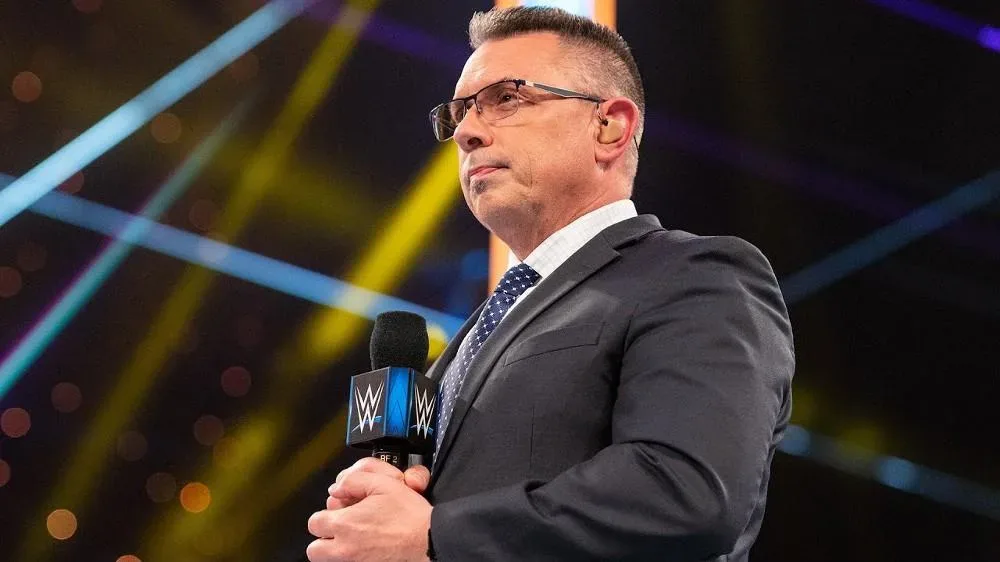
Michael Cole has spent decades serving as one of WWE’s most recognizable voices, calling major championship matches, WrestleMania moments and unexpected turns that become part of the company’s long-term history. But despite his central role at the commentary desk, Cole says he does not always know how a match will end before the bell rings.
Discussing the subject in a new interview, Cole described his advance knowledge of WWE finishes as “fifty-fifty.” The answer reflects the balancing act involved in calling a live weekly wrestling program: commentators sometimes need enough information to clearly communicate the direction of a story, but there are other occasions when keeping them in the dark helps preserve a genuine emotional response.
“Fifty-fifty. Sometimes I do because I need to know where to lead the audience in terms of where stories may be going each and every week,” Cole said. “Of course, we’re episodic TV. We need to be able to explain to the audience where we’re going each and every week.”
That distinction is important in WWE, where matches are rarely presented as isolated events. A victory, defeat, interference or post-match confrontation can influence the next edition of Raw or SmackDown, establish a challenger for a title, or create the foundation for a larger Premium Live Event program. Commentary is tasked with helping viewers understand those developments in real time, particularly when the next chapter of a rivalry needs to be made clear immediately.
For more background on this topic, read Ricky Saints Calls for Rey Fenix Rematch and Another Shot at AAA World Cruiserweight Title.
Cole’s comments underline why announcers can sometimes be briefed on the intended result or broader narrative direction. If a finish is meant to position a performer differently, signal a new feud or move an ongoing story toward its next stage, the broadcast team may need context to frame the moment for the audience. That knowledge can affect the language used during a match, what threads are emphasized, and how the aftermath is presented once a decision has been made.
At the same time, Cole made clear that he does not always want that information. Some matches are built around uncertainty, and the natural reaction of the person calling the action can become an essential element of the presentation. For Cole, WWE’s Money in the Bank matches are a prime example of a setting where surprise has particular value.
“Sometimes, I don’t like to know the ending of matches. The Money in the Bank match is a great example. I want the excitement to take over,” Cole said.
Money in the Bank has long been designed to create unpredictability. With multiple competitors fighting for a contract that can lead to a championship opportunity, and with ladder-match chaos making every near fall and every climb feel potentially decisive, the concept benefits from a sense that anything can happen. The identity of the winner can shape WWE programming for months, especially because the eventual contract holder can choose when to pursue a title.
For an announcer, not knowing which wrestler will pull down the briefcase means the call is made without a predetermined emotional destination. The reaction can be immediate rather than measured, with the surprise of the moment carrying through the broadcast. Cole’s perspective suggests that this spontaneous energy is not simply incidental; in certain circumstances, it is something he actively values.
He pointed to two of the biggest WrestleMania developments of the modern era as examples of finishes he did not know beforehand. The first came when Brock Lesnar defeated The Undertaker at WrestleMania, ending The Undertaker’s undefeated WrestleMania streak. The result remains one of WWE’s most dramatic shocks because of the stature attached to the streak and the disbelief that greeted its conclusion.
“There have been some great matches over the years where I didn’t know the finish for: The Undertaker vs. Brock Lesnar when Brock Lesnar defeated Undertaker and ended his undefeated streak at WrestleMania. I didn’t know that was going to happen,” Cole said.
That finish did not require manufactured astonishment from those at ringside. The enormity of Lesnar’s win over The Undertaker was apparent in the immediate reaction around the stadium and on the broadcast. In recalling that he was unaware of the outcome, Cole identified the kind of moment where an announcer’s authentic shock can match what viewers are experiencing at home.
Cole also cited Seth Rollins’ Money in the Bank cash-in at WrestleMania, a moment commonly remembered as the “Heist of the Century.” Rollins entered the championship match involving Brock Lesnar and Roman Reigns by cashing in his Money in the Bank contract, changing the match and capturing the title. Cole said he did not know that cash-in was coming, and he revealed that the phrase attached to the moment was created spontaneously.
“I didn’t know that Seth Rollins was going to cash in the Money in the Bank at WrestleMania. ‘Heist of the Century’ I came up with on the fly,” Cole said.
The line has since become inseparable from the moment because it captured the scale and opportunism of Rollins’ decision. It also illustrates the value of allowing commentators room to respond naturally. A major wrestling call is often remembered alongside the visual itself, but the most enduring phrases can emerge from instinct rather than preparation. Cole’s recollection of the Rollins cash-in is a clear example of how a surprise finish can produce language that remains tied to the event years later.
There is no single approach that would fit every WWE match. A tightly plotted television story may require commentary to explain a result with precision. A title change, alliance shift or controversial finish can have implications that need to be identified immediately so the audience understands why the development matters. In those cases, advance direction can help commentators guide viewers through an increasingly layered weekly narrative.
By contrast, the largest surprise moments often depend on the absence of certainty. If the commentary desk is reacting in real time, its surprise can reinforce the feeling that the result was genuinely seismic. That does not change the announcers’ responsibility to tell the story effectively, but it can change the tone of the call from explanatory to instinctive.
Cole’s “fifty-fifty” description captures both sides of the job. He is not portraying advance knowledge as unnecessary; he specifically noted that it can be vital for explaining where WWE stories are headed from week to week. Yet he also recognizes that withholding an outcome can allow the excitement of a major match to take control, especially in a concept such as Money in the Bank or in a WrestleMania moment built to alter expectations.
As WWE continues to present programming driven by serialized rivalries and high-stakes event matches, commentary will remain a major part of how those stories are experienced. The booth must be prepared enough to provide clarity, while still being capable of meeting the unexpected with the kind of reaction that makes a turning point feel even larger.
For Cole, that means living in the middle ground. Sometimes he knows the destination and can help lead viewers toward it. Sometimes, as with Lesnar ending The Undertaker’s streak or Rollins’ WrestleMania cash-in, he learns the outcome at the same instant the audience does. Those are the moments when preparation gives way to reaction—and, occasionally, produces a call that becomes part of WWE history.

Darryl Polo
Darryl Polo is a passionate wrestling fan covering WWE, AEW, TNA and beyond. He loves great rivalries, breakout stars and the moments that keep fans talking long after the bell. How we work.