
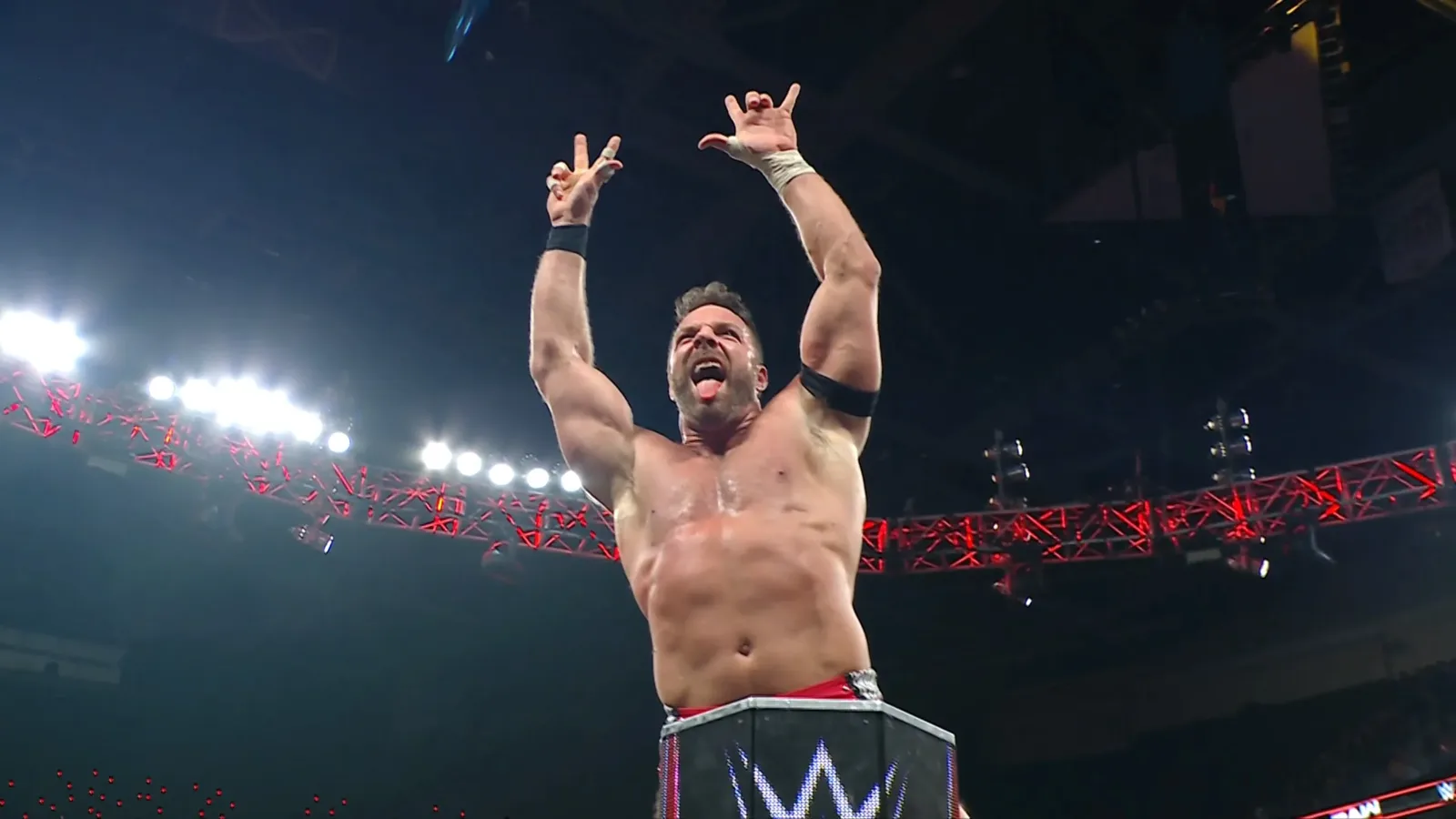
LA Knight has built his WWE identity around urgency, defiance and an unmistakably confrontational edge. Whether he is addressing an arena, trading barbs with an opponent or making his case for a bigger opportunity, Knight’s presentation has long made it clear that he sees every moment as something to seize.
But Knight has now offered a more personal look at the mentality behind that intensity. In reflecting on difficult periods in his life and career, he acknowledged that he was “miserable” at times and that the feeling followed him into the workplace. The result, by his own description, was a version of himself who would arrive at WWE shows already prepared to fight anyone and anything in front of him.
It is a candid admission from a performer whose on-screen character is fueled by conflict. Knight made an important distinction, however: his intensity was not about mistreating people. Instead, it was about being consumed by a competitive, defensive frame of mind that made every environment feel like a battle.
“I wasn’t an asshole,” Knight said. “But I would show up, and immediately I was in the zone and feeling like I was going in there to fight everything and everybody, and especially the company, I guess.”
For more background on this topic, read John Cena Joins Elmo in New Sesame Street Video About Helping Others.
The comments provide added context to Knight’s career path in WWE, where his rise has involved persistent fan support, major matches and the challenge of establishing his voice within a constantly changing creative landscape. His current outlook appears considerably more balanced, with Knight explaining that he has made a conscious effort to make his home life feel separate from the pressures of the job.
For Knight, that means turning his attention toward ordinary but meaningful parts of life once he is away from the arena. Spending time with his dogs and maintaining a social life have become central parts of correcting the unhappiness he said he had been carrying.
“I just try to make sure that once I’m home, it’s focused on, ‘Well now I’m going to hang out with my dogs,’ or ‘I’m going to have a little bit of a social life,’” Knight said.
That shift matters for a wrestler who has often projected the image of someone unwilling to wait patiently for recognition. Knight’s confidence is a major reason audiences respond to him, but he is also describing the work required to ensure that professional ambition does not overwhelm every other aspect of life.
A Different Dynamic With Triple H
Knight also addressed his relationship with Triple H, indicating that it is now in a good place. He looked back on a conversation the two had at Money in the Bank 2025, describing himself as receptive to the message being delivered even if he approached the circumstances from a slightly different perspective.
Rather than presenting the exchange as a dramatic confrontation, Knight described listening and taking in what was being said. He also assessed the situation through his own lens, believing that things had gone largely as smoothly as anyone could tell.
“I’m just sitting there listening to it, like, ‘Okay, yeah, all right.’ Obviously I’m gonna listen to what’s coming at me,” Knight said.
He added that he was thinking, “Well, everything went off pretty much without a hitch, as far as anybody can tell, as far as even I could tell.”
There is a notable difference between Knight’s description of his former outlook and his comments on that conversation. The wrestler who once felt as though he had to battle “especially the company” is now discussing communication with WWE leadership in a more measured way. That does not mean Knight has lost his edge. If anything, his comments suggest that he has learned how to keep that edge without allowing it to become a source of constant frustration.
In WWE, where creative direction, timing and opportunity can be as important as in-ring ability, a productive relationship between a performer and the people guiding the larger presentation can be crucial. Knight’s remarks indicate that he and the creative team have found a process that better suits the way he works.
Keeping Promos Focused On Feeling
One of the clearest examples is Knight’s approach to speaking. He said he has gained more creative freedom on the microphone, while also explaining why a fully scripted, start-to-finish approach does not fit his style.
Knight does not want every beat laid out from “A to Z.” His goal is not to force viewers to process an overly complicated message. Instead, he wants them to feel the moment. That philosophy aligns with the traits that have made him such a recognizable figure: a sharp cadence, concise points and the ability to make a crowd react emotionally to the confidence behind his words.
“We’ve kinda gotten that figured out between me and creative, where it’s like, I’m not the type that wants to have everything mapped out from A to Z,” Knight said. “I don’t want the audience to have to think as much. I want them to feel.”
That is not simply a statement about memorizing lines. It is an explanation of Knight’s broader performance philosophy. Wrestling promos often work best when the audience immediately understands the emotion, stakes and personality at the center of the segment. Knight’s style is built around that immediacy. His words are designed to land with force, and his connection with a live audience depends on having enough room to respond naturally to the atmosphere in the building.
Finding common ground with creative is therefore significant. It allows Knight to retain the qualities that make him distinct while working within WWE’s wider television framework. The balance is especially important for someone whose appeal is so closely connected to authenticity and conviction.
Solo Sikoa’s Role In The Adjustment
Knight also credited Solo Sikoa with helping him navigate this more positive period. Their rapport appears to have extended beyond simply working around one another at WWE events, with Knight saying that they “bounce off each other very well.”
He specifically noted that it has been helpful to watch Sikoa relax and “let loose a little bit.” The remark points to the value of having someone around who can help cut through the tension of a demanding environment. For Knight, that seems to have been an important part of changing the way he enters a workday.
“It’s cool just to see him let loose a little bit, so that’s been helpful,” Knight said. “We bounce off each other very well.”
The detail is particularly interesting because Knight’s earlier description was rooted in isolation and confrontation. He spoke about arriving locked into a mindset where everything felt adversarial. Now, he is openly identifying a colleague who has helped him find a more relaxed rhythm. That does not erase the competitive instincts that drive him, but it suggests he has found a healthier way to manage them.
Professional wrestling is an unusual workplace. Performers are asked to compete, collaborate, travel and create under intense public scrutiny, often while their characters are built on animosity. Being able to separate storyline conflict and career pressure from everyday personal interaction can be essential. Knight’s comments make clear that this has been an area of growth for him.
Money In The Bank As A Crucial Moment
Elsewhere, Knight described his match against Roman Reigns at Money in the Bank as “do or die” for him. The wording underscores how seriously he viewed the opportunity. Reigns has been one of WWE’s defining stars, and sharing the ring with him on a major stage carried obvious significance for Knight.
Knight did not frame that match as just another high-profile assignment. By calling it “do or die,” he conveyed the pressure he felt to prove that he belonged in that level of spotlight. For a performer whose career has been defined by a drive to be seen as a top-tier name, that kind of test naturally carried enormous personal weight.
His reflections now connect several sides of his WWE journey: the pressure he felt, the conversations that helped reshape his perspective, the creative trust he has developed and the personal changes that have allowed him to approach the job differently. Knight remains intensely ambitious, and nothing in his remarks suggests he is becoming less demanding of himself. The change is that he no longer appears to believe he has to take on the entire world every time he walks into a building.
That could prove to be an important development for LA Knight moving forward. His ability to generate emotion, command attention and make audiences feel the stakes has never been in question. With a healthier outlook, a productive creative relationship and trusted peers around him, Knight has described a foundation that may allow those strengths to come through even more clearly.

Darryl Polo
Darryl Polo is a passionate wrestling fan covering WWE, AEW, TNA and beyond. He loves great rivalries, breakout stars and the moments that keep fans talking long after the bell. How we work.