
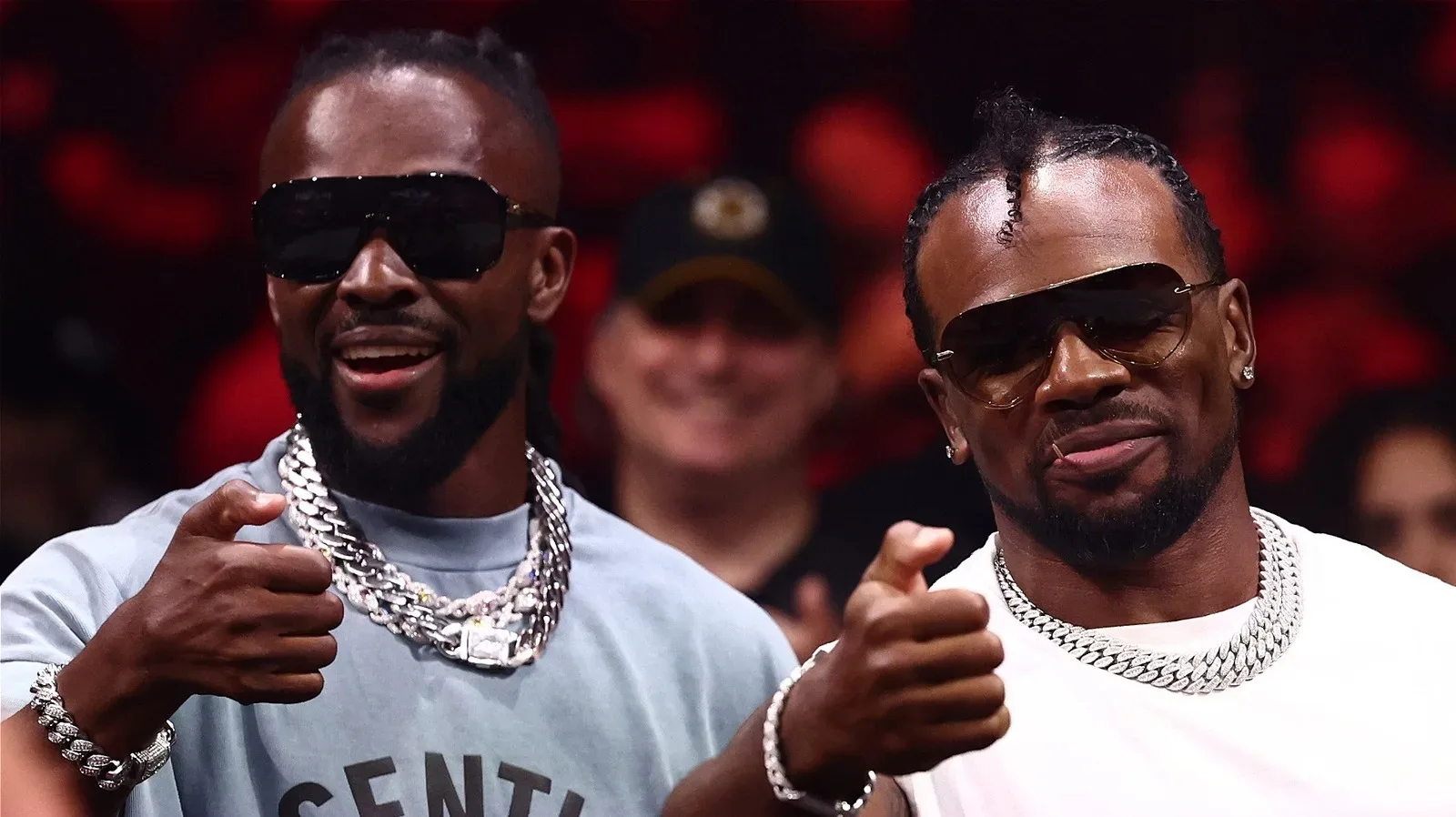
Kofi Kingston and Austin Creed built a defining legacy in WWE as two-thirds of The New Day alongside Big E, becoming one of the promotion’s most recognizable teams through championship success, charisma and a connection with audiences that extended far beyond the ring. Their departure from WWE was therefore a major surprise, particularly given the group’s status as a significant merchandise presence during its run.
But Kingston and Creed, who now hold the AEW World Trios Championship, were not entering that transition with the fear that work would disappear. Speaking on Close Up with Renee Paquette, Creed explained that their period away from wrestling quickly became an opportunity to explore the interests and professional connections they had cultivated outside the industry.
“Not to sound pompous or anything, but our phones were ringing pretty quick and our schedule got filled pretty quick; not even with wrestling stuff, just with, like, anime conventions,” Creed said on Close Up with Renee Paquette.
That response speaks to an important part of the New Day’s broader public identity. Kingston and Creed were never presented solely as wrestlers whose visibility began and ended on weekly television. Over the years, they developed genuine footholds in gaming, anime and convention culture, allowing them to connect with communities that overlap with wrestling fandom but remain distinct from it. Those interests were not merely hobbies to be revisited between shows. They became avenues for appearances, engagement and career options when their WWE tenure ended.
For more background on this topic, read Malakai Black Confirms Randy Orton WrestleMania 42 Match Was Pitched Before WWE Exit.
Creed’s comments make clear that the expected 90-day period after leaving WWE was not an idle wait for a new wrestling contract. Instead, their schedules filled with commitments that gave both men room to decide how they wanted to spend their time. In that sense, the break carried both personal and professional value.
“So for that 90 days, it was just really nice to only do what we wanted to do — be our own bosses,” Creed said.
For performers accustomed to the constant travel, television production and physical demands of a full-time wrestling schedule, that freedom is notable. The life of a top-level wrestler often requires long stretches away from home, with limited control over dates and a calendar built around the needs of a national promotion. Creed described a period in which he and Kingston could instead make choices around their own priorities, while still remaining active through selected convention appearances.
Family was central to that experience as well. Creed noted that the time away allowed them to spend more time with their families, an aspect of the transition that can be easy to overlook when a major wrestling departure is discussed primarily in terms of titles, free agency and the next contract. For Kingston, that personal perspective became the heart of his message to other wrestlers.
“I think, for me, it’s like: have interests outside of wrestling, you know what I mean?” Kingston said on Close Up with Renee Paquette.
Kingston was careful not to frame that advice as a suggestion that wrestlers should be less committed to their craft. Rather, he emphasized the importance of recognizing that a wrestling career, even a successful one, is only one part of a larger life. In an industry where performers can be conditioned to place every available hour into training, travel, promotion and competition, maintaining outside interests can provide both perspective and practical security.
“But there’s also so much else to life! And, you know, having a family, to me, is like the greatest thing in life,” Kingston said.
The comments offer an insightful look at why Kingston and Creed were able to approach their post-WWE situation with confidence rather than uncertainty. Their profile as The New Day certainly gave them name recognition, but recognition alone does not automatically produce work beyond wrestling. The opportunities they discussed came from years of consistently participating in and supporting the spaces they cared about, especially gaming and anime. Their visibility in those communities gave them a foundation that was separate from any one wrestling company.
That distinction matters for today’s wrestlers. Social media and streaming have created more ways than ever for talent to establish an identity outside of television storylines, but the challenge is turning that exposure into something meaningful and lasting. Kingston and Creed’s experience illustrates the potential benefit of building authentic interests rather than simply pursuing short-term attention. Convention audiences and gaming communities recognize sustained enthusiasm, and that credibility can create opportunities that remain available even when an in-ring schedule changes.
A New Chapter in AEW
The pair have since entered a new phase of their wrestling careers in AEW, where they are part of the current AEW World Trios Champions. Their transition to the company followed a stretch in which they were able to step back, assess their options and continue working in areas they enjoyed. That route stands in contrast to the idea that a wrestler’s departure from a major company must immediately lead to a frantic search for the next televised role.
For Kingston and Creed, wrestling remained an important part of the picture, but it was not the only consideration. Their remarks suggest that having the ability to choose their commitments helped make the 90-day period productive on its own terms. They could take convention bookings, prioritize home life and retain a public presence without being tied to the relentless pace of a weekly wrestling machine.
There is also a broader lesson in how they describe being “our own bosses.” Wrestlers often talk about freedom in terms of where they can compete, but independence can also mean controlling time, deciding which appearances fit a person’s values, and avoiding the pressure to accept every opportunity out of financial necessity. Creed and Kingston were able to treat that time as a chance to exercise that control because they had developed interests and relationships that gave them alternatives.
The New Day’s Reach Beyond the Ring
The New Day’s success was built on far more than championship reigns. Kingston, Creed and Big E created a presentation that was flexible enough to thrive across multiple eras, from their early days as a motivational trio to their evolution into a fan-favorite act known for humor, energy and audience interaction. Their merchandise appeal reflected that broad popularity, but so did their ability to resonate with viewers who shared their enthusiasm for games, animation and other elements of pop culture.
Creed, in particular, has long been associated with gaming, while both men have been visible in convention settings. As a result, their work beyond wrestling did not emerge suddenly after the WWE exit. It was the continuation of a long-running effort to build creative lives with multiple outlets. The 90-day stretch simply brought the usefulness of those efforts into sharper focus.
Kingston’s point about family adds another dimension. Wrestling promotions regularly celebrate sacrifice and perseverance, and those qualities are undeniably part of succeeding in the business. Yet the demands of that lifestyle can also make it difficult to protect time for relationships and personal fulfillment. His comments serve as a reminder that career ambition and a life outside the ring do not have to be competing goals.
For younger performers, the advice is practical as much as it is philosophical. Develop skills that travel beyond a specific promotion. Invest time in genuine passions. Build communities around those passions. And remember that professional success is not measured only by the number of matches, championships or television appearances attached to a name.
Kingston and Creed’s experience after WWE shows how those principles can work in real time. Their phones continued ringing, their schedules filled, and their opportunities did not depend exclusively on wrestling bookings. At the same time, their eventual arrival in AEW ensured that their in-ring careers continued on a major stage.
As AEW World Trios Champions, Kingston and Creed remain prominent figures in professional wrestling. Their reflections, however, show that their confidence has been shaped by more than what happens under arena lights. The ability to move through a major career change, enjoy time with family, work in the worlds of gaming and anime, and later resume wrestling at a high level is a powerful example of the value of building a complete life beyond the ring.
In pictures
Darryl Polo
Darryl Polo is a passionate wrestling fan covering WWE, AEW, TNA and beyond. He loves great rivalries, breakout stars and the moments that keep fans talking long after the bell. How we work.