
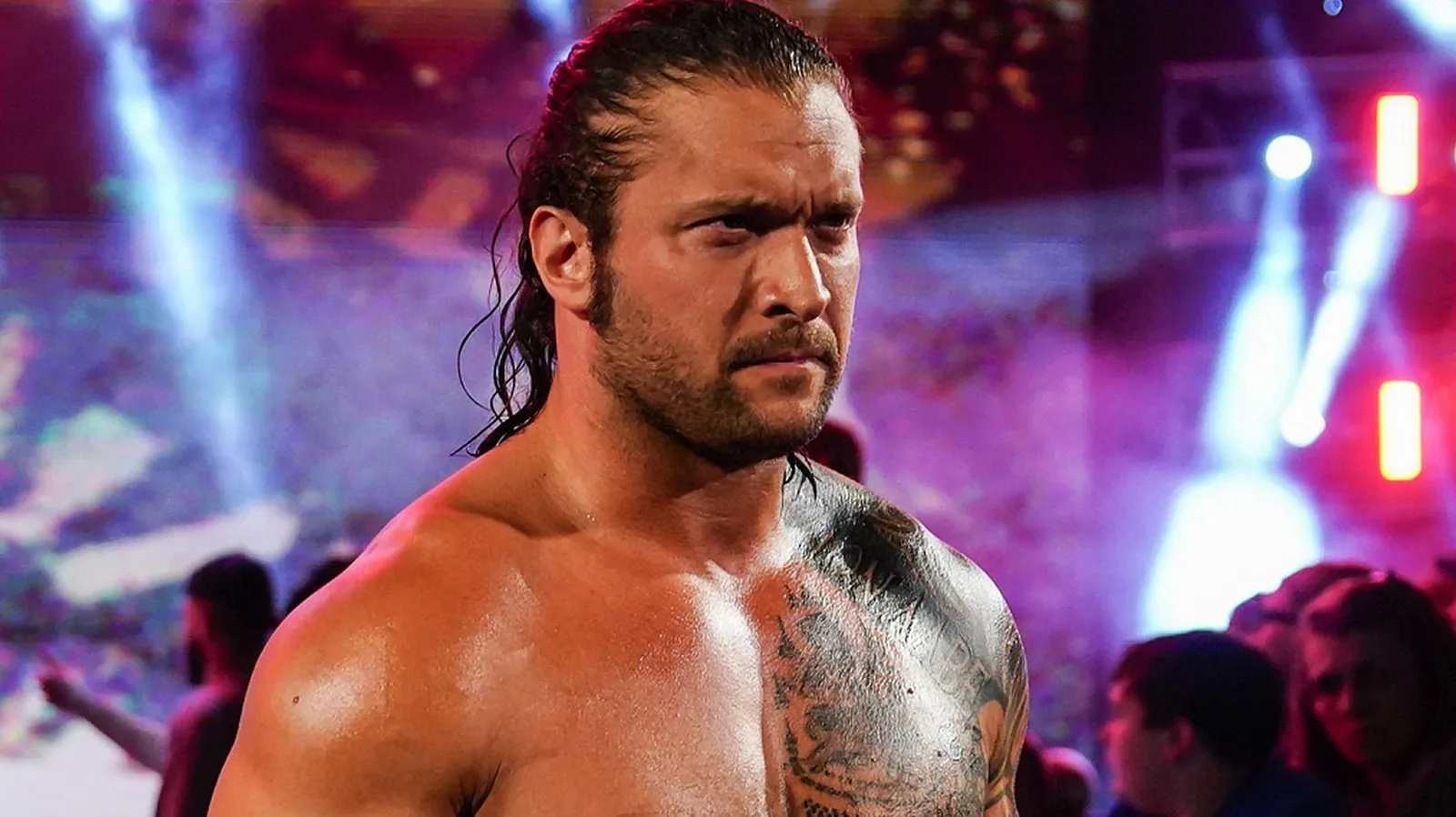
Killer Kross says a WWE presentation held after the company’s merger into TKO created the impression that talent could receive help exploring opportunities beyond the wrestling ring. For Kross, whose interests in filmmaking and acting have long been visible through his creative work, that message appeared to offer a potential path into the entertainment business without stepping away from professional wrestling.
Instead, Kross said the discussions did not progress beyond an initial promise that he would be brought to Los Angeles and introduced to people who could help him navigate the acting world. Speaking on The Wrestling Classic, Kross recalled following up more than once, only for the proposed opportunity to never happen. He said the experience ultimately pushed him to build his own projects independently.
Kross recalls WWE meeting after TKO merger
The former Karrion Kross described an in-house WWE meeting from a couple of years earlier in which company leadership discussed the potential value of WWE’s connection to TKO. TKO’s wider sports and entertainment footprint was presented, in Kross’ recollection, as something that could help performers move into other areas of the industry.
“A couple of years ago, we had this in-house meeting at WWE where, you know, the bosses were there and they were talking about how the merger with TKO was going to provide some sort of transitionary connective tissue into getting into different types of lanes of entertainment,” Kross said on The Wrestling Classic.
For more background on this topic, read CM Punk vs. Sami Zayn Ends in DQ at WWE Palm Desert Live Event.
Kross characterized the presentation as being similar in style to a university lecture, suggesting that the subject was addressed in a formal and serious setting. The central idea, as he understood it, was that WWE talent could potentially benefit from a broader corporate network as they pursued work in adjacent entertainment fields.
That concept naturally stood out to Kross. He has made no secret of his interest in film, using the visual and cinematic aspects of his presentation as part of his identity in wrestling. His work has included a short film, and he has continued to discuss and tease projects outside the ring as his creative ambitions have expanded.
He says he wanted to remain in wrestling while pursuing acting
Kross said he approached WWE after the meeting to ask how he could properly pursue acting opportunities. Importantly, he said he was not looking for a route out of wrestling. Rather, he wanted to develop another part of his career while continuing to represent the company as a wrestler.
“I have a background in theater and such, and I went into all that and I just said, ‘What’s the right way to go about doing this?’” Kross said.
His stated goal was to become an entertainment ambassador for WWE in a way comparable to prominent current names who have crossed into larger mainstream projects. Kross specifically referenced Cody Rhodes and Roman Reigns as examples of wrestlers operating in film and entertainment spaces while retaining major connections to WWE.
There is an important distinction in Kross’ account: he was not describing a request for special treatment or a departure from his wrestling responsibilities. He said he was trying to respond to an opportunity that he believed had been presented directly to the WWE roster. In his view, the company’s messaging encouraged talent to see TKO as a bridge toward other entertainment lanes, and he then asked for guidance on taking that next step.
For a performer with prior theater experience and an established interest in production, the prospect of an organized introduction to industry contacts would have been a meaningful one. The entertainment world often depends heavily on access, meetings, representation, and relationships. Kross said he believed WWE was prepared to help provide that access.
Promised Los Angeles trip did not come together, Kross says
According to Kross, he was instructed to follow up in October. The expectation was that he would then be flown to Los Angeles, where he would meet people connected to the entertainment side of the business.
“I was told to follow up in October, and I’d be flown into Los Angeles and they’d introduce me to all these people, ... and I followed up and none of that ever happened,” Kross said.
Kross said he made another attempt to follow up after the first effort did not lead anywhere. That lack of movement became a point of frustration for him, particularly because he had sought the guidance after an internal presentation that he felt outlined a real possibility for talent to branch out.
His comments are framed as his own recollection of the discussions and their aftermath. No further details were provided regarding why the meeting, flight, or introductions did not take place. Kross also did not identify the people he spoke with about the matter, nor did he indicate that a formal acting agreement had ever been finalized.
What he did make clear was that the experience altered his approach. Rather than wait for a company-supported route into film and acting, Kross said he chose to pursue that work himself.
Independent projects became Kross’ answer
After becoming frustrated by the lack of progress, Kross moved forward independently and produced his own short film. That decision fits with the creative direction he has increasingly embraced since leaving WWE, where he had performed as Karrion Kross alongside Scarlett.
His post-WWE work has placed a noticeable emphasis on his interests beyond conventional wrestling appearances. Kross has continued to speak about unreleased projects and has also teased further film work. One project, Godshot, is slated for release soon.
The shift toward independent filmmaking carries obvious practical significance. Rather than relying on a wrestling company’s corporate infrastructure to open a door, Kross is creating material himself and developing a body of work on his own terms. For performers who have interests in acting, writing, production, or other creative disciplines, that kind of initiative can be as important as any promise of a meeting or introduction.
It also reflects a broader reality of modern wrestling careers. Wrestlers often have to balance their in-ring identity with pursuits that may last beyond a contract, a television run, or an active full-time schedule. Mainstream crossover opportunities can be valuable, but they are not guaranteed, even when a company publicly emphasizes its entertainment reach.
Kross’ remarks do not challenge the idea that WWE and TKO can offer substantial exposure. WWE remains one of the most visible professional wrestling platforms in the world, and its biggest stars can command attention far beyond weekly programming. But Kross’ account underscores the difference between broad corporate possibilities and a concrete, follow-through plan for an individual performer.
A creative path outside the WWE system
Kross’ story is ultimately less about a single missed trip to Los Angeles than it is about how he responded when the opportunity he expected did not materialize. He says he initially sought a way to work with WWE’s proposed entertainment connections while remaining a wrestler. When that process stalled, he redirected his energy into independently produced film work.
The result is a growing parallel career that complements the darker, cinematic sensibility fans have seen in his wrestling presentation. His background in theater and his interest in visual storytelling made acting and filmmaking a natural area to explore, and he has chosen not to wait for a larger company to organize that exploration for him.
With Godshot still on the horizon and additional unreleased work teased, Kross appears focused on continuing that independent momentum. Whether or not the WWE meeting he described might have led to something meaningful will remain an unanswered question. What is clear from his comments is that he felt the initial promise was not fulfilled—and that he has since taken ownership of the path he wanted to pursue.
In pictures

Darryl Polo
Darryl Polo is a passionate wrestling fan covering WWE, AEW, TNA and beyond. He loves great rivalries, breakout stars and the moments that keep fans talking long after the bell. How we work.