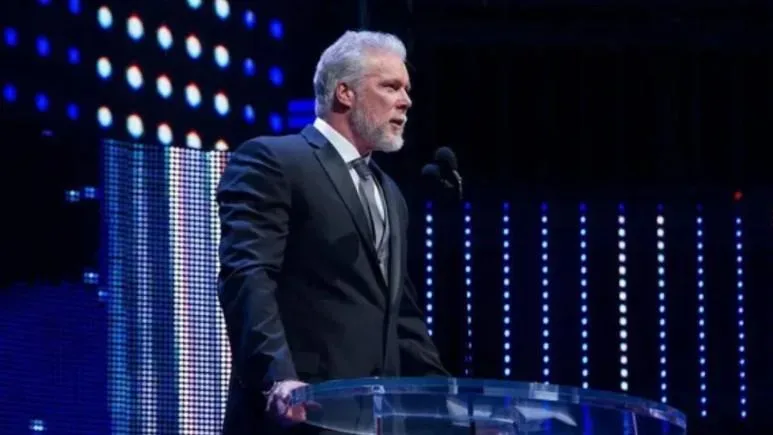
Kevin Nash has revealed that he helped stop an idea that would have used an AI-generated hologram of the late Scott Hall during a WWE Hall of Fame ceremony.
Speaking on Kliq This, Nash addressed the proposed concept and made clear that he was firmly against it. Nash said he was the deciding vote in rejecting the idea, which would have brought an artificial recreation of Hall to a Hall of Fame-stage setting after Hall's death.
For Nash, the issue was not simply whether the technology could create a convincing likeness. It was about Hall himself: a friend, a colleague, and one of the most significant creative partners of Nash's career. The two men worked together for roughly three decades, from their formative WWE runs as Diesel and Razor Ramon through their pivotal roles in WCW's New World Order and later reunions connected to the group.
Nash's position was rooted in his belief that Hall would not have wanted his likeness used in that way without being able to make the decision himself. He also felt the proposal came too soon after Hall's passing, describing the loss as still fresh at the time the idea was raised.
For more background on this topic, read WWE x AAA Worlds Collide Reportedly Set To Air Live On YouTube From Chicago Area.
Nash Draws a Line on Posthumous AI Use
The former WWE Champion did not frame his objection as a rejection of every technological advancement in wrestling presentation. Instead, he focused on the absence of consent when a performer has died. Nash argued that people who are no longer alive cannot have a say in how their voice, image, personality, or legacy is presented.
That concern is increasingly central to the broader conversation around artificial intelligence in entertainment. AI tools can potentially recreate a person's visual appearance, speech patterns, and mannerisms with growing sophistication. In wrestling, where characters are inseparable from the people who portray them, that possibility carries particularly difficult questions.
A wrestler's persona may be associated with a promotion, licensed through various business arrangements, and remembered by millions of fans. But the human element remains at the center of the performance. Hall's Razor Ramon character, his work as Scott Hall in WCW, and his role in the nWo were built on his own charisma, timing, voice, physical presence, and instincts. An AI-generated version could reproduce elements of an image, but it could not receive Hall's personal approval or reflect a new choice made by Hall himself.
Nash also raised concerns about profit. He questioned who benefits when a deceased performer's likeness is brought back for a new presentation, especially when the person being depicted cannot participate in the decision. His comments reflect a concern that memorialization can become commercialization when it is handled without a clear connection to the wishes of the person being honored.
Scott Hall's Enduring WWE Legacy
Hall died in March 2022 at the age of 63. His impact on professional wrestling remains immense, both because of what he achieved in WWE and because of the way his later move to WCW changed the industry's landscape.
In WWE, Hall became one of the defining stars of the early 1990s as Razor Ramon. The character was instantly recognizable, from the gold chains and toothpick to the unmistakable delivery and swagger. Razor Ramon was not merely a colorful personality; Hall became an elite in-ring performer whose matches helped establish the Intercontinental Championship as a major prize during that era.
His ladder match with Shawn Michaels at WrestleMania X remains one of the most celebrated matches in WWE history. Beyond its immediate acclaim, the bout shaped the expectations surrounding ladder matches for generations. It demonstrated that a match built around a stipulation could still be driven by character, pacing, athleticism, and escalating drama.
Hall's WWE Hall of Fame credentials were already secure long before his death. He was inducted individually as Razor Ramon in 2014, taking his place among the company's most influential singles stars. He was also inducted again in 2020 as a member of the nWo, alongside Nash, Hulk Hogan, and Sean Waltman.
The nWo's influence extends far beyond its original WCW run. When Hall arrived in WCW in 1996, his appearance was presented with a level of ambiguity that captivated audiences. His subsequent alliance with Nash and, later, Hogan fueled an angle that became one of the most successful and culturally important stories in wrestling history. Hall's presence was essential to the group's early identity. He carried himself like a star who knew exactly how dangerous and disruptive the group was meant to feel.
A Personal Decision for Nash
Nash's remarks carry added weight because Hall was much more than a fellow Hall of Famer to him. Their histories were intertwined across multiple companies and multiple eras. They were friends before the nWo became an industry-altering act, and their relationship endured through personal struggles, professional changes, and the many reunions that accompanied their shared legacy.
That connection explains why Nash viewed the proposed hologram as more than a corporate creative choice. From his perspective, it involved the image of someone he knew intimately and someone whose preferences he believed he understood. Nash said that, if their positions had been reversed, Hall would have protected him from a similar posthumous use of his likeness.
Wrestling has always had a complicated relationship with nostalgia. Hall of Fame ceremonies, anniversary shows, video packages, archival footage, and surprise appearances all rely on the emotional power of the past. In many cases, those tributes are meaningful because they allow fans and peers to celebrate performers who helped shape the business.
However, an AI hologram moves beyond showing footage or discussing a performer's accomplishments. It attempts to place a recreated version of that person into the present. That distinction is at the heart of Nash's objection. A video package uses material the performer created while alive. A speech from a friend or family member reflects a living person's memories. An AI recreation creates something new under the image of a person who cannot decide whether they want to be part of it.
The Debate WWE and Wrestling Face Going Forward
No details were provided about how far the proposed Scott Hall hologram concept had progressed, when it was considered, or what the presentation would have looked like. What is clear is that Nash's opposition was enough to prevent it from happening.
The discussion nevertheless points toward a larger issue that wrestling promotions will continue to face. As AI technology develops, companies may have more opportunities to use historical figures in documentaries, promotional material, video games, ceremonies, and other content. Those opportunities will also require decisions about rights, family involvement, respect, and the difference between tribute and exploitation.
There is no single answer that will apply to every performer or every family. Some estates may welcome carefully managed recreations, while others may prefer that a wrestler's legacy remain tied exclusively to the work they completed during their lifetime. The key point in Nash's comments is that the absence of the performer changes the ethical equation. A living talent can approve, decline, negotiate, or set limits. A deceased talent cannot.
For Hall's legacy, there is already an extraordinary body of work available to fans. His classic WWE matches, his Razor Ramon persona, his nWo contributions, and his Hall of Fame recognition provide a complete record of why he remains one of wrestling's most revered figures. Nash believes that record should be allowed to stand without creating a new artificial performance in Hall's name.
Nash's decision to reject the hologram proposal ultimately reflects a simple position: honoring Scott Hall does not require simulating Scott Hall. For Nash, the more respectful choice was to let his longtime friend rest and allow the work Hall actually chose to create to speak for itself.
Darryl Polo
Darryl Polo is a passionate wrestling fan covering WWE, AEW, TNA and beyond. He loves great rivalries, breakout stars and the moments that keep fans talking long after the bell. How we work.