
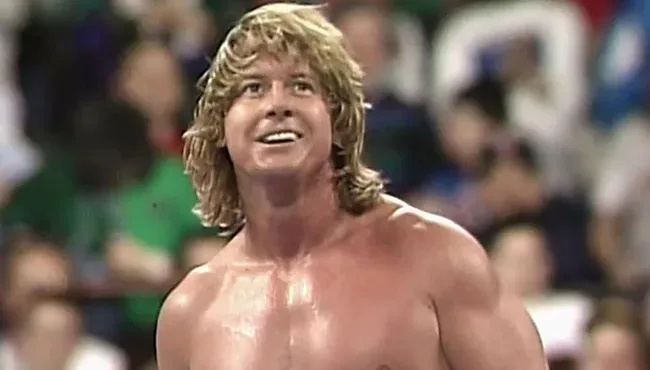
Kevin Nash has wrestled an extraordinary list of opponents across a career that carried him through WWE, WCW and TNA, with rivalries against some of the most recognizable names in professional wrestling history. Yet when asked to identify the one match he wishes he could have had, Nash did not select another powerhouse, technical specialist or longtime contemporary.
Instead, Nash named “Rowdy” Roddy Piper.
Speaking on Kliq This, Nash reflected on the sheer level of opposition he encountered during the peak years of his career. He noted that, particularly during an era packed with established stars, appearing in the ring opposite a future Hall of Famer was not an occasional attraction. It was often simply the job every night.
“I look at my era and I look at — [I] wrestled the Steiners, wrestled Harlem Heat, wrestled Meng and Barbarian, wrestled Macho, wrestled Hulk, wrestled Hennig, wrestled Rude,” Nash said. “I mean like, every night. Wrestled Scott, wrestled Triple H, wrestled Razor Ramon, wrestled 1-2-3 Kid, wrestled Davey Boy, wrestled Bret Hart, wrestled Owen Hart. Every night I was in the ring across from a Hall of Famer, so nobody else necessarily makes a diary entry. I just can’t think of anybody.”
For more background on this topic, read Triangle of Madness Set for First Artist of Stardom Title Defense at Yokohama Budokan.
That list spans virtually every major stage of Nash’s career. As Diesel in WWE, he worked against the likes of Shawn Michaels, Bret Hart, The Undertaker, Razor Ramon and Sycho Sid, while also being part of the changing main-event landscape of the mid-1990s. In WCW, he became a central figure in the New World Order and had major programs involving Hulk Hogan, Randy Savage, Goldberg, Diamond Dallas Page, Booker T, Scott Steiner and many more.
For Nash, that deep catalog makes Piper stand out even more. It was not that Nash and Piper never appeared in the same promotion or even participated in the same match. The two had interactions during their time in WCW, including Fall Brawl 1998, where both men were involved in the WarGames match. What they never had, however, was the kind of one-on-one showcase Nash now imagines: Diesel against Piper during Piper’s hottest and healthiest years.
Nash Wanted the Piper Who Could Create Instant Chaos
Piper’s standing as one of wrestling’s great talkers and emotional instigators was established well before Nash arrived as a top singles star. His ability to turn an interview segment into a personal issue was central to his appeal. Whether he was provoking fans, tormenting an opponent, hosting Piper’s Pit or escalating a feud through an unpredictable brawl, Piper brought a volatile authenticity that made his programs feel immediate.
Nash said that was the version of Piper he would have wanted to face: the younger performer operating at full force and generating the type of crowd response that defined his biggest runs.
“I would have liked to have worked with Piper when he was healthy and young, because I think a lot of the issue we had was he was just bitter,” Nash said. “I can’t even imagine trying to wrestle — I watched him and Hogan the other day, I think it was Starrcade. And Hogan let him put him out in a sleeper, and Rod took some — for the injuries he had, he took a bump through the ropes onto the floor that was solid. I looked at it and was just like, ‘He worked his ass off.’ I don’t know how old he was in that match; he was probably 46. But I would have liked to have worked with him as Diesel when he was in his ‘Coconut Off the Head’ f**king heyday heat.”
Nash’s comments underline the distinction between merely sharing a ring with someone and getting the chance to work a full program under ideal circumstances. By the time Nash and Piper were both in WCW in the late 1990s, Piper had already spent decades absorbing the physical consequences of a demanding career. He remained a major personality and a credible presence, but he was not the same young firebrand who could build a feud through relentless promos and wild physicality.
The reference to Piper’s “Coconut Off the Head” era points to the kind of scorching crowd hostility Piper could generate at his peak. Piper was uniquely effective at making audiences react before a bell rang. His rivalries were rarely built around athletic comparisons alone; they were driven by insult, outrage and the sense that Piper might say or do anything to get under an opponent’s skin.
Against the Diesel character, that approach could have created a compelling contrast. Diesel was presented as an imposing seven-footer whose confidence and presence gave him a natural aura, particularly during his ascent to the WWE Championship. Piper, meanwhile, made his reputation by confronting larger men without hesitation and finding emotional openings that allowed him to level the playing field. Nash’s size would have made the visual instantly striking, while Piper’s verbal edge could have supplied the conflict.
A Match That Could Have Changed Nash’s Approach
Nash did not frame the missed opportunity solely as a dream match for fans. He also saw it as a potential developmental moment in his own career. In particular, he believes a prime Piper could have pushed him to become more effective on the microphone.
“I would have liked it because I think he could have got some heat on me,” Nash said. “And then I could have picked up my game at that point in my career, because he would have made me pick up my interview game. Like, he would have made me pick up my mic work. So I would have to say that Piper would have been a guy in his prime that would have been a person I wish I would have had a chance to work with.”
That assessment is notable because Nash eventually became known as a confident and highly recognizable promo presence in his own right. His delivery as Diesel evolved from the character’s early, largely silent bodyguard presentation. As Kevin Nash in WCW, he became a defining voice of the nWo era, mixing swagger, sarcasm and a relaxed style that helped make the group feel different from more conventional wrestling villains.
But Nash’s point is that working with Piper would have demanded another level of urgency. Piper’s strongest opponents had to answer his intensity. A wrestler could not simply wait for Piper to finish a promo and move to the next segment; Piper’s ability to make issues feel personal forced reactions. Nash believes that pressure would have benefited him at a crucial point, particularly had the match happened when the Diesel persona was gaining momentum.
There is also an in-ring component to what Nash described. Piper was not defined by a polished, exhibition-style approach. His work was built around emotion, physical struggle and making a fight appear messy when the story required it. Nash praised Piper for how hard he was still working despite the injuries he had accumulated, specifically recalling a match with Hogan and a forceful fall through the ropes to the floor. The admiration was not merely for Piper’s toughness; it was for the commitment to making the moment matter.
A prime version of that Piper opposite Diesel would have offered a ready-made story. Piper could question whether Nash’s imposing appearance matched his readiness for a chaotic fight. Diesel could respond with the kind of force that made him believable as a champion. The resulting feud would likely have depended less on elaborate stipulations and more on the escalating confrontation between Piper’s volatility and Diesel’s power.
Why the Match Remains a Fascinating What-If
Professional wrestling is full of compelling matches that never reached the ring because timing matters as much as talent. Promotions change direction, performers move between companies, injuries accumulate and wrestlers can arrive in the same place years after the ideal window has passed. Nash and Piper’s overlap in WCW provides one of those interesting near-misses.
Both men were undeniably major figures by that point, but their most natural singles meeting belonged to an earlier imagined moment. Nash envisions a version of the bout with Piper at the height of his ability to antagonize crowds and opponents alike, while Diesel was still developing his voice as a main-event player.
That is what makes Nash’s answer more meaningful than a simple list of famous names. He did not choose Piper because the two lacked history altogether. He chose him because the history they did have never delivered the circumstances he wanted: a healthy, younger Piper, a focused singles feud, and a chance for Nash to test himself against one of the most instinctive personalities in wrestling.
Nash’s career left him with no shortage of landmark opponents, championships or eras to revisit. Still, the Piper match remains the one he believes could have brought something new out of him. For a wrestler who shared rings with so many elite names, that says plenty about Piper’s enduring reputation as a performer capable of forcing everyone around him to raise their game.

Darryl Polo
Darryl Polo is a passionate wrestling fan covering WWE, AEW, TNA and beyond. He loves great rivalries, breakout stars and the moments that keep fans talking long after the bell. How we work.