
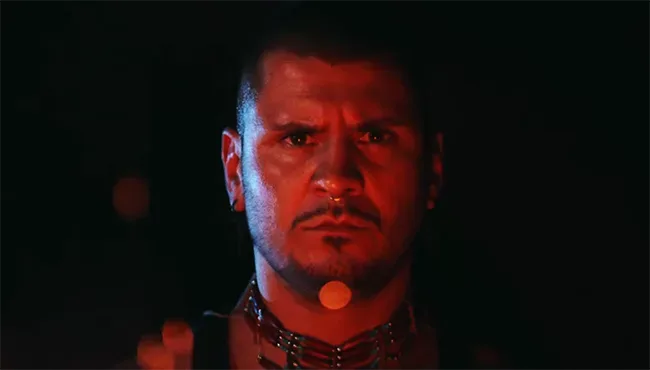
Karl Fredericks has opened up about the frustrations he experienced during his WWE NXT run as Eddy Thorpe, particularly in relation to the way his Indigenous heritage was incorporated into the on-screen character.
Fredericks, who joined WWE in 2023 after making his name in New Japan Pro-Wrestling and was released in May 2025, discussed the subject in an extensive interview. He described a recurring disconnect between what he wanted his presentation to be and the creative material he was asked to perform. While Fredericks stressed that he did not believe the people involved were acting with malicious intent, he said the process often exposed a lack of cultural understanding.
The former NXT wrestler recalled an early conversation with Shawn Michaels at the WWE Performance Center that set the tone for his concerns. Fredericks said Michaels had watched matches he submitted and offered encouraging feedback, but that the explanation for seeing him as a babyface immediately troubled him.
“I think you’re a babyface, you know, because you’re Indian! I think that’s cool!”
For more background on this topic, read Stephanie Vaquer Set To Defend Women’s World Championship Against Becky Lynch And Liv Morgan At Money in the Bank.
Fredericks said that comment registered as a warning sign for him. He explained that he could quickly assess the level of awareness surrounding the subject, and he did not want to be presented as a throwback stereotype. “I don’t want to be Tatanka,” he said, referencing the longtime WWE character whose portrayal has frequently been cited in discussions about dated depictions of Native American wrestlers.
A Character Beyond Visual Shortcuts
Under the Eddy Thorpe name, Fredericks’ Indigenous background became a visible element of his NXT identity. The issue, from Fredericks’ perspective, was not that WWE acknowledged his heritage. Rather, he felt that the creative direction too often treated it as a collection of familiar visual and verbal cues instead of building a contemporary, credible person who happened to be Indigenous.
He recalled appearing in one of his early pre-taped promos beside a fire and questioned why that imagery was necessary for a wrestler who was supposed to exist in the modern world. Fredericks said he pushed back on the idea that he needed to be placed in a forest for such segments, arguing that it did not represent a real person recognizable to his own community.
“This isn’t a real person,” Fredericks said of the presentation. “This isn’t someone that my people know.”
That distinction is central to his criticism. Professional wrestling has a long history of using broad cultural shorthand to establish personalities quickly. In some cases, promotion has depended on costumes, settings, catchphrases, or rituals that reduce heritage to an aesthetic. Fredericks felt the material he received could fall into that pattern, making an Indigenous identity feel more like a storytelling device than an honest foundation for a fully formed character.
He also addressed the reaction such portrayals can generate online. Fredericks acknowledged that internet criticism is common for wrestlers and television characters in general, but said an inauthentic presentation can create a particular kind of response when it involves cultural identity. Fans may not understand what is inaccurate or why a portrayal feels uncomfortable, he said, because the character itself does not reflect a lived, present-day reality.
Fredericks said he was told at one point that he was playing a television character. His response, at least internally, was that the character had been written by people who did not truly know him. He recalled hearing an assertion that considerable reading had been done about Indigenous culture and that it was considered “real cool,” but said that kind of sentiment did not resolve the creative problem.
For Fredericks, appreciation or curiosity alone was not enough. The bigger question was whether that interest translated into thoughtful material, meaningful collaboration, and a character with depth. He said there were instances where he believed the work was moving in a positive direction, but also many moments when the scripts left him feeling as though he was receiving what he described as “scraps.”
The Promo That Drew a Firm Line
The clearest example Fredericks offered involved a proposed promo about leaving the reservation and assimilating into the wider world. He said he had a close relationship with the writer who handed him the material, but his reaction was immediate and emphatic.
“Abso-f**king-lutely not, brother. What the f**k is this?”
Fredericks explained why the use of the word “assimilate” carried serious historical weight. Assimilation policies affecting Indigenous communities in North America were not abstract concepts. Government and church-run institutions, including boarding schools, separated Indigenous children from their families and sought to erase their languages, traditions, and cultural identities. The history includes documented brutality, abuse, neglect, and malnourishment. It has been widely characterized as a form of cultural genocide.
He specifically referenced Carlisle, connecting the wording of the proposed wrestling promo to the painful history of schools designed to force Indigenous children into assimilation. To Fredericks, framing a character’s personal growth as leaving the reservation behind and assimilating into a broader society was inseparable from that legacy.
“Just the fact that the word assimilate was in there,” Fredericks said, was enough to require a difficult conversation and a history lesson.
The timing also made the subject particularly sensitive. During the early part of Fredericks’ WWE tenure, public attention had been renewed by reports from Canada concerning the discovery of more than 200 unmarked graves at a former school. Those revelations prompted widespread discussion about the residential school system and its impact on Indigenous families and communities. Against that backdrop, Fredericks felt the language in the script was not merely clumsy but deeply unsuitable for the story WWE was trying to tell.
Still, he took care to separate the impact of the words from the intent of the writer. Fredericks said the writer was not from the United States and did not know the historical context. He did not view the episode as an example of deliberate cruelty. Instead, he saw it as another example of the cultural ignorance he encounters in everyday life: people either treating Indigenous identity as a joke or simply lacking the education to understand what certain words and ideas can evoke.
Creative Frustration and Mental Strain
Fredericks said the repeated nature of these issues took a toll. He described receiving scripts, reading certain phrasing, and feeling as though there was no realistic way to reshape the material into something substantive. In his view, even revisions could still leave the promo as what he called “meaningless cultural slop,” filled with ornate language that did little to reveal character or advance a believable story.
He also said the strain was visible in his physical condition toward the end of his time in NXT. Fredericks stated that he was struggling mentally and “fighting for my life” while working through the demands of the job and the dissatisfaction he felt with the creative direction.
At times, he attempted to get through the process by focusing on performance. His plan, as he described it, was to deliver when major matches and storylines arrived, prove that he could be relied upon, and eventually move beyond the material he disliked. He believed WWE was happy when he delivered in high-profile situations. But the breakthrough he hoped for never fully came.
Fredericks recalled being asked to perform other spiritualized elements, including passing sage over an injured arm, and questioned what exactly he was being asked to portray on television. The concern was not simply about one segment or one line. It was about an accumulated pattern in which sacred or culturally specific practices could be used as surface-level props without sufficient context, care, or connection to the wrestler as a person.
What Fredericks’ Comments Illustrate
Fredericks’ account highlights the challenge wrestling companies face when incorporating a performer’s real identity into a fictional persona. A wrestler’s background can add authenticity, emotional stakes, and an immediate connection with audiences. But it also demands more than research for research’s sake or familiar television imagery. The performer must have meaningful input, especially when stories touch on heritage, historical trauma, and practices that have real cultural significance.
His comments do not reject the idea of Indigenous representation in wrestling. In fact, the frustration stems from wanting better representation: a contemporary character, grounded in reality, who was not trapped by stereotypes or asked to turn painful history into generic motivational dialogue.
Fredericks’ WWE chapter ended with his release in May 2025, but his reflections provide a candid look at the creative pressures that existed behind the Eddy Thorpe presentation. He said he did not believe there was malice behind the problematic moments. Even so, his experience demonstrates that good intentions do not automatically prevent harmful or reductive ideas from reaching a script.
For Fredericks, the central issue was always authenticity. He wanted an on-screen identity that people in his community could recognize as real, rather than one built from assumptions about what Indigenous representation should look or sound like. His criticism of the NXT creative process is ultimately a call for that standard to be taken seriously.

Darryl Polo
Darryl Polo is a passionate wrestling fan covering WWE, AEW, TNA and beyond. He loves great rivalries, breakout stars and the moments that keep fans talking long after the bell. How we work.