
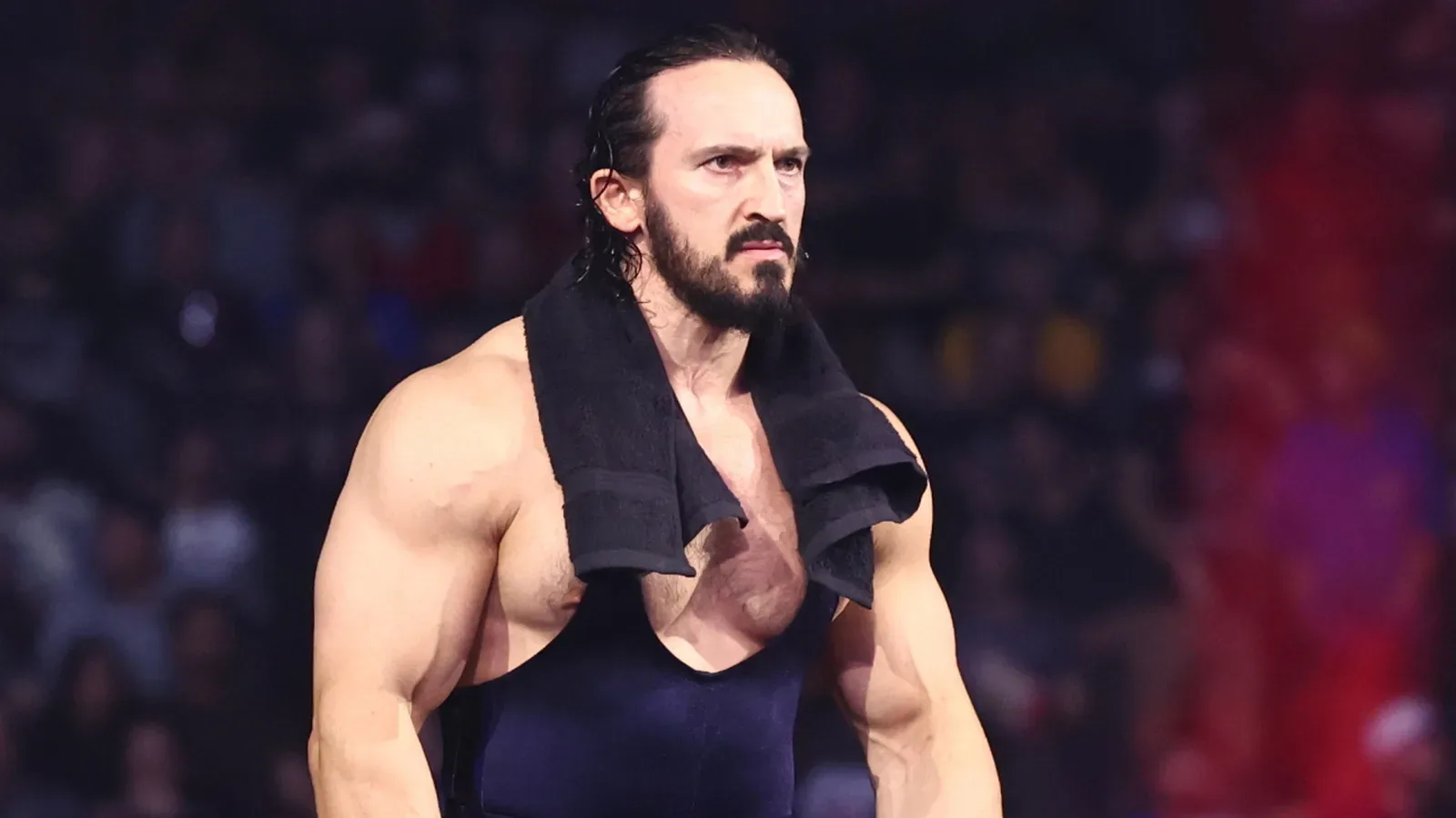
Tributes continue to be shared across professional wrestling following the death of AEW’s PAC, whose real name was Benjamin Satterley. PAC died on September 27, and performers who knew him through different stages of his career have remembered both his influence and his presence inside the locker room.
Among those offering a personal reflection is former WWE star Kalisto, who worked with Satterley during their time in WWE and first crossed paths with him in NXT. Speaking on TMZ Sports’ Inside the Ring, Kalisto described the loss as “surreal” while looking back on the relatively limited, but meaningful, in-ring time the two shared.
“Awesome to work with. I wish I could have worked him more,” Kalisto said.
That feeling of wanting more was central to Kalisto’s recollection. Their paths did intersect in WWE, including a non-televised bout at the Arnold Classic and a later match on SmackDown for the United States Championship. Yet Kalisto’s comments made clear that he believed there was still much more the two performers could have created together had circumstances allowed it.
For more background on this topic, read Stephanie Vaquer’s Status in Doubt Ahead of Becky Lynch No. 1 Contender’s Match on WWE Raw.
For Kalisto, Satterley was not simply a talented peer. He was one of the wrestlers whose earlier work helped shape Kalisto’s own approach to the ring. Before the two had the chance to wrestle one another, Kalisto had watched Satterley’s work in Dragon Gate and recognized a distinct quality in the style he brought to the ring.
“I remember my first match with him, because I always wanted to work with Ben,” Kalisto said. “Just seeing his Dragongate videos. He’s one of the wrestlers that inspired me to do the style that I also do. His style was unique. It was awesome. It’s just flow, like art.”
The description speaks to why PAC’s work connected so strongly with wrestlers and viewers alike. Kalisto focused on the movement and rhythm of Satterley’s wrestling, framing it less as a collection of athletic maneuvers and more as a complete artistic style. That observation carries particular weight coming from Kalisto, a performer whose own career was built around speed, aerial ability, timing, and a lucha-influenced offensive repertoire.
In an industry where wrestlers often discuss the difficulty of finding opponents with whom they share natural chemistry, Kalisto recalled feeling that immediately in their first encounter. The match took place at the Arnold Classic, was not televised, and happened early in the morning. None of those factors, Kalisto said, stopped the two from producing a performance that stood out to him years later.
“First time I worked with him was, I believe it was the Arnold Classic. It was not televised. It was in front of the people, 8 a.m. Tired. But, man, we were killing it, and I just thought we were having such a great match,” Kalisto said.
It is an especially telling memory because it was not attached to the scale or exposure of a major televised WWE event. Kalisto did not point to a marquee setting, a celebrated premium live event, or a match remembered for its storyline stakes. Instead, he remembered the work itself: two wrestlers performing in an unusual setting, early in the day, and finding the kind of rhythm that made the bout memorable to one of the people involved.
Kalisto and Satterley later met on SmackDown in a United States Championship match. In WWE, Satterley performed as Neville, while Kalisto was a former United States Champion whose quickness and innovative offense made him a natural stylistic counterpart. Their shared athletic vocabulary gave the matchup obvious potential, and Kalisto continues to view it as a pairing that could have gone further.
“The second time I worked with him was on ‘SmackDown’ for the US title, which, man, we could’ve done more,” Kalisto said.
That sentiment is not presented as a complaint about what did happen. Rather, it is the reflection of someone who recognized a special professional connection and remains thankful that he got to experience it at all. Kalisto said he was grateful for the time they spent together between the ropes and for the opportunity to share a locker room with Satterley.
That distinction matters in the tributes that have followed PAC’s death. A wrestler’s legacy is measured in more than matches, championships, or the places where they appeared on television. It is also measured in the impressions left on colleagues: the performers they inspired before ever meeting them, the opponents they made better, and the people who valued their company away from the ring.
Kalisto’s memories encompass all of those elements. He was influenced by Satterley’s Dragon Gate work before becoming an opponent. He found immediate chemistry when they finally wrestled. He saw further possibilities in their SmackDown title match. And he came away from their shared time in WWE with admiration for Satterley not only as a wrestler, but as a colleague.
PAC’s career took him through multiple major stages of modern wrestling. As Neville in WWE, he was known to many fans as “The Man That Gravity Forgot,” a fitting presentation for an athlete whose ability to move through the ring often seemed to defy ordinary expectations. As PAC, he continued to establish himself as one of the most distinctive competitors in AEW. Across those identities, the traits Kalisto highlighted—uniqueness, flow, and artistic precision—remained part of how fellow wrestlers viewed him.
Kalisto also said that the praise currently being voiced by wrestlers in both AEW and WWE is genuine. He specifically emphasized that he looked up to Satterley a great deal. In a profession defined by constant competition, that kind of respect is notable. It reflects the influence Satterley held among those who understood the demands of his style firsthand.
Kalisto said that everything being said about PAC by wrestlers in AEW and WWE is true, adding that he looked up to “The Man that Gravity Forgot” a lot.
The loss has prompted memories from across the wrestling world, and Kalisto’s is a reminder that influence does not always depend on a long list of shared matches. Sometimes one opponent can leave a lasting impression through a small number of encounters, an earlier body of work, and the unmistakable feeling that the pairing could have produced even more.
For Kalisto, PAC was an inspiration before he was an opponent, an opponent before he was a locker-room peer, and a peer whose death still feels difficult to process. His reflection returns repeatedly to the same idea: gratitude for the work they did have, alongside the lingering sense of the work they never got to do.
As tributes continue following Satterley’s death, Kalisto’s comments offer a personal account of why PAC commanded such deep respect. He was remembered for his athleticism, but also for the creativity and natural flow that made his matches feel different. He was remembered as a wrestler who could inspire another performer from afar, then validate that admiration when the two finally met in the ring. And he was remembered, above all, as someone whose impact reached well beyond the number of times he appeared on a card with any one opponent.
In pictures

Darryl Polo
Darryl Polo is a passionate wrestling fan covering WWE, AEW, TNA and beyond. He loves great rivalries, breakout stars and the moments that keep fans talking long after the bell. How we work.