
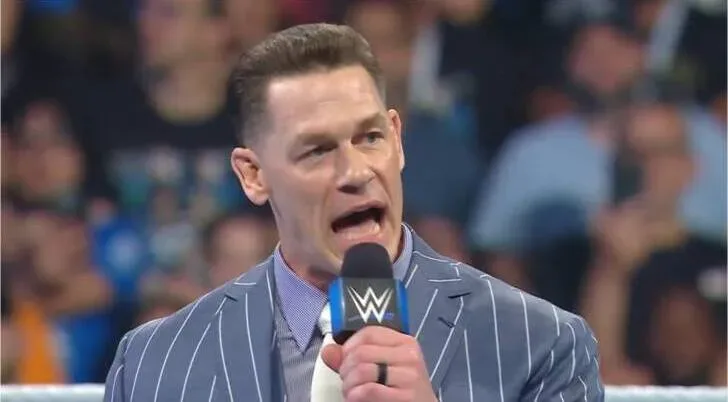
John Cena has offered a candid look at the personal choices behind his life outside WWE, explaining why he decided against having children of his own while discussing the demands of his career, his relationship, and the value he places on privacy.
The 17-time WWE Champion, whose in-ring career has made him one of the most recognizable figures in professional wrestling history, spoke about the subject in the context of the life he has built. Cena did not frame the decision as a rejection of family or connection. Instead, he described it as an honest assessment of the commitments that parenthood would require and the reality of the path he has chosen.
“[I’m home] about 15 days a year and even now it’s maybe 70,” Cena said. “If I said yes to children, I have to say no to everything else. … I really enjoy my life.”
For Cena, the issue is tied directly to responsibility. His comments make clear that he views raising children as a commitment that cannot be approached halfway. The travel, production schedules, public appearances and other obligations that have accompanied both his WWE career and his move into film would naturally limit the time he could spend at home. Rather than trying to balance every possible priority, Cena said he made a decision based on what he believes he could realistically give.
For more background on this topic, read IYO SKY Names Rey Mysterio As Her Lifelong Wrestling Idol.
That level of self-awareness has been a recurring element of Cena’s public persona, even as his role in WWE changed over the years. He spent much of his career as the company’s defining full-time star, regularly carrying an immense schedule of live events, television, premium live events, promotional work and community appearances. The pace of that period was intense, and Cena’s name became synonymous with consistency, discipline and an ability to meet enormous expectations.
While his WWE schedule has shifted as his Hollywood work has expanded, Cena’s perspective suggests that the underlying demands on his time have remained substantial. He noted that even having more days at home than before has not altered his view of the commitment involved in becoming a parent.
“If I have a family of my own, I don’t have those 650 moments,” Cena said. “I’m flying with just my partner on this one.”
The wording reflects a choice Cena has considered in terms of the experiences he is able to share with his partner. His comments were not about presenting a universal answer to the question of parenthood. They were about the answer that has fit his own circumstances, ambitions and relationships. Cena said he enjoys his life, and he made no effort to suggest that a life without children must be incomplete.
That distinction is important because Cena has spent decades in an industry where a performer’s public image can become larger than the person behind it. Wrestling fans have watched him portray a wide range of versions of John Cena: the outspoken young star who challenged the establishment, the workhorse champion who defined WWE’s modern era, the veteran who returned for major matches and moments, and the performer who ultimately reached a record 17 recognized WWE Championship reigns. Those roles have all existed in public view. His personal life, however, is something he continues to protect.
“I have a loving connection that people don’t see,” Cena said. “I don’t need the world to totally know me as a person.”
That statement provides a useful lens for understanding the tone of his remarks. Cena has always been exceptionally visible, whether through WWE programming, movies, interviews or his long-running charitable work. But visibility is not the same as total access. His comments draw a line between being a public entertainer and placing every meaningful part of his private life on display.
It is a boundary that carries particular weight for someone whose career has been built around audience connection. Cena became a central WWE figure not simply because of championship victories, but because he knew how to make millions of viewers feel included in the journey. His rallies, promos and signature catchphrases were designed to be immediately understood by enormous crowds. Yet the same performer whose work depended on openness with an audience is also emphasizing that some of the most meaningful elements of his life do not need public validation.
From bullying to confidence
Cena also reflected on being bullied when he was younger and how he responded to hostility. Rather than saying he met that treatment with more aggression, Cena described using his appearance and eventually his physical development as a way to establish confidence and discourage others from testing him.
“I didn’t treat hostility with hostility,” Cena said. “I got bullied for the way that I dressed, so I dressed more outlandish. I’ll just project a physical sense of: Man, I don’t want to press my luck with that guy.”
The comments add context to the self-assured presence that later became so familiar in WWE. Cena’s physique was a major part of his presentation from the earliest stages of his career, but his explanation places that physical transformation in a more personal frame. He was not describing muscle simply as an athletic or aesthetic goal. He was describing it as a form of projection: a way to signal strength and create distance from the hostility he experienced.
There is also a notable defiance in his recollection of clothing. Being criticized for how he dressed did not cause Cena to retreat or conform. He said he dressed even more outlandishly. That response aligns with the confidence that helped fuel his eventual rise as a WWE personality. Long before he became a world champion, Cena found a way to turn distinctiveness into part of his identity rather than allowing it to become a weakness imposed by others.
In wrestling, where larger-than-life presentation is often essential, performers routinely turn personal experiences into elements of their on-screen identity. Cena’s remarks do not reduce his WWE character to childhood experiences, but they do show a through line in how he has approached challenge: do not answer hostility with hostility, but do not surrender who you are either.
That approach also helps explain why Cena’s career has endured through so many different eras. He has faced intense reactions from audiences at various points, including periods when crowds were sharply divided over his place at the top of WWE. The volume and nature of that response changed over time, but Cena remained a constant presence. He continued to work, continued to represent the company, and continued to evolve as both an in-ring performer and a public figure.
A defining WWE legacy and a continuing screen career
Cena’s standing in WWE is already secure. His 17 recognized WWE Championship reigns place him at the top of the company’s championship record, a milestone that reflects the scale and duration of his influence. The number is significant, but it only tells part of the story. Cena was a foundational star for WWE across an extended period, headlining major events and serving as the face of the company for a generation of fans.
His transition into acting did not erase that connection. Instead, it created a second major professional lane, one that has increasingly taken him around the world and placed him in new creative environments. That broader career is central to the calculation he described when talking about children and family. The opportunities he has pursued are not abstract possibilities; they are experiences he has actively chosen and values deeply.
Cena’s latest screen work includes Coyote vs. Acme, which is now available to rent or purchase digitally. He also appears in Matchbox, which is set to arrive on Apple TV on October 9. The projects underline the range of his present-day schedule and the continued expansion of a career that began with a relentless climb through WWE.
For fans who know Cena primarily through his championship accomplishments and iconic WWE moments, the interview provides a more reflective view of the person beyond the entrance music and ring gear. He is not presenting his choices as dramatic revelations or asking for approval. He is simply explaining the priorities that guided them.
Cena’s perspective is ultimately rooted in accountability. He recognizes what a child deserves from a parent, understands what his own professional and personal life asks of him, and has made a decision he believes is honest. At the same time, he has made clear that privacy remains valuable to him, even after a career spent under extraordinary public attention.
That balance between openness and boundaries may be one of the most revealing aspects of Cena’s comments. He has shared enough to explain his decision, his past and his values. But he has also reinforced that being known by an audience does not require revealing every part of oneself. For one of WWE’s most recognizable champions, that distinction remains a deeply personal one.

Darryl Polo
Darryl Polo is a passionate wrestling fan covering WWE, AEW, TNA and beyond. He loves great rivalries, breakout stars and the moments that keep fans talking long after the bell. How we work.