
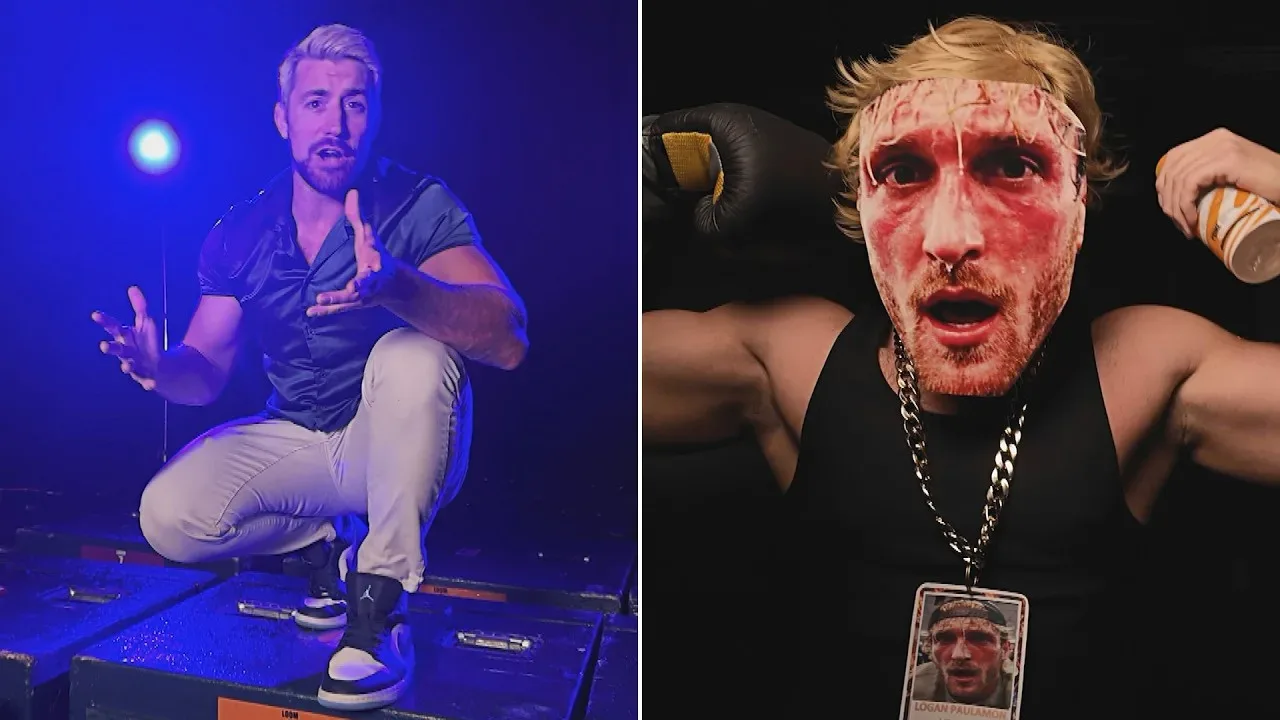
Joe Hendry has addressed the response to his viral “Fire Logan Paul” song, describing the track as an opportunity to use his profile in a positive way while blending the two sides of his public persona: professional wrestler and musician.
The song first arrived in the spring and has since generated millions of views and plays across multiple platforms. Its spread has made it a notable piece of WWE-adjacent viral content, with Hendry’s musical approach once again becoming part of the conversation around his wrestling career.
Hendry said the idea behind the track was bigger than simply creating a catchy wrestling song or taking a shot at another prominent name. In his view, performers occasionally have a responsibility to use the attention they receive to make a statement.
“I think every so often, as a wrestler and a musician, you’ve got to take some time to do something right, use your platform for good and I can’t think of anything better than firing Logan Paul.”
For more background on this topic, read Booker T Says Travis Scott Had the Ability for WWE, but the Timing Was Not Right.
The quote underlines the way Hendry sees the song’s role. Rather than separating his music from his in-ring identity, he has long made both elements part of the same presentation. “Fire Logan Paul” is another example of Hendry using an original song to direct fan attention toward a specific subject while maintaining the humor and directness associated with his material.
A Viral Track Built Around Hendry’s Dual Identity
Hendry’s ability to create songs tied to wrestling situations has been central to how many fans identify him. The format gives him a different means of communicating than a standard backstage interview or an in-ring promo. A song can establish a target, state a viewpoint and invite an audience to participate in a matter of moments.
That approach has helped “Fire Logan Paul” reach beyond a conventional wrestling segment. Millions of views and plays across platforms point to the appeal of music that is easy to recognize, easy to revisit and directly connected to a major WWE personality. Logan Paul is one of the most visible crossover figures in WWE, and that visibility naturally gives a song bearing his name a wide potential audience.
Hendry’s comments frame the song as a deliberate use of that visibility. He did not present the track merely as a novelty or an exercise in promotion. Instead, he placed it within the broader idea that wrestlers and musicians can choose moments to say something meaningful with the platforms they have built.
In professional wrestling, performers routinely use promos, signs, chants and character work to encourage audience reactions. Hendry’s musical output adds another tool to that tradition. It is both part of his act and a way to make a message immediately shareable. The continuing response to “Fire Logan Paul” demonstrates how quickly that kind of material can travel when it gives audiences a clear refrain and a recognizable subject.
Would WWE Talent Listen to It?
Hendry was also asked whether anyone else in WWE might secretly listen to “Fire Logan Paul.” He did not claim to know how his colleagues have reacted privately, but he made clear that he would not be shocked if the song had found listeners within the company.
“I have no idea whether any of my colleagues have ever just one day decided to spin Fire Logan Paul, but it wouldn’t surprise me.”
It is a lighthearted answer, but it also reflects the unusual place a viral wrestling song can occupy. Once a track gains traction, it is no longer limited to its original audience. It can circulate among viewers, performers and anyone following the conversation around WWE. Hendry did not identify any WWE names as listeners, and there is no indication that he has received private confirmation from colleagues. His point was simply that the song’s reach makes the possibility plausible.
The response is consistent with the tone of the track itself. “Fire Logan Paul” is built around a forceful premise, but Hendry’s remarks about potential listeners carry a playful uncertainty. He is not attempting to manufacture a backstage story or suggest that a particular WWE star has endorsed the song. He is acknowledging that a viral piece of music can take on a life beyond its creator’s immediate control.
Why the Logan Paul Subject Matters
Logan Paul remains one of WWE’s most recognizable mainstream personalities, which makes him an obvious subject for a song designed to capture attention. His name reaches audiences inside and outside wrestling, and that kind of recognition can amplify any creative work attached to him.
For Hendry, however, the focus is not only on the size of the name involved. His description of “Fire Logan Paul” makes clear that he sees the song as an expression of a position he wants to put forward. The phrase “use your platform for good” gives his explanation a more pointed context than simply trying to capitalize on a headline-friendly target.
That does not change the entertainment value inherent in wrestling music. A memorable title, a direct hook and a famous name are all ingredients that can help a song resonate. But Hendry’s comments add his own interpretation of why he made it. In his words, firing Logan Paul was a cause worth using his wrestler-musician platform to address.
The song’s performance across platforms shows that the premise connected. Viral success does not happen solely because an idea is confrontational; audiences still have to engage with it repeatedly. In this case, Hendry’s established musical identity and the familiarity of the subject gave the track a strong foundation for circulation.
Music Remains Part of the Joe Hendry Formula
Hendry’s latest comments also reinforce that music is not a side project separate from his wrestling career. He explicitly described himself as both “a wrestler and a musician,” treating those roles as equally relevant to the way he communicates with fans.
That distinction matters because wrestling has always rewarded performers who can find a clear, individual voice. Some do it through promo delivery. Some rely on physical charisma, visual presentation or a distinctive entrance. Hendry’s songs offer a recognizable alternative, one that can build anticipation before a match and sustain discussion after the music stops.
Original music can also be more flexible than a conventional talking segment. A song can be replayed independently, clipped into short-form posts, shared by fans and remembered through a repeated lyric or title. “Fire Logan Paul” has benefited from that flexibility, accumulating millions of views and plays since premiering in the spring.
Hendry has also explained that he does not intend to write theme songs for other wrestlers. That position further emphasizes how closely he connects his music to his own presentation. Rather than operating as a general-purpose songwriter for the locker room, he views the musical element as something tied to his individual act and his own voice.
That choice preserves the specificity of the Hendry formula. The songs are not simply interchangeable entrance themes; they are part of the way he frames rivalries, ideas and wrestling conversation. When he releases a track centered on a subject such as Logan Paul, the music itself becomes the vehicle for the message.
The Conversation Continues
“Fire Logan Paul” has already become a viral success for Hendry and WWE, and Hendry’s remarks explain how he views that success. He sees it as validation that a wrestler can use music to reach people while also speaking up about an issue he believes is worth addressing.
His answer about WWE colleagues leaves the door open to a humorous possibility: somewhere, someone in the company may have decided to play the song. Hendry is not claiming inside knowledge, and he does not need to. The track’s broad performance has already established that it has reached a substantial audience.
For Hendry, the key takeaway is straightforward. His platform gives him the ability to make music that people will hear, and “Fire Logan Paul” gave him a subject he felt was worth using that ability to address. As the song continues to circulate, it stands as another example of how Hendry’s wrestling and musical personas remain inseparable.

Darryl Polo
Darryl Polo is a passionate wrestling fan covering WWE, AEW, TNA and beyond. He loves great rivalries, breakout stars and the moments that keep fans talking long after the bell. How we work.