
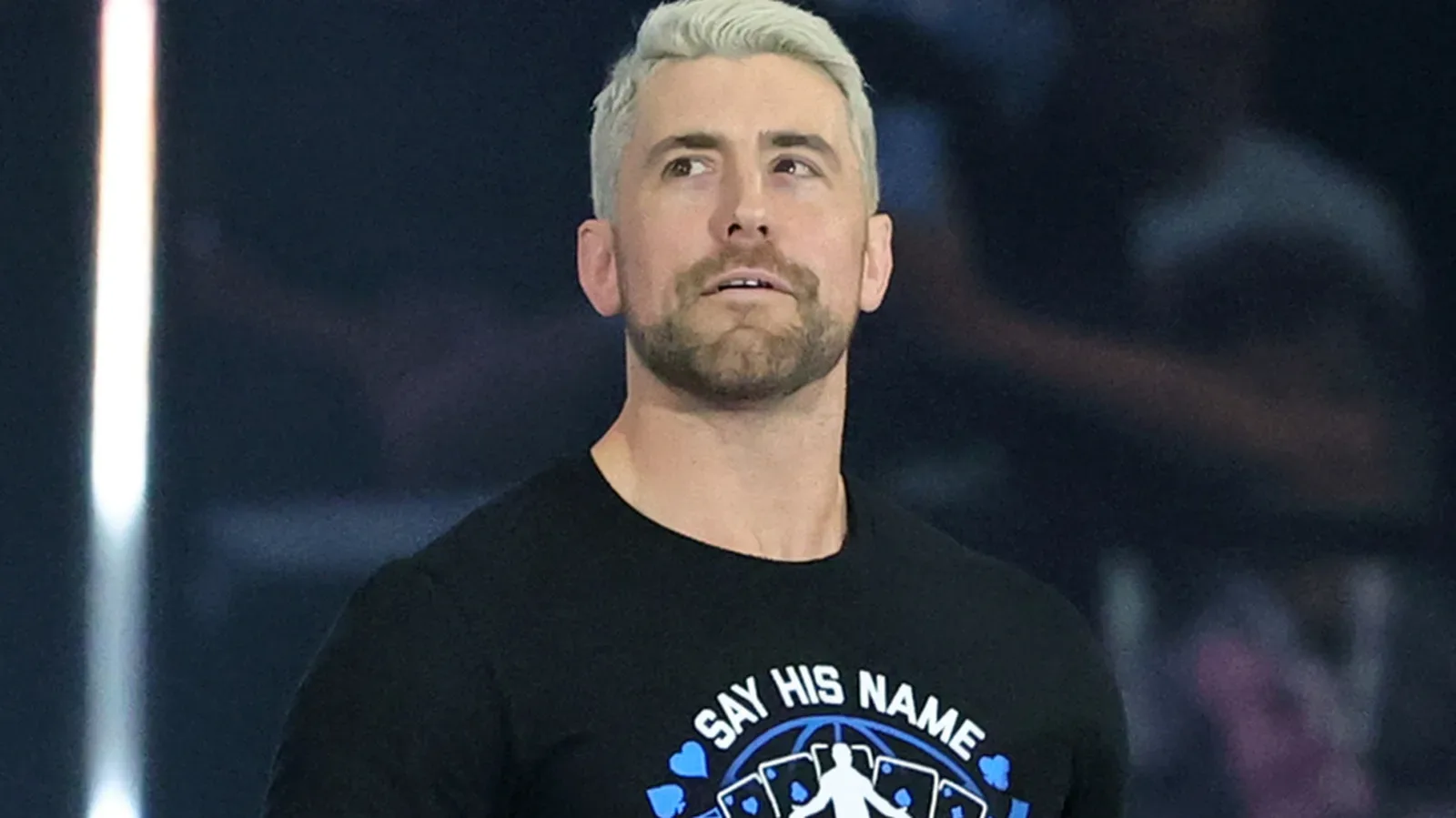
Joe Hendry has become one of the more naturally magnetic personalities around WWE programming, with a presentation that seems tailor-made to get an arena singing along. His entrance music, camera-facing confidence, musical background and highly shareable mannerisms have given fans plenty of reasons to rally behind him. Yet Hendry is not ruling out the possibility that the same character could eventually move in an entirely different direction.
Speaking with the Michael Fairman Channel, Hendry addressed whether WWE fans could one day see a heel version of the performer they have enthusiastically supported. While he did not suggest an imminent turn, Hendry made clear that he views WWE as an environment where character trajectories can change quickly.
“Interesting question. I mean, never say never,” Hendry said. “You just never know. Anything can happen in the WWE.”
The answer is especially notable because Hendry’s current reception is rooted in a fan connection that has continued to grow beyond a conventional in-ring push. “I Believe In Joe Hendry” has become a recognizable rallying cry, while Hendry’s deliberate spin and stare into the camera have traveled through wrestling fandom as a popular meme. Rather than being merely a catchy entrance, the act has given crowds an immediate way to participate in his appearances.
For more background on this topic, read Raquel Rodriguez Reflects on Full-Circle John Cena Moment After High School Crush.
That connection was not necessarily the intended outcome when Hendry put the character together. He explained that the personality audiences now cheer was originally designed to generate a much different response.
“It’s funny. Originally, this is the character that I’ve designed, and the person that I’m portraying was designed to be hated and people just happen to like it,” Hendry said. “So I guess that’s always intriguing. It was absolutely designed to be hated by everyone and people just liked it, so yeah.”
That history gives Hendry an intriguing foundation should WWE ever choose to explore a more antagonistic presentation. Many successful wrestling villains are not created by abandoning what makes them distinctive. Instead, they take the familiar pieces fans enjoy and redirect them into something more self-important, dismissive or calculating. Hendry’s persona already carries an element of oversized confidence, theatricality and self-promotion. Those qualities have been embraced as entertaining, but they could also become the basis for conflict if his attitude toward the crowd shifts.
For now, though, Hendry stressed that performers cannot simply dictate how an audience should react. A character can be conceived as a heel act, but once fans decide they enjoy the act, that reaction becomes an important part of the story. Hendry said the audience has a major role in determining where wrestlers ultimately go.
“You can’t force it,” Hendry said. “Like you say, [the audience] are a huge part in dictating our paths.”
A character built around participation
Hendry’s rise has been closely linked to the way he incorporates his creative strengths into professional wrestling. Musical performance has long been central to his act, whether he is using a guitar, holding a microphone or presenting an entrance that invites fans to sing along. His recently released album, Beyond Belief, further reflects how closely his music and wrestling identities are connected.
That blend is not simply an accessory to the in-ring side of his career. It is the engine of his presentation. The songs and visual gags give Hendry a way to communicate with audiences before a match begins, while his willingness to lean into internet culture has helped turn small character moments into familiar fan references. The music video associated with “I Believe In Joe Hendry” became a widespread example of that approach working on a larger scale.
In WWE, where the weekly environment includes a deep roster and rapidly shifting stories, an act that can create a reaction almost instantly carries real value. Hendry does not need a lengthy explanation for fans to understand the central idea. They recognize the song, anticipate the spin, and know that the presentation is inviting them to join in. That sort of instant identification can make a performer feel important even when appearances are spread across different shows or match settings.
It also creates a challenge for any future heel turn. WWE would have to consider whether changing Hendry’s alignment means taking away the crowd participation that made him popular, or whether it means using that participation in a more layered way. A heel Hendry could potentially retain the memorable music and visual cues while treating the audience’s enthusiasm as proof of his own greatness. Conversely, a more drastic turn could see him actively reject the very behavior fans have attached to his act.
Hendry’s comments indicate that he understands the distinction. The goal would not be to force boos simply because a story requires a villain. The reaction would need to develop in a way that feels organic to both the character and the audience that helped make it successful.
Recent WWE action has brought tougher opponents
While the discussion of a future character change remains hypothetical, Hendry has continued to compete in WWE against established names. Most recently, he faced Bronson Reed of The Vision on the October 28 edition of WWE Main Event. Reed presents a major physical test for nearly anyone placed across the ring from him, and the match put Hendry in a high-impact setting against one of WWE’s more imposing competitors.
Before that outing, Hendry met JD McDonagh of The Judgment Day on the October 19 episode of WWE Raw. Hendry came up short against McDonagh, but the match continued to position him in WWE rings with talent closely connected to prominent factions and ongoing television stories.
Losses in those circumstances do not erase the response Hendry has built. If anything, they underline the competitive reality of finding a sustained place in WWE. Charisma can get a wrestler noticed, but bouts against performers such as McDonagh and Reed demand different answers: resilience, adaptability and the ability to remain compelling when the momentum of a match is not entirely in one’s favor.
Hendry arrives at that challenge with substantial experience behind him. As a former TNA World Champion, he has already shown he can be featured at the top level of a major promotion. His history also makes the question of a heel turn more than a theoretical exercise. Hendry has demonstrated range throughout his career, and his present popularity does not mean his character must remain fixed forever.
Why “never say never” matters
In professional wrestling, the most effective turns often happen when the core of a performer’s identity is strong enough to survive the change. Fans do not have to forget who Hendry is for a heel version of the character to work. In fact, his strongest traits could become even more pronounced. The confidence that reads as charming today could become arrogance. The musical celebration could become a demand for admiration. The knowing look into the camera could become less of a shared joke and more of a declaration that Hendry believes he is always one step ahead.
There is no indication that such a move is currently planned, and Hendry did not present one as inevitable. His point was more straightforward: WWE is unpredictable, and audience reactions matter. That is a sensible outlook for a performer whose biggest strengths have always depended on engaging with the crowd rather than speaking over them.
For the moment, the audience continues to treat Joe Hendry as a fan favorite, and the elements once designed to make him disliked have instead become the reasons viewers want to see him. Whether that unusual dynamic stays intact or eventually produces a new edge is a question for the future. Hendry is not closing that door. As he put it, in WWE, never say never.
In pictures

Darryl Polo
Darryl Polo is a passionate wrestling fan covering WWE, AEW, TNA and beyond. He loves great rivalries, breakout stars and the moments that keep fans talking long after the bell. How we work.