
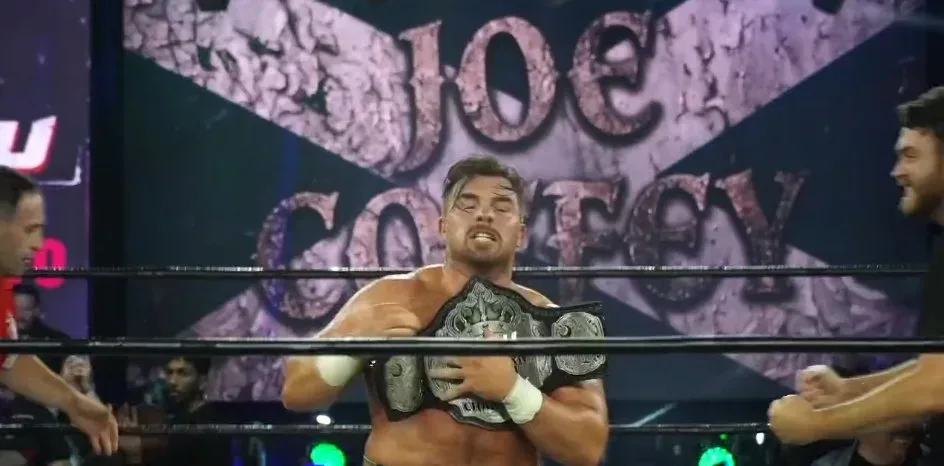
Joe Coffey defeated Trevor Lee on the Thanksgiving edition of MLW Fusion to win the MLW Southern Crown Championship. The victory gave Coffey his first reign with the title and made him the second Southern Crown champion in Major League Wrestling history. Lee, who won the championship in a Bunkhouse Stampede match, held it for 91 days when measured from the day he won it live to the day he lost it live.
The title change marks the first time the Southern Crown has passed from one champion to another. Lee established the championship’s lineage by winning it in a match that was recorded in March and aired in July. Coffey added the second name to that lineage by beating the inaugural champion himself. The Thanksgiving episode is where viewers saw the change, but the broadcast schedule and the live-event timeline tell different parts of the story of Lee’s reign.
Coffey takes the Southern Crown from its inaugural champion
For Coffey, the result is a first: he had not held the Southern Crown before defeating Lee. For the championship, it is the first change of possession since MLW crowned its original holder. Those are separate milestones, even though they come from the same result. Coffey did not win a vacant championship or enter a match to determine a new title’s first holder. He took an established title from the only wrestler who had held it to that point.
View the referenced post on X
View the referenced post on X
That gives Coffey a different place in the championship’s early history than Lee. The inaugural Bunkhouse Stampede answered the question of who would become Southern Crown champion in the first place. The Thanksgiving match answered who could take the championship from that winner. Lee remains the answer to the first question, while Coffey now has a distinction of his own as the first challenger to bring a Southern Crown reign to an end.
For more background on this topic, read Focus Pro Wrestling Mo Money Mo Problems 4 Results: Two Women’s Title Changes, Diego Alvarez Retains.
The result also makes the line of succession particularly easy to follow. There is no intervening champion between Lee and Coffey, and no vacancy to separate their reigns. The match that closed Lee’s run was the same match that opened Coffey’s. For a championship with only two holders so far, that head-to-head result is the clearest link between its debut and its next chapter.
How Trevor Lee’s 91-day reign was counted
Lee’s 91 days are measured from his championship win in front of a live audience to his championship loss in front of a live audience. They are not a count from the July broadcast of his Bunkhouse Stampede victory to the Thanksgiving broadcast of his defeat. That distinction matters here because the match that made Lee champion was recorded months before it appeared on television.
March is when the inaugural title match was recorded. July is when the result aired. That means a viewer following Fusion received the start of Lee’s reign on a different date from the people who saw the match take place. Both points belong in the history of the championship, but they describe different events: one is the night Lee won the match, and the other is when the television audience saw him win it.
The same distinction applies at the other end. The Thanksgiving edition identifies the broadcast on which Coffey’s victory was shown, not necessarily the day the wrestlers worked the match. Calculating Lee’s reign from a July starting point and a Thanksgiving endpoint would therefore answer a different question: how much time passed between the two results airing. The 91-day figure describes how long Lee held the title on the live-event timeline.
For viewers catching up on the championship, the sequence is straightforward even if the calendar is not. Lee won the Bunkhouse Stampede to become the first champion. The match was shown in July after being recorded in March. Coffey then defeated Lee for the title in the match shown on Thanksgiving. The broadcast gap changes when viewers learned those results, not the order in which the two wrestlers won the championship.
What the title change means for both wrestlers
Lee leaves the reign with a distinction the result cannot take away: he was the first Southern Crown champion. The Bunkhouse Stampede remains the starting point for the title’s record, and his 91-day run is the first completed reign against which later ones can be compared. Coffey’s win puts an endpoint on that run without changing how it began. Any account of the championship’s first two holders starts with Lee winning the inaugural match and continues with Coffey beating him for the belt.
For Coffey, beating Lee gives his reign a clear starting point. He goes from pursuing the Southern Crown to holding it, and the next match contested for the championship will come with a different question: who can take it from him? The victory itself does not establish a first challenger or set a date for a defense. Nor does it settle whether Lee will get another chance at the championship. What it does establish is that any bid by Lee to regain the title would be a pursuit of a second reign rather than a continuation of his first.
There is also a useful contrast in the two championship wins. Lee’s came in the Bunkhouse Stampede that introduced the Southern Crown, whereas Coffey’s came at the expense of a reigning champion. A title needs an inaugural winner before it can have a successful challenger, and the Southern Crown now has both. That is a modest but concrete milestone for an early championship lineage: the story is no longer solely about the match that created its first champion, but also about the result that ended his time with the belt.
The Thanksgiving episode leaves the Southern Crown with a short, clear record. Lee won it first, his reign lasted 91 days on the live-event calendar, and Coffey ended it by defeating him on Fusion. The March recording and July airing explain why the televised history does not map neatly onto that number. The result itself is simpler: Trevor Lee is the inaugural champion, and Joe Coffey is the new one.

Darryl Polo
Darryl Polo is a passionate wrestling fan covering WWE, AEW, TNA and beyond. He loves great rivalries, breakout stars and the moments that keep fans talking long after the bell. How we work.