
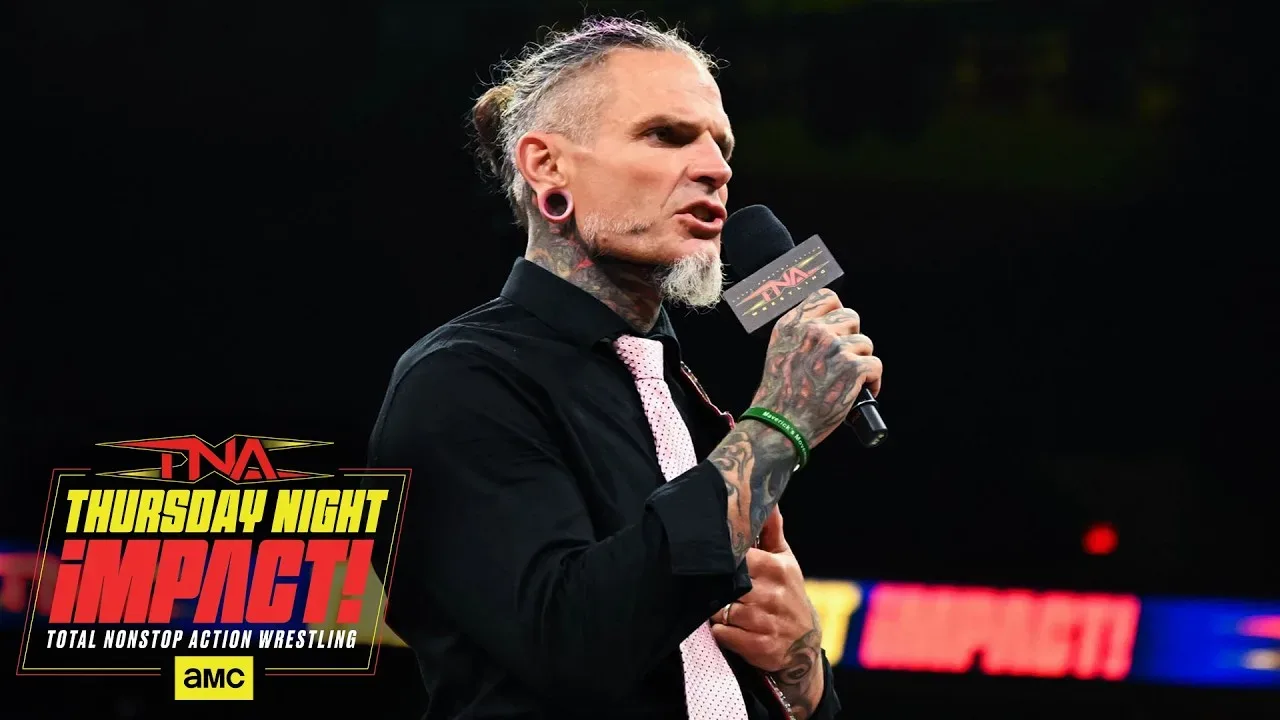
Jeff Hardy has looked back on a little-remembered entertainment opportunity from one of the most consequential periods of his career: a proposed reality television series that was announced in 2009 but never made it to viewers.
In September 2009, reports indicated that Hardy had reached an agreement with Fox 21 for a reality show centered on the longtime wrestling star. The idea arrived at a time when unscripted television was becoming an increasingly powerful part of pop culture, with celebrity-focused and personality-driven programs finding large mainstream audiences.
Hardy has now addressed the abandoned project in a new interview, confirming that the show was intended to spotlight more than his in-ring work. Rather than functioning simply as another wrestling program, it would have followed the interests, projects, and parts of his day-to-day life that existed outside the ring.
“It was going to be like Jeff Hardy and pretty much all of the things I’m involved with outside of the wrestling world,” Hardy said.
For more background on this topic, read WWE Video Producer Douglas A. Plomitallo Releases Horror Film Featuring The Boogeyman.
For an artist and performer whose appeal has long extended beyond conventional wrestling presentation, the concept made sense on paper. Hardy has been known throughout his career for his distinctive visual identity, creative pursuits, extreme-risk style, and devoted fan connection. A reality series could have provided a different lens on a performer audiences had largely come to know through televised matches, promos, and the mythos that surrounded The Hardy Boyz.
But the planned series arrived at a moment of major upheaval. Hardy departed WWE in 2009 after a highly prominent run near the top of the company. His final stretch had included a run as World Heavyweight Champion and a long-running rivalry with CM Punk, one that remains among the defining programs of that era of WWE television.
Hardy described leaving WWE that year as happening while he was “on top of the wrestling world.” However, he said that events in the weeks that followed his departure changed the direction of the proposed television venture completely.
“Then, I took a turn for the worse,” Hardy said. “I left WWE in 09 on top of the wrestling world and then a couple weeks later, something terribly traumatic happened. Yeah, that’s why the reality show never took form.”
Hardy did not provide additional details about the project’s development, how far it had progressed, whether filming had started, or what format the series would ultimately have taken. What is clear from his comments is that the idea was not abandoned because of a lack of interest in showing a different side of his life. Instead, he connected its collapse to the difficult personal circumstances that followed his WWE departure.
The timing makes the unrealized show especially notable. Reality television was expanding rapidly in 2009, and programs built around well-known personalities were becoming central to cable and broadcast entertainment. The genre offered celebrities a way to reach viewers in a more personal, serialized format, often placing family life, business ventures, hobbies, and everyday conflicts alongside the public-facing work that made them famous.
Wrestling would eventually find its own major foothold in that space. A few years after Hardy’s proposed series fell apart, E! launched Total Divas, bringing WWE personalities into a reality format focused on their professional and personal lives. The show became a significant piece of WWE’s mainstream reach and demonstrated that wrestling fans would follow performers into a presentation far removed from the usual structure of weekly wrestling programming.
That later success naturally raises questions about what a Jeff Hardy-led series might have looked like had circumstances been different. Still, Hardy’s remarks do not establish that his show would have resembled Total Divas, nor do they reveal whether the Fox 21 concept had a specific episode order, cast, production timetable, or creative approach. The available picture is limited to Hardy’s explanation: it was meant to explore his world away from wrestling, and it did not move forward after a traumatic period in his life.
The revelation also underscores how quickly Hardy’s career path shifted in 2009. At the time, he was leaving one of the industry’s biggest platforms while still positioned as a central figure. A reality deal could have represented a transition into a broader entertainment profile outside WWE. Instead, it became one of the many what-if stories attached to a career that has featured extraordinary highs, dramatic turns, reinventions, and remarkable returns.
Hardy’s standing with audiences has always been tied in part to that unpredictability. Alongside his brother Matt Hardy, he helped redefine tag team wrestling through the groundbreaking ladder, tables, and TLC matches that made The Hardy Boyz one of the most influential teams of their generation. As a singles performer, Jeff Hardy developed into a top-level attraction whose connection with fans repeatedly carried him into championship contention and main-event programs.
His creative identity also made him an unusual fit for the typical mold of a wrestling headliner. Hardy’s look, entrance presentation, face paint, music interests, and willingness to take spectacular risks helped make him recognizable far beyond the specifics of wins and losses. Those qualities are likely part of why a show focused on his life outside the ring had apparent potential. Yet Hardy’s reflection makes clear that the public announcement of a deal did not guarantee that the cameras would ever tell that story.
The subject is particularly relevant because Hardy continues to speak openly about the rivalries and moments that have shaped his legacy. Earlier this month, he drew attention by saying he is manifesting another feud with CM Punk. Their WWE rivalry remains closely associated with the final period before Hardy’s 2009 departure, making the possibility of revisiting that matchup an intriguing thought for fans who remember their original series.
Whether another Hardy-Punk program ever materializes is a separate question, and Hardy’s comments about manifesting it should not be viewed as confirmation of plans for a match or storyline. Still, the reference illustrates the lasting importance of 2009 in his professional history. It was a year in which he was involved in one of WWE’s most memorable rivalries, exited the company at a major moment in his career, and briefly appeared poised to cross into reality television.
Instead of becoming a reality-TV personality in the fashion envisioned by the Fox 21 deal, Hardy’s story continued through wrestling. The proposed show remains an unfinished chapter, one that could have documented the performer behind the character at a pivotal time. In Hardy’s own account, however, the circumstances that followed his WWE exit made that chapter impossible to complete.
For fans, it is another reminder that wrestling careers are often shaped by opportunities audiences never get to see. Hardy’s reality series was announced during an era when both he and unscripted television were highly visible. It had the ingredients for an unusual crossover project, but it ultimately remained just that: a plan that never took form.

Darryl Polo
Darryl Polo is a passionate wrestling fan covering WWE, AEW, TNA and beyond. He loves great rivalries, breakout stars and the moments that keep fans talking long after the bell. How we work.