
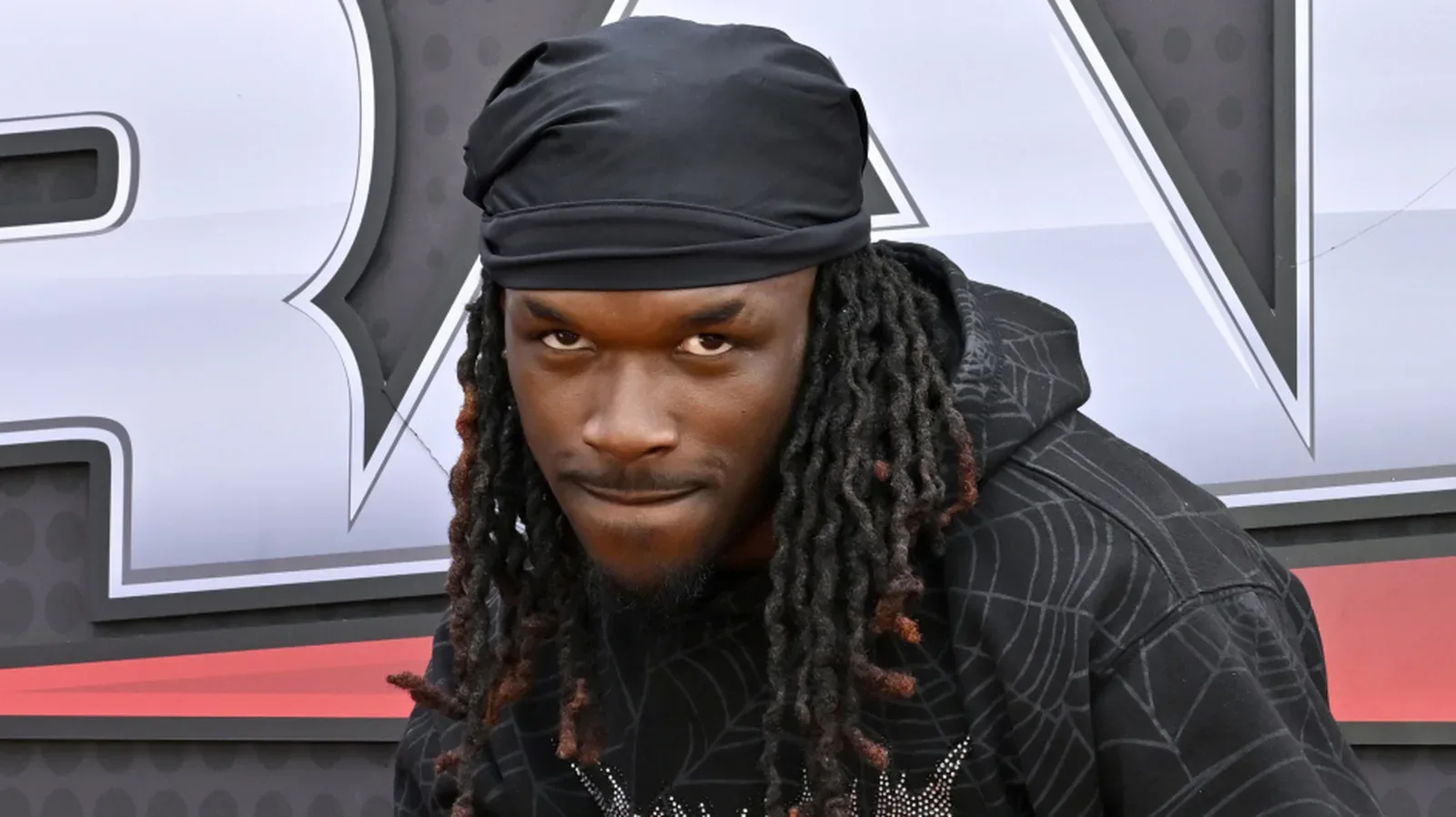
Je’Von Evans and Oba Femi built one of WWE NXT’s most compelling rivalries through a combination that looks almost deliberately designed to work: Evans brings explosive speed, unpredictability and a willingness to take risks, while Femi brings overwhelming size, power and an increasingly polished command of the ring. Their contrast made every meeting feel significant, but Evans says their success was not simply about the visual difference between them.
Speaking on Cheap Heat, Evans discussed the bond he formed with Femi before both men moved on from NXT and described a level of trust that allowed their matches to become as creative as they did. The two competitors faced each other four times during their NXT runs, and Evans believes none of those outings fell below the standard they set for themselves.
“We go crazy every match, because he listens to me ... I just tell him what to do and he does it. You feel me? He listens to me,” Evans said. “Our chemistry is great, bro. I don’t think we’ve ever had a bad match for real.”
An Intimidating First Impression
While the friendship between Evans and Femi became clear to viewers through their NXT interactions, Evans admitted that his first encounter with “The Ruler” was more intimidating than friendly from his perspective. Femi’s imposing physical presence was already evident, but it was the deep voice and accent of the man later known as the “Bringer of War” that briefly caught Evans off guard.
For more background on this topic, read Grayson Waller Vows To Restore NXT Championship Prestige During ‘Redemption Season’.
“Honestly, I think it was his accent ... he was like, ‘I’m Oba.’ But it was very deep and I was like, ‘Oh my, my bad, OG.’ He was just saying what’s up to me. I feel like I did something wrong,” Evans recalled.
The anecdote offers a lighter look at a relationship that has been fueled by intensity whenever the bell rings. Evans may have been initially unsure of how to approach Femi, but he quickly developed an appreciation for what the powerhouse could do between the ropes. That appreciation was rooted in more than Femi’s stature or his presentation. Evans was particularly struck by the way Femi moved.
“Other than that, bro, every time I saw him train in the ring, he was a beast ... one thing that really mainly stood out to me was just how he moved in the ring for his size,” Evans said.
That mobility has been central to Femi’s appeal. A larger wrestler is expected to be powerful, difficult to move and dangerous when he gets his hands on an opponent. Femi’s ability to move with greater quickness than opponents may anticipate adds another dimension to that threat. It also makes him a natural foil for Evans, whose offense relies on rapid changes in pace and finding opportunities that are easy for larger opponents to miss.
Why the Matchup Worked
Great wrestling chemistry cannot be reduced to one performer being bigger and the other being faster. Those differences can create a compelling premise, but the match still needs timing, communication and an understanding of how each wrestler’s strengths can make the other look better. Evans’ comments suggest that this was where his connection with Femi stood apart.
Evans credited Femi’s willingness to listen and adapt during the match. That does not mean the rivalry lacked structure or that either man was following the other without contribution. Instead, Evans’ description points to an openness that enabled them to react to one another and push the pace without losing control of the story they were telling in the ring.
For Evans, the freedom to be creative is especially important. His style is built around momentum, athletic bursts and the kind of moments that can make a match feel like it could change in a second. Against a physically dominant opponent such as Femi, that creativity becomes even more valuable. Evans has to find ways around an opponent who can overpower him, while Femi has to make every opening feel believable without diminishing the force that defines his game.
The result, in Evans’ view, was a series of matches in which the contrast between them became a benefit rather than a limitation. Femi could establish the danger of his size and strength, while Evans could make resilience and speed matter. Each element helped sharpen the other.
Their four NXT meetings also came during a period when both were among the brand’s biggest names. That positioning raised the expectations attached to their encounters. A rivalry involving two established standout performers needs to feel different each time it is revisited, particularly when fans already know the basic matchup. Evans’ belief that they never had a bad match speaks to the confidence he has in the foundation they developed together.
Trust, Creativity and Physicality
Evans also revealed that the physical edge of the rivalry was intentional. He and Femi would trade harder shots in the ring, giving their encounters a more forceful feeling. That approach can make a match appear more visceral, but it also requires clear trust between the performers involved. A harder strike can contribute to the atmosphere of a contest; it can also produce consequences if somebody goes beyond what was expected.
Evans acknowledged that he has occasionally crossed that line, leading to a painful response from Femi. In wrestling terminology, that response is commonly known as a receipt: a shot delivered back to a performer after a strike is judged to have been too stiff or too hard. Evans did not present the matter as a personal issue between the two. Rather, it fit his overall description of their relationship, one based on mutual respect, honest reactions and a willingness to make the action feel meaningful.
That distinction matters. Competitive matches can be physical without turning into genuine conflict, particularly when the wrestlers know one another well enough to understand the difference between intensity and disrespect. Evans’ comments portray Femi as a trusted opponent who will meet that intensity, and who will also make his point if Evans gets carried away.
It is another reason their chemistry was able to translate so effectively. The best rivalries often have an element of friction, even when the wrestlers involved are close outside the ring. Evans and Femi could bring that friction to their work because their friendship and familiarity gave them a base from which to take creative risks.
A NXT Partnership That Carried Weight
Before their main-roster call-ups, Evans and Femi were key figures in NXT. Their shared history on the developmental brand was not limited to one match or one brief program; it was a stretch of time in which they became friends while also repeatedly testing each other in competition. Femi’s subsequent status as the 2026 King of the Ring winner further reflects the level of momentum attached to his rise.
For Evans, though, the lasting takeaway from working with Femi is not simply the accolades or the size of the stage. It is the match-to-match connection. He saw a formidable athlete in training, was initially startled by the way Femi introduced himself, and then found a partner capable of matching his creative energy when it was time to perform.
“The Young OG” and “The Ruler” have personalities and styles that naturally invite comparison, but Evans’ account makes clear that the story is not one of opposites who merely happened to collide. It is one of two performers who learned how to use their differences to create something stronger together.
Whether their paths cross again in WWE or their rivalry remains defined by its NXT chapter, Evans has little doubt about the quality of what they produced. The matches were hard-hitting, they were creatively charged, and, in Evans’ words, they consistently “go crazy.”
In pictures

Darryl Polo
Darryl Polo is a passionate wrestling fan covering WWE, AEW, TNA and beyond. He loves great rivalries, breakout stars and the moments that keep fans talking long after the bell. How we work.