
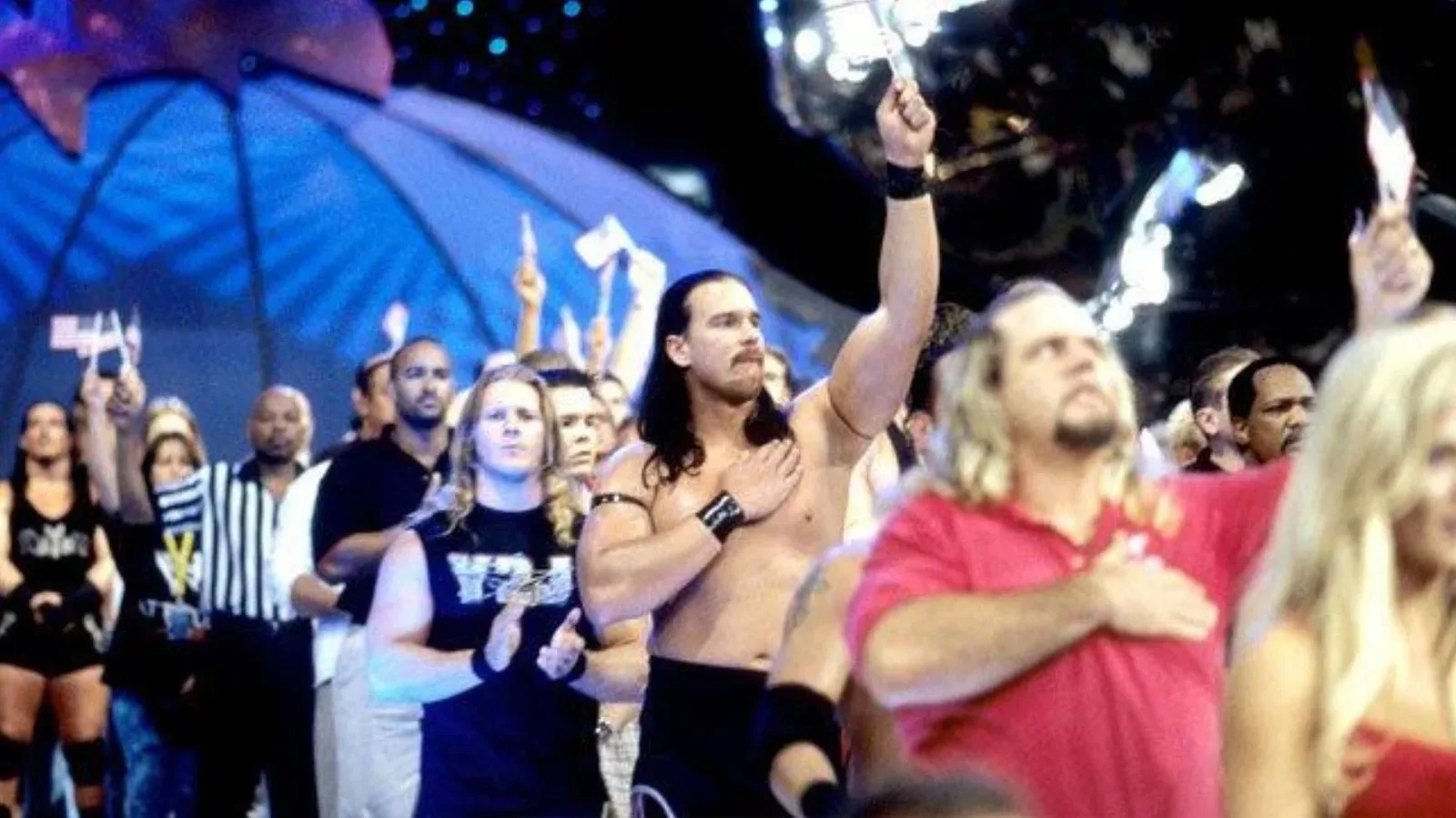
JBL has reflected on one of the most emotional nights in WWE history, revisiting the September 13, 2001 edition of SmackDown and the difficult circumstances surrounding it.
The show took place in Houston, Texas, just two days after the September 11 terrorist attacks. At a time when the United States was processing an unimaginable tragedy, public events across the country had been disrupted or canceled amid grief, uncertainty, and major security concerns. WWE nevertheless moved ahead with its Thursday night event, creating a broadcast remembered less for conventional wrestling spectacle than for its messages of unity, resilience, and gratitude toward first responders.
Speaking on Something To Wrestle, the WWE Hall of Famer recalled watching the attacks unfold from a hotel room. JBL said the original plan for that week’s SmackDown had been canceled, but WWE leadership ultimately wanted to stage a program that could bring people together during an extraordinarily painful moment for the country.
“Vince made it very clear nobody has to be here, nobody has to be a part of the show, you know? What we’re going to do is we’re going to do something for America.”
For more background on this topic, read Lola Vice Officially Joins WWE Raw After Heated Roxanne Perez Confrontation.
For JBL, the decision was not about pretending professional wrestling could solve the enormity of the situation. Instead, he described the event as an effort by the WWE roster and staff to offer support in the only way they could: by gathering, performing, and sharing a message with fans who were also looking for a sense of normalcy and connection.
“From my perspective and from the perspective of everybody I talked to, that was our way of saying ‘We’re behind you America,’ and that’s all it was. We want to do something that we believe in. We didn’t know if no one would show up or if the place would be packed, we had no idea.”
A SmackDown Defined by More Than Matches
WWE’s September 13, 2001 broadcast has endured as a singular chapter in the company’s history. The show featured numerous performers addressing the attacks and the nation’s response directly, an unusual approach for a weekly wrestling program built around ongoing rivalries and storylines. The weight of the moment required something different, and the roster’s words were aimed at an audience trying to make sense of a tragedy that had changed the national mood overnight.
JBL’s recollection underscores the uncertainty wrestlers felt before arriving in Houston. Nobody involved could know how fans would respond to attending a major live event so soon after the attacks. The question was not simply whether the building would be full. It was whether people would be ready to congregate at all, and whether a wrestling show could provide even a temporary outlet without diminishing the severity of what had happened.
The Houston crowd did attend in force, and the atmosphere became an essential part of the night’s legacy. Rather than approaching the show as an ordinary episode of television, the audience and WWE personnel shared an openly emotional experience. Patriotic imagery, tributes, and spoken messages were central to the presentation, while cheers of “USA” reflected the immediate response of a country seeking solidarity.
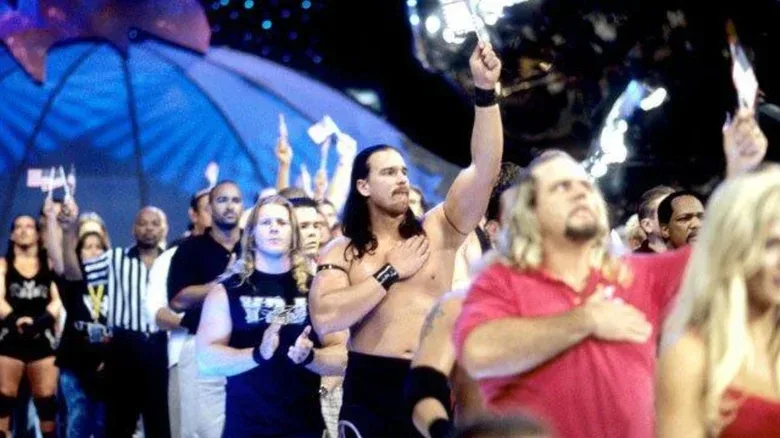
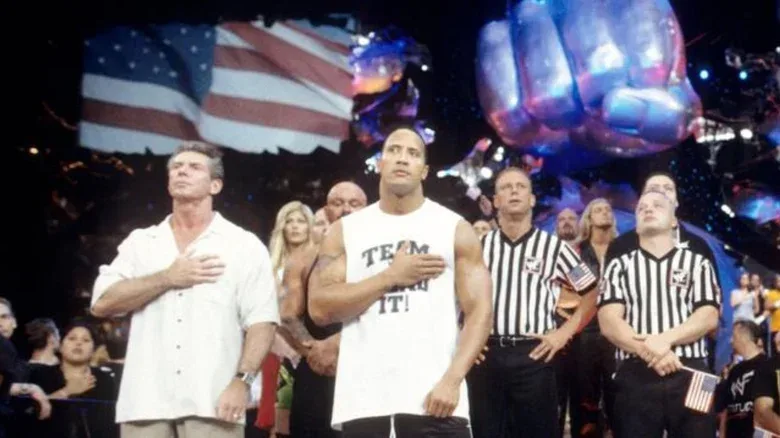
Among the many moments from the broadcast, JBL singled out Lilian Garcia’s performance of “The Star-Spangled Banner” as one he will never forget. Garcia, then WWE’s ring announcer, sang as the entire roster assembled on the entrance ramp and fans stood throughout the sold-out arena.
“I’ll remember that to the day I die. The entire crowd, I mean people were chanting USA, people were crying, people had their flags, it was an unbelievable moment to be a part of. I mean it’s something I’m so, and I hate to say proud because it was a terrible event and a terrible week, but I’m proud that we were able to do something.”
JBL compared Garcia’s singing to Whitney Houston’s, emphasizing the impact of the performance in a setting already charged with emotion. The anthem became far more than a standard pre-show formality. With the wrestlers gathered together, the audience standing and visibly moved, and the country still in the first days of mourning, it represented the purpose WWE hoped the event could serve.
JBL Recalls Reaching Out to WWE
JBL also discussed wanting to contribute away from the television cameras. He said that he called WWE’s head office to ask how he could help and whether he could travel to Ground Zero in New York City to thank firefighters and other first responders personally.
According to JBL, Vince McMahon supported the idea but felt it should be a company-wide effort rather than an individual visit. JBL said WWE personnel ultimately made the trip, giving members of the roster a chance to express their appreciation directly to people working at the site in the aftermath of the attacks.
He recalled that an NBA team had been expected to visit, but concerns arose after a possible anthrax issue was reported at Ground Zero. JBL said the NBA group did not go after that concern surfaced. Once it was confirmed there was no anthrax at the location, he said WWE’s group was able to proceed with its visit.
“I’m glad of where I was at the time because I got to be a part of that first mass gathering, and I got to go down to Ground Zero and tell those heroes ‘Thank you’ in person.”
The remarks offer a personal perspective on a week that remains deeply etched into the memories of countless people, including those who worked in professional wrestling. WWE has produced major events across decades, but the September 13, 2001 SmackDown stands in a different category from even the company’s biggest pay-per-views or landmark television episodes. Its historical significance is tied to its timing and its purpose rather than championships, match outcomes, or storyline turns.
Why the September 13, 2001 Broadcast Still Resonates
The event took place before social media, when live television had a different kind of immediacy and national broadcasts could become shared cultural experiences on a massive scale. For many fans, WWE’s decision to hold the Houston show became a memorable example of entertainment operating in a moment of collective mourning. It did not erase fear or grief, and it was never meant to. The goal, as JBL explained, was to make a statement of support and to give people a place to be together.
That context is vital to understanding why the episode has remained meaningful 25 years later. The wrestling itself was only one part of the show. The central image was a company’s performers, announcers, crew members, and fans standing together in an arena while the rest of the country was attempting to recover from shock.
JBL’s account also illustrates the human side of the WWE locker room during that period. Wrestlers are often remembered through their characters, feuds, matches, and championships, but the events of September 2001 brought a real-world crisis into every corner of American life. The people appearing on SmackDown were confronting that crisis alongside the viewers at home.
His memories of the broadcast and the Ground Zero visit are therefore rooted in appreciation rather than nostalgia. JBL acknowledged that it was a terrible week and a terrible event, while also expressing pride that WWE could provide a moment of unity and personally thank first responders.
As the anniversary of 9/11 continues to prompt reflection across the United States, the September 13, 2001 edition of SmackDown remains an enduring reminder of how WWE responded in the immediate aftermath: with an emotional live gathering, a roster-wide show of solidarity, and a message that the country’s pain was being shared.
In pictures
Darryl Polo
Darryl Polo is a passionate wrestling fan covering WWE, AEW, TNA and beyond. He loves great rivalries, breakout stars and the moments that keep fans talking long after the bell. How we work.