
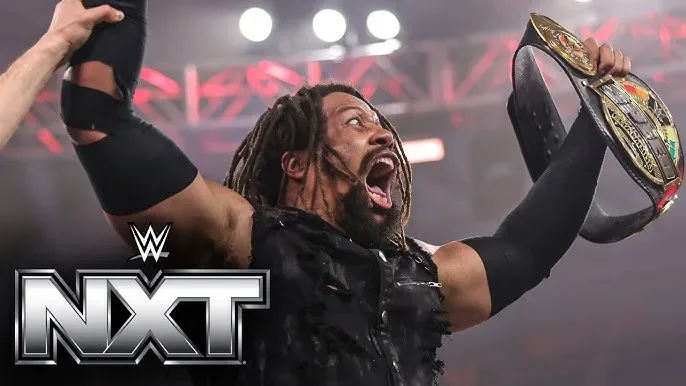
Jasper Troy has offered a candid look at the frustrations that built during his WWE NXT tenure, describing a period in which he continued to work, remained receptive to direction and tried to stay professional while feeling that his opportunities were too inconsistent to sustain momentum.
Troy’s time with WWE came to an end in early September. In comments addressing his experience in NXT, the first-season winner of WWE LFG said the issue was not a lack of effort on his part. Instead, he pointed to extended gaps between matches, particularly televised bouts, as a major obstacle to maintaining the performance rhythm he felt he was beginning to establish.
The former NXT talent said he had frequent conversations and asked questions about his role, but was repeatedly encouraged to remain patient. Troy explained that he trusted the people above him and followed that guidance, even as he began to notice developments that left him increasingly frustrated.
“There was tons of conversations that I would have, tons of questions I would ask, and just being told, ‘stay patient, stay patient,’” Troy said. “I’m trustworthy, so I’m always gonna trust what I’m being told from the higher-ups, and I just listened.”
For more background on this topic, read Asuka’s WWE Hiatus Reportedly Tied to Personal Matter as Return Timeline Remains Unclear.
Frustration Did Not Change Troy’s Approach
Troy placed the beginning of his deeper concerns around February. He said he was seeing situations unfold that got into his head, but maintained that his response was to keep working rather than allow the disappointment to alter his attitude. He described himself as someone who does not take days off or look for excuses, adding that he tried to fight through the physical wear that comes with training and performing.
That distinction is important in Troy’s account. He did not frame his frustration as a decision to disengage from the process. Rather, he said it was the natural response of a performer who believed he was putting in consistent effort but was struggling to find the same consistency in the opportunities available to him.
“So at a certain point, I started getting upset, getting frustrated,” Troy said, while stressing that he still showed up with the same mindset. He felt his performances began improving and that he was getting into a groove. However, he also identified the lack of regular in-ring repetitions as something that could not simply be overcome through effort alone.
For a developing wrestler, television exposure is only one part of that equation. The chance to work matches regularly can help a performer sharpen timing, build chemistry, test character presentation and gain confidence in front of different audiences. Troy specifically mentioned house shows, dark matches and EVOLVE shows when explaining why opportunities to wrestle matter beyond a wrestler’s place on weekly NXT television.
The Challenge of Long Gaps Between Matches
Troy said lengthy breaks between matches made it difficult to preserve the groove he was seeking. He believed the reduction in his ring time affected his work rate, emphasizing that there is no substitute for actual match repetitions.
“There’s certain things that it’s hard to overcome when you go these long hiatuses of time between matches on TV and matches in the ring; it’s hard to stay in that groove,” Troy said. “You can’t outwork reps, whether that’s house shows, dark matches, you know, Evolve shows.”
The comments provide a clear window into how Troy evaluated his own development. He did not suggest that hard work had no value; in fact, he repeatedly emphasized how seriously he took preparation and perseverance. His point was that preparation cannot fully duplicate the experience of performing regularly in front of a crowd, working through live-match variables and receiving the kind of feedback that only comes from consistent in-ring activity.
That is a notable concern for any prospect attempting to establish a foothold in a competitive developmental environment. A wrestler can be prepared, healthy and eager for more, but a limited number of televised slots and the changing needs of creative plans can still leave performers waiting for their next meaningful opportunity. Troy’s remarks focus on the personal effect of that waiting process: frustration, a loss of rhythm and the feeling that progress becomes harder to measure.
At the same time, Troy said he attempted to separate the factors he could control from the ones he could not. Even when disappointment grew, he said the professional side of him urged him to remain focused and not become consumed by the parts of his situation that were not going his way.
Great American Bash 2025 as a Turning Point
Troy specifically referenced the months after Great American Bash 2025, where he shared the ring with Je’Von Evans. He said that not appearing on subsequent Premium Live Events weighed on him, describing an internal alarm that began sounding as he watched those opportunities pass.
“I’m not gonna sugarcoat it,” Troy said of the stretch after Great American Bash 2025 and his match with Evans. “Not being on those PLEs, like the thumb in my head was going off.”
He also made clear that he tried to answer that feeling with discipline. Rather than allow the concern to define his work, Troy said he reminded himself to stay in the fight and concentrate on where he could improve and where his career could go next.
That balance runs through all of Troy’s comments. He was openly dissatisfied with the way his usage unfolded, and he did not pretend that missing matches or PLE appearances was easy to accept. Yet he also described a deliberate effort to remain dependable and to avoid letting frustration show up in a way that would compromise his work.
The remarks do not identify a single incident as the reason for his departure, nor do they lay out a detailed timeline of every creative decision during his NXT run. Troy instead spoke broadly about the cumulative effect of being told to be patient, working through long periods between matches and feeling that his performance consistency suffered because he was not receiving enough in-ring reps.
From WWE LFG Winner to an Uncertain Next Chapter
Troy entered WWE with a notable credential as the winner of the first season of WWE LFG. That accomplishment put a spotlight on his potential and made his later frustrations over opportunity especially significant from his perspective. Winning a competition may create attention and expectations, but it does not guarantee a smooth path through a developmental system or a fixed position on a brand’s television lineup.
His comments underline the difference between recognition and regular placement. Troy had an achievement attached to his name, but he still wanted the steady workload necessary to build on it. In his view, being available and committed was not enough without matches that allowed him to maintain and demonstrate his progress.
There is no indication in Troy’s remarks that he has lost his desire to grow as a performer. If anything, his emphasis on repetitions, availability and attitude suggests that he remains focused on the practical parts of professional wrestling that he believes move a career forward. He repeatedly returned to the idea of continuing to show up, pushing through adversity and directing his attention toward what he can control.
His WWE departure in early September closed one chapter, but Troy’s reflections offer context for how he viewed the final portion of that chapter. He felt he was beginning to find a better performance level, only to be hindered by the irregularity of his match schedule. He felt the disappointment of being absent from PLE cards after Great American Bash 2025, but continued to approach his role as a professional. And he believes the missing ingredient was not desire or willingness to work, but the repetitions that come from being consistently active.
For Troy, the central message is straightforward: patience can be necessary in wrestling, but patience does not erase the need for ring time. His NXT experience left him frustrated by the gaps between opportunities, while also reinforcing his belief that a wrestler’s development is built through consistent work in front of an audience. As he moves forward following his WWE exit, that is the standard he appears determined to pursue.

Darryl Polo
Darryl Polo is a passionate wrestling fan covering WWE, AEW, TNA and beyond. He loves great rivalries, breakout stars and the moments that keep fans talking long after the bell. How we work.