
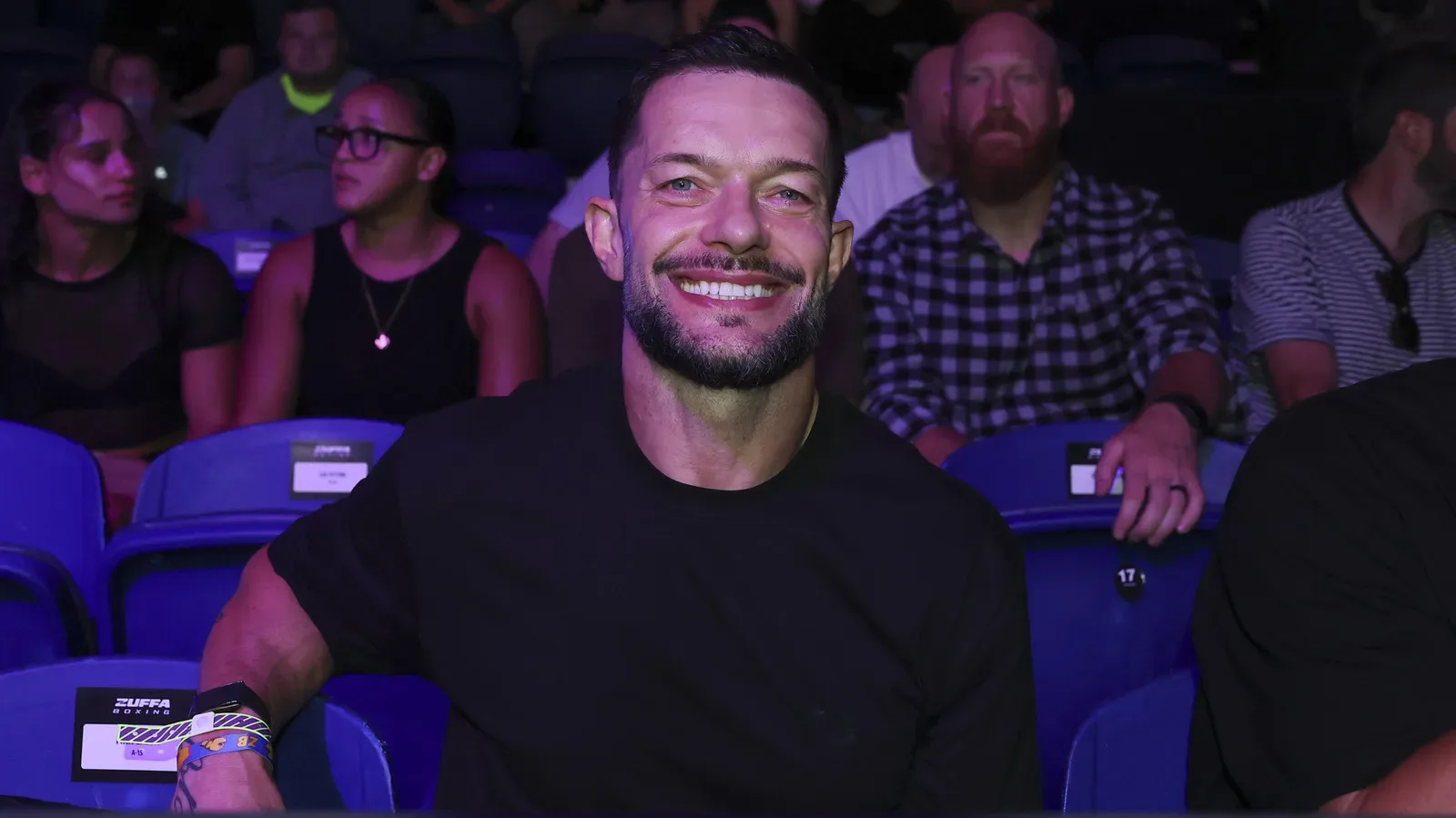
Finn Balor has spent more than two decades building one of modern wrestling’s most distinctive careers, from his formative years in Ireland to international success and a major place on WWE television. At 45, Balor remains an active presence in the company and continues to view himself through the eyes of the young fan who dreamed of becoming a wrestler. Still, he is also taking a realistic view of where he stands in the larger arc of his career.
Speaking on Rosenberg Wrestling, Balor addressed the contrast between his internal mindset and the practical reality of being a veteran performer approaching his 50th birthday. He said he can still feel as though he is in the middle of his run, but the logical side of his thinking recognizes that the latter phase of his wrestling life is approaching.
“Obviously, I feel like I’m in the middle of it [my career], but perhaps, you know, the logical part of my brain tells me you’re not in the middle of it, you’re on the wind-down,” Balor said.
That acknowledgement does not come with an indication that retirement is imminent. Balor made clear that his body feels good, and he believes he is in better physical condition now than he was 10 years ago. For a performer whose style has long required speed, precision and an ability to absorb punishment in high-level matches, that confidence is an important part of assessing how much time may remain in the ring.
For more background on this topic, read WWE Files New Worlds Collide Trademarks for Merchandise Categories.
“But physically I feel great. I feel better now at 45 than I did at 35, and that’s probably down to training schedule adjustments, you know, diet, and just general conditioning.”
Balor says his body feels better than it did at 35
Balor credited adjustments to his training schedule, diet and overall conditioning for the way he currently feels. It is a notable perspective from someone who has been wrestling longer than he has lived outside the profession. Maintaining a career at the WWE level demands far more than preparing for occasional matches; it requires a performer to manage travel, television schedules, recovery, training and the consistent pressure of delivering in front of a worldwide audience.
The Irish star’s remarks also reflect how veteran wrestlers can recalibrate their approach as they gain experience. Rather than framing age solely as a limitation, Balor pointed to the benefits of finding a smarter routine and developing a greater understanding of what his body needs. His comments do not erase the demands of a long career, but they show why he does not currently describe himself as physically ready to step away.
Mentally, he said he still relates to the teenager who wanted to enter the business in the first place. That enthusiasm remains part of how he sees himself in the locker room, even if the passage of time can be impossible to ignore when looking at the roster around him.
“I still feel like kind of the new kid in the locker room. And then I have to kind of look around and go, ‘Oh, these guys could be my kids.’”
It is an observation that captures a common reality for long-tenured wrestlers. The drive that led them into the industry can remain intact long after they have become respected veterans, while a new generation of talent arrives with little memory of the early parts of their careers. Balor said he still feels like a 15-year-old dreaming of becoming a wrestler, even while accepting that he is probably in the later stages of that dream’s in-ring chapter.
A major lifestyle change awaits whenever retirement comes
Balor was candid that it is difficult to predict his emotional reaction when the day eventually comes to retire from active competition. Wrestling has not simply been a job for him. It has been the defining structure of most of his life, and leaving that routine behind would amount to a substantial personal transition.
“It’s really hard to kind of think about how I’m going to feel in the future and how I’m going to feel like with that monumental lifestyle switch of, you know, I’ve been wrestling longer than I’ve not wrestled in my life,” he said.
That sense of uncertainty is understandable for someone whose identity and day-to-day life have been tied to the industry for so long. Retirement would mean more than ending matches and television appearances. It would mean changing a schedule and lifestyle that has shaped his adult years, including the time spent away from home and family while pursuing the career he loves.
Balor recently discussed the tension between continuing to wrestle and being able to spend more time with his family. That conflict has become increasingly familiar to performers who have devoted years to a global touring business. The desire to keep competing can be powerful, particularly when a wrestler feels healthy and creatively engaged, but the sacrifices attached to life on the road do not disappear.
For Balor, there is no definitive retirement timetable included in his comments. He has not said that he is preparing to leave WWE or that a final match has been planned. Instead, he has spoken honestly about the natural questions that come with reaching this stage of a lengthy career: how long he wants to continue, what his body can sustain, and what kind of life he hopes to have once the boots are eventually put away.
Producer and visual presentation work appeal to Balor
While Balor cannot yet know exactly how retirement will feel, he already has an idea of how he would like to remain involved in professional wrestling. He said he would prefer to stay in the business in some capacity, naming both producing and behind-the-scenes work related to a show’s visual presentation as areas that interest him.
“I would like to stay in the business in some capacity, whether it’s a producer or kind of more behind the scenes in like a visual presentation of the show aspect, is kind of something I’m very interested in.”
The producer role would allow Balor to use the experience accumulated over more than 20 years in wrestling, helping shape matches and offering guidance to talent. His interest in visual presentation, meanwhile, points to another side of the craft that has been important throughout his career. Wrestling presentation encompasses far more than what happens between the ropes. Character imagery, entrances, mood, pacing and the overall visual identity of a show all contribute to how performers connect with an audience.
Balor’s career has included a strong emphasis on identity and presentation, making his stated interest in that area particularly fitting. Whether he ultimately moves into producing, presentation work, another backstage role, or a combination of responsibilities, he clearly sees a future where he remains connected to the industry that has occupied most of his life.
No immediate goodbye, but a clear view of the future
For now, Balor’s message is not one of farewell. He feels physically well, remains motivated by wrestling and still carries the mentality of the fan who first wanted to make it in the business. At the same time, he is not dismissing the reality that every in-ring career eventually reaches its conclusion.
His reflections offer a measured assessment rather than a dramatic declaration. Balor understands that he is on the wind-down rather than at the beginning, yet he also believes his conditioning has put him in a stronger position than he held a decade earlier. That combination leaves room for him to continue performing while also considering what a responsible and fulfilling transition could look like.
Whenever that transition arrives, Balor does not appear to envision a clean break from wrestling. His interest in producing and visual presentation suggests that WWE could continue to benefit from his experience, perspective and creative instincts after his active days are over. Until then, Balor remains focused on the unusual position of feeling like the new kid in the locker room while recognizing that he has become one of its most seasoned members.
In pictures

Darryl Polo
Darryl Polo is a passionate wrestling fan covering WWE, AEW, TNA and beyond. He loves great rivalries, breakout stars and the moments that keep fans talking long after the bell. How we work.